Representative Ardolph Loges Kline
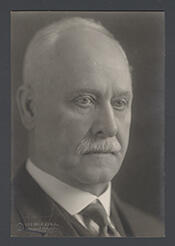
Here you will find contact information for Representative Ardolph Loges Kline, including email address, phone number, and mailing address.
| Name | Ardolph Loges Kline |
| Position | Representative |
| State | New York |
| District | 5 |
| Party | Republican |
| Status | Former Representative |
| Term Start | April 11, 1921 |
| Term End | March 3, 1923 |
| Terms Served | 1 |
| Born | February 21, 1858 |
| Gender | Male |
| Bioguide ID | K000266 |
About Representative Ardolph Loges Kline
Ardolph Loges Kline (February 21, 1858 – October 13, 1930) was an American politician, New York National Guard officer, and Republican member of the United States House of Representatives from New York. He is best known for serving as acting Mayor of New York City in 1913 following the death of Mayor William Jay Gaynor and later as a United States Representative from Brooklyn from 1921 to 1923. Over the course of his public career, Kline held a series of municipal and federal offices and participated actively in the legislative and administrative life of New York City and the nation.
Kline was born near Newton, Sussex County, New Jersey, on February 21, 1858. He pursued his early education locally before attending Phillips Academy in Andover, Massachusetts. Although he studied at Phillips Academy, he did not go on to attend college, instead entering the workforce as a young man. In 1876 and 1877 he began working for a men’s clothing company in New York City, an experience that brought him into the commercial life of the city that would later be the center of his political career.
Alongside his early business pursuits, Kline embarked on a long association with the New York National Guard. He joined the Guard as a private in the 1870s and rose steadily through the ranks. With the outbreak of the Spanish–American War in 1898, he was appointed a lieutenant colonel, reflecting his growing responsibilities and leadership within the state militia. In 1901 he received the brevet (honorary) rank of brigadier general, a distinction that recognized his service and standing in the Guard. His military background contributed to his public reputation and provided a foundation for his later political roles.
Kline’s formal political career began in Brooklyn, where he became active in Republican Party affairs. After an unsuccessful campaign for Sheriff of Kings County (Brooklyn), he was elected as an alderman for Brooklyn’s 51st District in 1903 and was re-elected in 1905. His tenure was interrupted when he lost re-election in 1907, a defeat attributed in part to Democratic redrawing of his district’s boundaries. Kline returned to the Board of Aldermen by winning back his seat in 1911. In 1912 he was chosen as vice chairman of the Board of Aldermen, where he gained a reputation for fairness and impartiality, publicly promising to enforce all rules from the chair, including those against smoking in the chamber.
Later in 1912, when John P. Mitchel, the elected President of the Board of Aldermen, resigned to become Collector of the Port of New York, Kline succeeded him as president of the Board. This position placed him next in the line of succession to the mayoralty. On September 10, 1913, Mayor William Jay Gaynor, who had never fully recovered from an attempted assassination in 1910, died at sea while traveling to Europe. Under the city charter, Board President Kline thereupon became acting Mayor of New York City. He served out the remainder of Gaynor’s term, holding office from September 10, 1913, until December 31, 1913. Although he initially announced his intention to retain all department heads appointed by his predecessor for the balance of his term, in the final days of his administration he dismissed Rhinelander Waldo as Commissioner of Police rather than accept Waldo’s planned New Year’s Eve resignation. Kline’s brief mayoralty was notable in the history of the consolidated city: as of early 2016 he remained the only mayor of post-1897 New York City never to have won a citywide popular election to any office, even as he also stood as the last serving or former mayor of New York City to win election to any other public office.
Following his service as acting mayor, Kline continued to play a role in municipal government. He was re-elected as an alderman for his old district for the 1914–1915 term, but he resigned in early January 1914 to accept appointment as the city’s Tax Commissioner for Brooklyn. In that capacity he served for four years, reviewing appeals of property tax assessments and participating in the administration of the city’s fiscal policies as they affected Brooklyn property owners. His work as tax commissioner further solidified his reputation as an experienced municipal administrator.
Kline later extended his public service to the national level. A member of the Republican Party, he was elected as a Republican U.S. Representative from New York, representing the 5th Congressional District in Brooklyn, and served in the Sixty-seventh Congress from 1921 to 1923. His election came in the Republican landslide of 1920 during the presidential campaign of Warren G. Harding, in a race for the seat being vacated by Democratic Representative John B. Johnston, who did not seek re-election. During his single term in the House of Representatives, Kline was appointed to the House Committee on Naval Affairs, where he contributed to the legislative process on matters affecting the United States Navy and maritime policy. His service in Congress occurred during a significant period in American history marked by post–World War I adjustments and debates over national defense and economic policy. He represented the interests of his Brooklyn constituents and participated in the broader democratic process of federal lawmaking. In the 1922 elections, without the impetus of a national presidential race and in a year when New York City Democrats Al Smith and Royal Copeland defeated incumbent Republican Governor Nathan L. Miller and Republican U.S. Senator William M. Calder, Kline lost his bid for re-election to Democrat Loring M. Black Jr., who went on to serve from 1923 to 1935.
After leaving Congress in 1923, Kline did not return to elective office but remained active in public-related work. He spent all of his post-congressional life as the New York manager of the sea-service bureau of the United States Shipping Board, a federal agency that oversaw aspects of the nation’s merchant marine and maritime commerce. In this role he drew on both his legislative experience on the Committee on Naval Affairs and his long-standing interest in maritime and naval matters, helping to administer programs related to sea service and shipping in New York.
Ardolph Loges Kline died on October 13, 1930, at the Methodist Episcopal Hospital in Brooklyn, New York. He was interred in Holy Cross Cemetery in Brooklyn. His career, spanning military service, municipal office, the mayoralty of New York City, and a term in the United States House of Representatives, reflected a lifetime of engagement in public affairs at both the local and national levels.