Representative Ariosto Appling Wiley
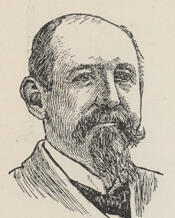
Here you will find contact information for Representative Ariosto Appling Wiley, including email address, phone number, and mailing address.
| Name | Ariosto Appling Wiley |
| Position | Representative |
| State | Alabama |
| District | 2 |
| Party | Democratic |
| Status | Former Representative |
| Term Start | December 2, 1901 |
| Term End | March 3, 1909 |
| Terms Served | 4 |
| Born | November 6, 1848 |
| Gender | Male |
| Bioguide ID | W000466 |
About Representative Ariosto Appling Wiley
Ariosto Appling Wiley (November 6, 1848 – June 17, 1908) was an American lawyer, Spanish–American War veteran, and Democratic politician who served four terms as a U.S. Representative from Alabama from 1901 until his death in office in 1908. A member of the Democratic Party, he contributed to the legislative process during a significant period in American history, representing Alabama’s 2nd congressional district in the Fifty-seventh and three succeeding Congresses. He was the brother of Oliver Cicero Wiley, who succeeded him in Congress after his death.
Wiley was born to Jacob McCaleb Wiley and Cornelia Appling Wiley in Clayton, Barbour County, Alabama. During his youth he moved with his parents to Troy, Alabama, where he attended the common schools. He was one of five children and grew up in the post–Civil War South, an environment that shaped his later interest in law, public service, and military affairs.
Pursuing higher education, Wiley enrolled at Emory and Henry College in Emory, Virginia, from which he was graduated in 1870. Remaining in Virginia after his graduation, he studied law and was admitted to the bar in 1871. That same year he returned to Alabama and commenced the practice of law in Clayton. Later in 1871 he moved to Montgomery, Alabama, where he continued his legal career. In Montgomery he formed professional associations with prominent members of the Alabama bar, including former Alabama Supreme Court justice Samuel F. Rice and local judge Thomas Goode Jones, with whom he practiced law.
Wiley’s public career began in state politics and the militia. He served extensively in both chambers of the Alabama Legislature. He was a member of the Alabama House of Representatives in 1884, 1885, 1888, 1889, 1896, and 1897, and he served in the Alabama Senate from 1890 to 1893 and again in 1898 and 1899. During the 1880s he was twice a delegate to the Democratic National Convention, reflecting his growing influence within the party. Parallel to his legislative work, Wiley was active in the Alabama National Guard, first as captain of a cavalry troop and later as a lieutenant colonel commanding the Second Regiment of Infantry of the Alabama National Guard.
With the outbreak of the Spanish–American War, Wiley entered federal military service. On June 9, 1898, President William McKinley appointed him lieutenant colonel of the Fifth Regiment, United States Volunteer Infantry. He served in Cuba during the conflict, acting as legal adviser and chief of staff to General Henry W. Lawton in Santiago. In the aftermath of hostilities, he assisted General Leonard Wood in the establishment of civil government in the eastern province of Cuba, gaining experience in both military administration and civil governance that would inform his later legislative interests.
In 1900, Wiley was elected as a Democrat to an open seat in Alabama’s 2nd congressional district, created by the retirement of Representative Jesse Francis Stallings. He entered the U.S. House of Representatives on March 4, 1901, and served continuously until his death on June 17, 1908. During his four terms in Congress, he participated actively in the democratic process and represented the interests of his constituents during a transformative era in American politics and economic development. Wiley served on House committees with oversight over militia and pensions, where his military background and concern for veterans informed his work. His legislative efforts included measures aimed at improving military organization, assisting Alabama homesteaders, and securing infrastructure improvements along the Alabama River. He also supported the expansion of rural mail service in Alabama and worked to bring to his home state various relics of the Spanish–American War, reflecting both regional pride and his own service in that conflict.
In his later years, Wiley’s health declined markedly. He suffered from rheumatism, which increasingly limited his activities and capacity to travel and campaign. By 1908 his condition had deteriorated to the point that he sought therapeutic relief at mineral springs. He traveled to Warm Springs, Georgia, in hopes of improving his health, but died there on June 17, 1908, while still in office. He was interred in Oakwood Cemetery in Montgomery, Alabama. Following his death, his brother Oliver Cicero Wiley was elected to fill the remainder of his term in Congress, continuing the family’s representation of Alabama in the national legislature. Ariosto Appling Wiley is remembered as a lawyer, state legislator, military officer, and four-term congressman whose career bridged Reconstruction-era Alabama politics, overseas military service, and early twentieth-century national legislative affairs.