Representative Armistead Inge Selden
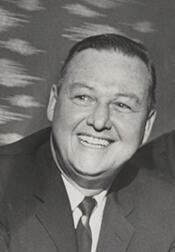
Here you will find contact information for Representative Armistead Inge Selden, including email address, phone number, and mailing address.
| Name | Armistead Inge Selden |
| Position | Representative |
| State | Alabama |
| District | 5 |
| Party | Democratic |
| Status | Former Representative |
| Term Start | January 3, 1953 |
| Term End | January 3, 1969 |
| Terms Served | 8 |
| Born | February 20, 1921 |
| Gender | Male |
| Bioguide ID | S000232 |
About Representative Armistead Inge Selden
Armistead Inge Selden Jr. (February 20, 1921 – November 14, 1985) was a segregationist U.S. Representative from Alabama who served eight consecutive terms in the United States House of Representatives from 1953 to 1969. A member of the Democratic Party during his congressional career, he later switched parties in 1979 to become a Republican. His years in Congress coincided with a pivotal era in American political and social history, particularly in the areas of civil rights and foreign policy, and he played a prominent role in both the domestic resistance to desegregation and the shaping of U.S. policy in the Western Hemisphere.
Selden was born in Greensboro, Hale County, Alabama, where he attended the public schools and graduated from Greensboro High School in 1938. He went on to the University of the South in Sewanee, Tennessee, receiving his degree in 1942. Shortly after completing his undergraduate education, he entered military service during World War II. From August 1942 until March 1946 he served in the United States Navy, spending approximately thirty-one months aboard ship, primarily in the North Atlantic theater. He was discharged with the rank of lieutenant and later held the rank of lieutenant commander in the United States Naval Reserve. After the war, Selden pursued legal studies at the University of Alabama School of Law, from which he graduated in 1948.
In 1948 Selden was admitted to the bar and commenced the practice of law in his hometown of Greensboro, Alabama. His entry into elective politics came soon thereafter. He was elected to the Alabama House of Representatives, serving in the state legislature in 1951 and 1952. This early legislative experience at the state level provided him with a platform and political base that facilitated his move to national office.
Selden was elected as a Democrat to the Eighty-third Congress and was reelected to the seven succeeding Congresses, serving from January 3, 1953, to January 3, 1969, as a Representative from Alabama. During these eight terms in the House of Representatives, he participated actively in the legislative process and represented the interests of his constituents during a period marked by the Cold War abroad and the civil rights movement at home. He was a signatory to the 1956 Southern Manifesto, which opposed the desegregation of public schools mandated by the Supreme Court’s decision in Brown v. Board of Education. Consistent with his segregationist stance, he voted against the Civil Rights Acts of 1957, 1960, 1964, and 1968, as well as against the 24th Amendment to the U.S. Constitution, which abolished the poll tax in federal elections, and the Voting Rights Act of 1965.
In addition to his domestic positions, Selden was influential in foreign affairs. He served on the United States House Committee on Foreign Affairs and headed the now-defunct House Inter-American Affairs Committee, where he became a key figure in shaping U.S. policy toward Latin America and the Caribbean. Following the Cuban Revolution led by Fidel Castro, Selden played a role in the passage of the United States embargo against Cuba announced on October 19, 1960, and in the diplomatic efforts that culminated in Cuba’s expulsion from the Organization of American States on January 31, 1962. He also represented the United States at the 1967 inauguration of Nicaraguan President Anastasio Somoza. Selden chose not to seek reelection to the House in 1968 and instead ran unsuccessfully for the Democratic nomination for the United States Senate from Alabama, losing in the primary to former Lieutenant Governor James Allen. After leaving Congress, he resumed the practice of law until October 1970.
Selden returned to federal service in the executive branch during the 1970s. He served as Principal Deputy Assistant Secretary of Defense for International Security Affairs from October 1970 to February 1973, a position in which he was involved in defense and security policy during a period that included the later stages of the Vietnam War and evolving U.S. security relationships. He was subsequently appointed U.S. Ambassador to New Zealand, Fiji, the Kingdom of Tonga, and Western Samoa, serving in these diplomatic posts from 1974 to 1979. In 1979 he formally changed his party affiliation from Democrat to Republican. The following year he sought the Republican nomination for the United States Senate from Alabama in the 1980 election but was unsuccessful.
In his later years, Selden remained active in international and commercial affairs. From 1980 to 1985 he served as president of the American League for Exports and Security Assistance, an organization involved in promoting U.S. exports and related security interests. He maintained residences in Greensboro, Alabama, and Falls Church, Virginia. Selden died of cancer in Birmingham, Alabama, on November 14, 1985, and was interred in Greensboro City Cemetery in his hometown. His legacy in Alabama is also marked by the A.I. Selden Dam, built in 1958 on the Black Warrior River, which bears his name.