Representative Artemas Ward
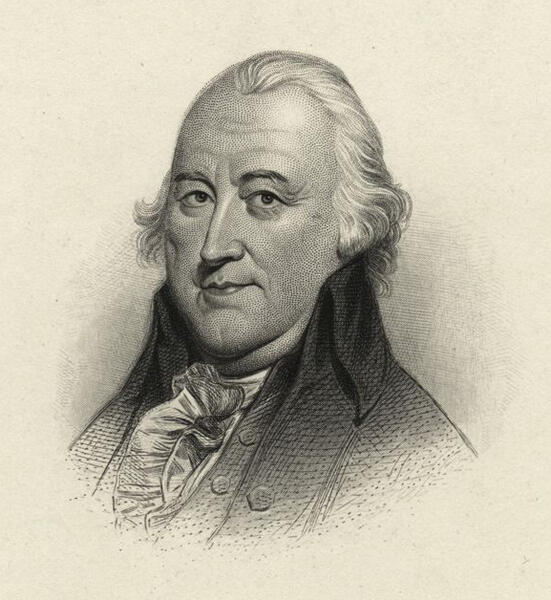
Here you will find contact information for Representative Artemas Ward, including email address, phone number, and mailing address.
| Name | Artemas Ward |
| Position | Representative |
| State | Massachusetts |
| District | 2 |
| Party | Unknown |
| Status | Former Representative |
| Term Start | October 24, 1791 |
| Term End | March 3, 1795 |
| Terms Served | 2 |
| Born | November 26, 1727 |
| Gender | Male |
| Bioguide ID | W000127 |
About Representative Artemas Ward
Artemas Ward (November 26, 1727 – October 28, 1800) was an American major general in the American Revolutionary War and a Congressman from Massachusetts. He served as a Representative from Massachusetts in the United States Congress from 1791 to 1795, completing two terms in the House of Representatives during a formative period in the early federal government. Widely regarded as an effective political and military leader, he was described by President John Adams as “universally esteemed, beloved, and confided in by his army and his country.”
Ward was born in Shrewsbury, in the Province of Massachusetts Bay, on November 26, 1727, the sixth of seven children of Nahum Ward (1684–1754) and Martha (Howe) Ward. His father pursued a broad and successful career as a sea captain, merchant, land developer, farmer, lawyer, and jurist, providing the family with both economic stability and social standing in colonial Massachusetts. Ward attended local common schools and, like his brothers and sisters, was instructed by a private tutor. He entered Harvard College and graduated in 1748, remaining there for a short period as a teacher. On July 31, 1750, he married Sarah Trowbridge (December 3, 1724 – December 13, 1788), daughter of Reverend Caleb Trowbridge and Hannah Trowbridge of Groton, Massachusetts. The couple settled in Shrewsbury, where Ward opened a general store. Over the next fifteen years they had eight children: Ithamar (born 1752), Nahum (1754), Sara (1756), Thomas (1758), Martha (1760), Artemas Jr. (1762), Maria (1764), and Henry Dana (1768).
Ward’s public career began early. In 1751, at the age of 23 or 24, he was appointed a township assessor for Worcester County, the first in a long succession of public offices. In 1752 he was commissioned a justice of the peace and elected to the Massachusetts provincial assembly, known as the General Court, beginning a legislative career that would span both the colonial and revolutionary eras. During the French and Indian War, between 1755 and 1757, he alternated periods of active militia service with attendance at the General Court. In 1755 the Massachusetts militia was reorganized, and Ward was appointed a major in the 3rd Regiment, which drew its companies largely from Worcester County and served primarily as a garrison force along the western Massachusetts frontier. In 1757 he was promoted to colonel of the 3rd Regiment of the militias of Middlesex and Worcester counties. The regiment joined General James Abercrombie’s 1758 expedition against Fort Ticonderoga, but Ward himself was sidelined during the campaign by an “attack of the stone,” a painful kidney or bladder ailment.
By 1762 Ward had returned permanently to Shrewsbury and was appointed to the Court of Common Pleas, adding judicial responsibilities to his legislative and military roles. In the General Court he emerged as a prominent critic of British imperial policy. Serving on the taxation committee with Samuel Adams and John Hancock, he was, on the floor of the assembly, second only to James Otis in speaking out against acts of Parliament. His growing prominence and opposition to royal authority led Governor Francis Bernard to revoke his military commission in 1767. In 1768, when Ward was again elected to the assembly from Worcester, Bernard voided the election results and barred him from taking his seat, but these measures did not diminish Ward’s influence among his constituents or within the burgeoning patriot movement.
As tensions with Britain escalated, Ward’s leadership in the provincial militia became central to the movement toward open rebellion. On October 3, 1774, the 3rd Regiment resigned en masse from Crown service and marched to Shrewsbury to inform Ward that they had unanimously elected him their leader. Later that month, the royal governor dissolved the General Court, and the towns of Massachusetts responded by creating a colony-wide Committee of Safety. One of the committee’s first acts was to appoint Ward as general and commander-in-chief of the colony’s militia. Following the Battles of Lexington and Concord on April 19, 1775, colonial forces pursued the British back to Boston and began the Siege of Boston, cutting off land access to the city. Ward initially directed operations from his sickbed in Shrewsbury, later moving his headquarters to Cambridge. The provisional governments of New Hampshire and Connecticut soon placed their forces participating in the siege under his command. His principal efforts during this period involved organizing the disparate militia units and securing adequate supplies.
In May 1775 additional British troops arrived in Boston by sea, and in June Ward learned of their plan to seize the Charlestown heights. He ordered the fortification of Bunker Hill, setting in motion the events that led to the Battle of Bunker Hill on June 17, 1775. Tactical command during the battle devolved upon General Israel Putnam and Colonel William Prescott, but Ward remained overall commander of the besieging forces. On the same day as the battle, the Continental Congress, in the process of creating the Continental Army, commissioned Ward a major general and appointed him second in command to General George Washington. He was one of the original four major generals of the Continental Army, along with Charles Lee, Philip Schuyler, and Israel Putnam. Over the ensuing months he played a key role in transforming the assembled New England militia into a more unified Continental force. After the British evacuated Boston on March 17, 1776, Washington moved the main army to New York, and Ward assumed command of the Eastern Department, a post he held until March 1777, when deteriorating health compelled him to resign his army commission.
Even while engaged in military duties, Ward continued to serve in civil office. He sat as a state court justice in 1776 and 1777, and from 1777 to 1779 he served as President of the Massachusetts Executive Council, effectively acting as governor before the ratification of the Massachusetts Constitution in 1780. He was continuously elected to the Massachusetts House of Representatives from 1779 through 1785 and was chosen Speaker of the House in 1785, underscoring his stature as a leading figure in state politics. In 1780 and 1781 he was appointed a delegate to the Continental Congress, participating in the national deliberations that guided the closing years of the Revolutionary War and the early Confederation period.
With the establishment of the federal government under the Constitution, Ward sought a seat in the United States House of Representatives. After an unsuccessful candidacy in 1788, he was elected as a Representative from Massachusetts and served in the United States Congress from 1791 to 1795, completing two terms in office. Although party alignments were still forming and he is listed in the existing record as a member of an “Unknown Party,” his service coincided with the early Federalist–Anti-Federalist divide. During his tenure he contributed to the legislative process in the 2nd and 3rd Congresses and represented the interests of his Massachusetts constituents at a time when the new federal institutions were taking shape. He was one of only nine representatives to vote against the final passage of the Eleventh Amendment to the United States Constitution, reflecting his independent judgment on questions of federal jurisdiction and state sovereignty.
Ward spent his later years in Shrewsbury, where he remained a respected elder statesman. His wife, Sarah, died on December 13, 1788, and Ward himself died at his home on October 28, 1800. He was buried alongside her in Mountain View Cemetery in Shrewsbury. His lifelong home, built by his father Nahum around the time of Artemas’s birth, survived as a family property and is now preserved as the Artemas Ward House, a museum maintained by Harvard University at 786 Main Street in Shrewsbury, open to the public during limited summer hours. His descendants continued to achieve distinction; his great-grandson Artemas Ward authored The Grocer’s Encyclopedia, published in 1911.
Ward’s memory has been honored in several ways. The town of Ward, Massachusetts, incorporated in 1778 in his honor, was renamed Auburn in 1837 after the U.S. Post Office complained that “Ward” was too easily confused with the nearby town of Ware. In Washington, D.C., Ward Circle, a traffic circle at the intersection of Nebraska and Massachusetts Avenues in Northwest, contains a statue of Ward and is bordered on three sides by property of American University. His great-grandson donated more than four million dollars to Harvard University on the condition that the university erect a statue in Ward’s honor and maintain his Shrewsbury home. Harvard’s initial 1927 offer of $50,000 was sufficient to fund a statue but not an equestrian monument. The statue at Ward Circle was ultimately unveiled on November 3, 1938, by Ward’s great-great-great-granddaughter, Mrs. Lewis Wesley Feick. American University subsequently named the Ward Circle Building, home of its School of Public Affairs, in his honor, further cementing the legacy of a soldier, jurist, and legislator who played a central role in the founding era of the United States.