Senator Arthur Brown
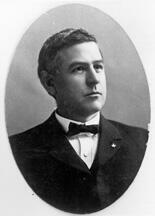
Here you will find contact information for Senator Arthur Brown, including email address, phone number, and mailing address.
| Name | Arthur Brown |
| Position | Senator |
| State | Utah |
| Party | Republican |
| Status | Former Representative |
| Term Start | January 1, 1896 |
| Term End | March 3, 1897 |
| Terms Served | 1 |
| Born | March 8, 1843 |
| Gender | Male |
| Bioguide ID | B000902 |
About Senator Arthur Brown
Arthur Brown, formally known as Arthur Brown (American politician), was born on March 8, 1843, in Schoolcraft, Kalamazoo County, Michigan. Raised in the American Midwest during a period of rapid territorial expansion and political realignment, he came of age in the years leading up to and during the Civil War. His early life in Michigan exposed him to the evolving debates over federal authority, states’ rights, and national development that would later shape his legal and political outlook. Although details of his family background are relatively sparse in the historical record, his subsequent academic and professional achievements indicate a household that valued education and civic engagement.
Brown pursued higher education at the University of Michigan in Ann Arbor, where he studied law. He graduated from the law department in the 1860s, entering the legal profession at a time when the nation was grappling with Reconstruction and the legal consequences of the Civil War. His legal training at one of the leading institutions in the Midwest provided him with a solid grounding in constitutional and statutory law, which would serve as the foundation for his later work as an attorney and political figure. After his admission to the bar, he began practicing law, initially in the Midwest, honing his skills as a courtroom advocate and counselor.
In the ensuing years, Brown moved westward, eventually settling in the Utah Territory, where he established himself as a prominent attorney. By the late nineteenth century, Utah was in the midst of a complex transition from territorial status to prospective statehood, with contentious issues surrounding federal authority, polygamy, and the integration of the territory into the broader political and economic life of the United States. Brown, a member of the Republican Party, became active in territorial politics and legal affairs, gaining recognition for his professional abilities and his alignment with national Republican positions favoring closer federal oversight and eventual statehood for Utah. His reputation as a capable lawyer and party loyalist positioned him as a leading figure in the territory’s emerging political class.
When Utah was admitted to the Union as the 45th state on January 4, 1896, Brown was selected as one of its first United States Senators. In accordance with the political arrangements of the time, he had actually begun serving slightly earlier, in 1895, as Utah organized its representation in anticipation of statehood, and he continued in office until 1897. A Republican, he served one term in the United States Senate, representing the interests of his new state during a formative period in its relationship with the federal government. His tenure coincided with a significant era in American history marked by industrial expansion, debates over monetary policy, and the consolidation of western states into the national political framework.
During his service in Congress from 1895 to 1897, Brown participated in the legislative process as Utah’s representative in the upper chamber, contributing to debates and votes that affected both his state and the nation. As a senator, he took part in the democratic process at a time when the country was addressing issues such as economic regulation, the lingering aftereffects of the Panic of 1893, and questions of western development and infrastructure. While he did not emerge as a dominant national figure, his role was nonetheless important in giving Utah a voice in federal deliberations during its earliest years of statehood. He worked within the Republican caucus and helped to integrate Utah’s concerns—ranging from mining and land policy to transportation and settlement—into the broader legislative agenda.
After leaving the Senate in 1897, Brown returned to private life and resumed his legal career, maintaining his status as a well-known attorney in Utah. His later years, however, were overshadowed by personal difficulties and scandal, including a tumultuous domestic life that drew public attention and ultimately affected his reputation. Despite these personal controversies, he remained a figure of historical significance as one of Utah’s earliest federal legislators and as part of the generation that oversaw the transition of the Intermountain West from territorial administration to full participation in the Union.
Arthur Brown’s life came to a tragic end on December 12, 1906, in Washington, D.C. He died at the age of 63, closing a career that had spanned law, territorial politics, and service in the United States Senate. Interred in Mount Olivet Cemetery in Salt Lake City, Utah, he is remembered primarily for his role as a Republican senator from Utah during the crucial years 1895 to 1897. His career illustrates the opportunities and challenges faced by political leaders in newly admitted western states and underscores the importance of legal and political expertise in shaping the early course of statehood and representation in the national legislature.