Senator Arthur Capper
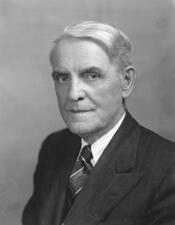
Here you will find contact information for Senator Arthur Capper, including email address, phone number, and mailing address.
| Name | Arthur Capper |
| Position | Senator |
| State | Kansas |
| Party | Republican |
| Status | Former Representative |
| Term Start | May 19, 1919 |
| Term End | January 3, 1949 |
| Terms Served | 5 |
| Born | July 14, 1865 |
| Gender | Male |
| Bioguide ID | C000133 |
About Senator Arthur Capper
Arthur Capper (July 14, 1865 – December 19, 1951) was an American newspaper publisher, broadcasting entrepreneur, and Republican politician from Kansas who served as the twentieth governor of Kansas from 1915 to 1919 and as a United States senator from Kansas for five consecutive terms from 1919 to 1949. He was the first native-born Kansan to become governor of the state and became one of its most enduring political figures in the first half of the twentieth century. Over the course of three decades in the Senate, he participated actively in the legislative process during a significant period in American history, representing the interests of his Kansas constituents through World War I, the Great Depression, World War II, and the early Cold War.
Capper was born in Garnett, Kansas, and attended the public schools there. As a young man he learned the art of printing, a skill that launched him into a lifelong career in journalism and publishing. Entering the newspaper business, he eventually became a prominent newspaper publisher in Topeka, Kansas. He acquired and developed a number of publications, including the Topeka Daily Capital, which he published, as well as the North Topeka Mail and the Kansas Breeze, which later merged to form the Farmers Mail and Breeze. Over time his publishing interests expanded to include the Missouri Valley Farmer, Capper’s Weekly, Nebraska Farm Journal, Missouri Ruralist, Oklahoma Farmer, and The Household Magazine. His best-known publication, Capper’s Weekly, achieved an enormous readership among farm families throughout the Midwest and became the principal base of his political support in Kansas. The Capper name remained associated with rural journalism for decades, with Capper’s continuing as a bimonthly magazine focused on rural living.
In addition to his print enterprises, Capper became an early figure in broadcasting. He owned the Capper Building in Topeka and established radio interests that paralleled his print operations. He owned WIBW in Topeka, one of Kansas’s pioneering radio stations, and at one point controlled two radio stations as part of his broader media network. These combined publishing and broadcasting ventures gave him a powerful platform in Kansas public life and helped shape his image as a spokesman for agricultural and rural concerns.
Capper’s public career began before he held elective office, when he served as president of the Board of Regents of Kansas State Agricultural College (now Kansas State University) from 1910 to 1913. In that role he was closely involved in the governance of one of the state’s principal institutions of higher education, particularly important to agricultural research and extension. He first entered electoral politics in 1912 as the Republican candidate for governor of Kansas. Drawing on the reputation he had built through his newspapers and on his family connection as the son-in-law of former Kansas governor Samuel J. Crawford, he mounted a strong campaign but was defeated by Democrat George H. Hodges. Undeterred, Capper ran again in 1914 and was elected governor, taking office in 1915. He won reelection in 1916 and served two full terms as governor from 1915 until 1919, becoming the first native Kansan to hold the office. Under the Kansas Constitution he was not permitted to seek a third consecutive term.
With his gubernatorial service ending, Capper turned to national office. In 1918 he ran successfully for the United States Senate as a Republican and took his seat in March 1919. He would remain in the Senate until January 1949, serving five full six-year terms and making him one of Kansas’s longest-serving senators. During his thirty years in the Senate, he was particularly identified with agricultural policy and rural issues. He served at various times as chairman of the Committee of Expenditures in the Department of Agriculture and the Committee on Agriculture and Forestry, positions from which he influenced federal farm programs and oversight of agricultural agencies. He also chaired the Committee on Claims and the Committee on the District of Columbia. In the latter capacity he played a crucial role in the establishment of the D.C. Alley Dwelling Authority in 1934, the first housing authority in the United States, aimed at improving substandard housing in the nation’s capital.
Capper’s legislative record reflected both his agricultural focus and the complexities of his era. He co-sponsored the Capper–Volstead Act, a landmark measure that gave agricultural producers the legal framework to form cooperatives without running afoul of antitrust laws, thereby strengthening the bargaining position of farmers in the marketplace. At the same time, his career included controversial episodes. In 1923 he introduced a proposed constitutional amendment that contained an anti-miscegenation provision outlawing mixed-race marriages. After protests from African American organizations, he had the offending passage struck from the proposal, later characterizing it as an unnecessary troublemaker. The withdrawal was eased by the fact that Capper himself had not drafted the language; it had been prepared by the attorney for the American Federation of Women’s Clubs. During the New Deal era, he was among those Republicans who, despite their party affiliation, supported certain relief efforts and other policies of President Franklin D. Roosevelt’s administration, especially where they affected farmers and rural communities.
Capper’s stance on foreign policy evolved against the backdrop of interwar and World War II debates. In April 1943, British scholar Isaiah Berlin, in a confidential analysis of the Senate Foreign Relations Committee prepared for the British Foreign Office, described Capper as a “solid, stolid, 78-year-old reactionary from the corn belt,” characterizing him as the voice of Midwestern “grass root” isolationism and a newspaper proprietor adept at “contriving to sit on the fence and keep both ears on the ground at the same time.” Berlin grouped him with senators who were unwavering opponents of many of the Roosevelt administration’s foreign policies, including reciprocal trade agreements. Despite advancing age and increasing deafness—by the mid-1940s his hearing was severely impaired and his speech difficult to understand—Capper remained active in Senate work. He became chairman of the Senate Committee on Agriculture in 1946. Remarkably, in 1947, at the age of 82 and as the oldest member of Congress, he joined the Congressional Flying Club and began taking flying lessons from Pearle Robinson, part owner of the Hybla Valley Airport just outside Washington, D.C. He chose not to seek reelection in 1948, bringing his thirty-year Senate career to a close in January 1949.
After retiring from Congress, Capper returned to his home in Topeka, Kansas, where he continued to be involved in the newspaper publishing business and in the management of his various media and business interests. His long public life left a substantial documentary record, including a collection of his correspondence—among which are letters of complaint from inmates at Parsons State Hospital—and numerous speeches and messages from his gubernatorial and senatorial years, preserved by the Kansas State Library and the Kansas Historical Society. Arthur Capper died in Topeka on December 19, 1951. He was buried in Topeka Cemetery in a plot adjacent to that of his father-in-law, former governor Samuel J. Crawford, symbolically linking two generations of Kansas political leadership.