Representative Arthur Monroe Free
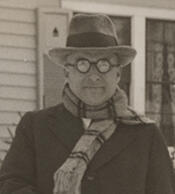
Here you will find contact information for Representative Arthur Monroe Free, including email address, phone number, and mailing address.
| Name | Arthur Monroe Free |
| Position | Representative |
| State | California |
| District | 8 |
| Party | Republican |
| Status | Former Representative |
| Term Start | April 11, 1921 |
| Term End | March 3, 1933 |
| Terms Served | 6 |
| Born | January 15, 1879 |
| Gender | Male |
| Bioguide ID | F000359 |
About Representative Arthur Monroe Free
Arthur Monroe Free (January 15, 1879 – April 1, 1953) was an American lawyer and Republican politician who served six terms as a United States Representative from California from 1921 to 1933. Over the course of his twelve years in the House of Representatives, he contributed to the legislative process during a significant period in American history, representing the interests of his constituents and participating actively in the democratic process.
Born on January 15, 1879, Free came of age in the closing decades of the nineteenth century, a time of rapid economic and social change in the United States. Details of his early childhood and family background are sparsely documented in the public record, but his subsequent educational and professional achievements indicate a formative upbringing that emphasized scholarship, civic engagement, and public service. His early life set the foundation for a career that would combine the practice of law with a sustained involvement in politics and government.
Free pursued higher education at a time when advanced study was becoming increasingly important for entry into the legal profession and public life. He studied law and was admitted to the bar, embarking on a legal career that would anchor his professional identity. As an attorney, he developed expertise in the interpretation and application of the law, experience that later informed his work as a legislator. His legal training and practice provided him with a practical understanding of statutory construction, judicial procedure, and the relationship between federal and state authority, all of which were central to the issues debated in Congress during his tenure.
Before his election to national office, Free established himself in California as a practicing lawyer and engaged citizen. His professional activities in the state’s legal community helped build the reputation and connections that supported his entry into electoral politics. As California’s population and economic influence grew in the early twentieth century, opportunities expanded for lawyers and civic leaders to move into public office, and Free emerged from this environment as a candidate aligned with the Republican Party’s priorities of the era, including business development, infrastructure, and a strong national government.
Free was elected as a Republican to the United States House of Representatives and served six consecutive terms from 1921 to 1933, a period that spanned the administrations of Presidents Warren G. Harding, Calvin Coolidge, and Herbert Hoover. Representing California in the House, he participated in deliberations on domestic and international issues in the aftermath of World War I, during the economic expansion of the 1920s, and at the onset of the Great Depression. As a member of the House of Representatives, Arthur Monroe Free contributed to the legislative process, took part in committee work, and helped shape federal policy affecting both his state and the nation. He represented the interests of his constituents in California, engaging in debates over economic policy, public works, and the evolving role of the federal government in American life.
During his congressional service, Free’s work reflected the responsibilities of a representative from a rapidly developing western state. California’s growth in agriculture, industry, and urbanization created demands for federal investment in transportation, water resources, and other infrastructure, and Free’s tenure coincided with broader national discussions about modernization and regulation. Serving through six terms, he gained seniority and experience, which enhanced his influence within the House and allowed him to advocate more effectively for his district’s needs. His service concluded in 1933, as the country transitioned into the New Deal era under President Franklin D. Roosevelt, marking the end of his direct role in federal legislative affairs.
After leaving Congress, Free returned to private life and the practice of law, drawing on his combined experience as an attorney and former member of the House of Representatives. His post-congressional years were spent away from the national spotlight, but his earlier public service remained part of the institutional memory of California’s representation in Washington. Arthur Monroe Free died on April 1, 1953, closing a life that had spanned from the Gilded Age through two world wars and the early Cold War, and leaving a record of service as a lawyer-legislator who represented California in the United States Congress for more than a decade.