Senator Arthur Robinson Gould
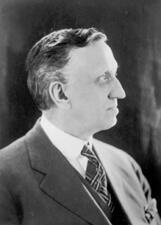
Here you will find contact information for Senator Arthur Robinson Gould, including email address, phone number, and mailing address.
| Name | Arthur Robinson Gould |
| Position | Senator |
| State | Maine |
| Party | Republican |
| Status | Former Representative |
| Term Start | November 30, 1926 |
| Term End | March 3, 1931 |
| Terms Served | 1 |
| Born | March 16, 1857 |
| Gender | Male |
| Bioguide ID | G000340 |
About Senator Arthur Robinson Gould
Arthur Robinson Gould (March 16, 1857 – July 24, 1946) was an American industrialist and Republican politician who represented Maine in the United States Senate from 1926 to 1931. Over the course of a long career in business and public life, he became a prominent figure in the development of northern Maine’s transportation and power infrastructure and played a visible role in national debates over immigration and Prohibition during the interwar period.
Gould was born in Corinth, Penobscot County, Maine, on March 16, 1857. He attended the common schools of Corinth and pursued further study at East Corinth Academy, receiving the basic education typical of rural New England in the mid-nineteenth century. As a young man he left his native town for Bangor, Maine, a regional commercial center, where he opened a candy factory. While living in Bangor he met Mary Frances Donovan, whom he later married, establishing a family connection that would remain rooted in Maine even as his business interests expanded.
In 1887 Gould moved with his wife to Presque Isle, in Aroostook County, then an area of rapid economic growth tied to lumbering and agriculture. There he entered the lumber business and quickly diversified his activities into related industrial and transportation ventures. He built power plants and became involved in the development of hydroelectricity, reflecting the broader turn at the time toward electrification in rural and small-town America. Recognizing the importance of reliable transportation to the region’s economy, he also promoted and constructed an electric railroad. Gould served as president of the Aroostook Valley Railroad from its early years in 1902 until his death in 1946, overseeing its operation as a key link between communities in northern Maine and neighboring New Brunswick, Canada. His enterprises in lumber, railroads, and hydroelectric power made him one of the leading industrial figures in Aroostook County and across the border in New Brunswick from the 1880s onward.
Gould’s prominence in business led naturally to involvement in public affairs, and he entered state politics in the early 1920s. A member of the Republican Party, he was elected to the Maine Senate and served from 1921 to 1922. In that capacity he gained experience in legislative work and developed a reputation as a representative of the interests of northern Maine, particularly its transportation and resource-based industries. His state-level service positioned him for higher office at a time when the Republican Party dominated Maine politics and when questions of economic development, immigration, and Prohibition were central to public debate.
On September 13, 1926, Gould was elected as a Republican to the United States Senate to fill the vacancy caused by the death of Senator Bert M. Fernald. He took his seat on November 30, 1926, and served one term, remaining in office until March 3, 1931. His tenure in Congress coincided with a significant period in American history, encompassing the later years of the Roaring Twenties and the onset of the Great Depression. As a senator, he participated in the legislative process and represented the interests of his Maine constituents, particularly those in the industrial and agricultural sectors of Aroostook County. During the 71st Congress he served as chairman of the Senate Committee on Immigration, placing him at the center of national deliberations over immigration policy in the years following the restrictive quota laws of the 1920s. Although he had publicly supported the Eighteenth Amendment before entering the Senate, favoring the maintenance of the constitutional ban on the manufacture, sale, or transportation of alcohol, he became nationally known while in office for writing in favor of the legalization of wine and beer, reflecting the growing movement toward modification and eventual repeal of Prohibition. He chose not to be a candidate for renomination in 1930 and concluded his Senate service at the end of his term in March 1931.
After leaving Congress, Gould returned to his business interests in Presque Isle, continuing to oversee his various enterprises, particularly the Aroostook Valley Railroad, of which he remained president until 1946. He maintained his role as a leading industrialist in northern Maine and continued to be identified with the region’s economic development, especially in transportation and power. His later years were spent largely in Presque Isle, where he had long been a central figure in civic and commercial life.
Arthur Robinson Gould died at his home in Presque Isle, Maine, on July 24, 1946. He was interred at Mount Pleasant Cemetery in Bangor, Maine, alongside his wife, Mary Frances Donovan Gould. His career left a lasting imprint on the industrial and political history of Maine, linking the growth of Aroostook County’s infrastructure with the broader currents of national policy in the early twentieth century.