Senator Arthur Peronneau Hayne
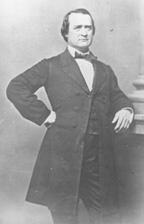
Here you will find contact information for Senator Arthur Peronneau Hayne, including email address, phone number, and mailing address.
| Name | Arthur Peronneau Hayne |
| Position | Senator |
| State | South Carolina |
| Party | Democratic |
| Status | Former Representative |
| Term Start | January 1, 1858 |
| Term End | March 3, 1859 |
| Terms Served | 1 |
| Born | March 12, 1788 |
| Gender | Male |
| Bioguide ID | H000397 |
About Senator Arthur Peronneau Hayne
Arthur Peronneau Hayne (March 12, 1788 – January 7, 1867) was a United States senator from South Carolina and a member of the Democratic Party whose career spanned military service, law, diplomacy, and state and national politics. Born in Charleston, South Carolina, he was the son of William Hayne, a lowcountry planter, and Elizabeth Peronneau, and was of English and French Huguenot descent. He grew up in a prominent South Carolina family that would produce several notable public figures, including his younger brother Robert Young Hayne, who later served as governor and U.S. senator and gained national fame in the Webster–Hayne debate over states’ rights in 1830. Arthur Hayne was also a cousin of Isaac Hayne, executed by the British during the American Revolution, and an uncle of the poet and editor Paul Hamilton Hayne.
Hayne pursued classical studies in his youth and initially engaged in business before turning to a military career. He began his service in 1807, and after the attack on the frigate Chesapeake he secured a commission as first lieutenant in a regiment of light dragoons commanded by Colonel Wade Hampton, a distinguished veteran of the Revolutionary War. In 1809 he was sent by Hampton to the Mississippi Territory, an assignment that helped establish his later military and political connections in the Southwest. During these early years he laid the foundation for a long association with frontier and southern military affairs that would shape his public life.
During the War of 1812, Hayne served in several important theaters of operation. He fought at Sackets Harbor on Lake Ontario, where he was brevetted major for gallantry in action, and subsequently served as a major of cavalry on the St. Lawrence River. He accompanied General James Wilkinson in the contemplated attack on Montreal and also served under General Jacob Brown. By 1814 he had risen to the position of inspector general, with orders to join General Andrew Jackson in the Creek Nation. In the absence of Colonel Butler he also acted as adjutant general. Jackson dispatched him to Fort Montgomery to organize forces for an attack on Pensacola, then held by the British and Spanish. In the storming of Pensacola, Hayne was among the first officers to seize an enemy battery under heavy fire, and after the city’s fall he was placed in charge of its administration. In the famous Battle of New Orleans, he selected the site for Jackson’s defensive line and played a significant role in organizing the defenses that repulsed the British assault and secured the city. Following the battle, Jackson sent him to Washington to obtain additional troops for New Orleans, unaware that the war had effectively ended. Over the course of the conflict Hayne was three times brevetted for bravery and was ultimately brevetted lieutenant colonel for gallant conduct at New Orleans.
After the War of 1812, Hayne continued his military and public service. He studied law in Carlisle, Pennsylvania, under the Hon. Thomas Duncan, who later served as a justice of the Supreme Court of Pennsylvania from 1817 to 1827 and who would become Hayne’s father-in-law. Hayne was admitted to the bar and practiced law, while also participating in subsequent military operations. He served in the Florida War as commander of the Tennessee Volunteers, further extending his experience in frontier and southern campaigns, and retired from active military service in 1820. His combination of legal training, military distinction, and family connections positioned him for broader roles in public life.
In South Carolina, Hayne entered state politics and diplomacy. He served as a member of the South Carolina House of Representatives, participating in the legislative affairs of his home state during a period of growing sectional tension. He was later appointed United States naval agent in the Mediterranean, a post he held for five years, overseeing naval supply and administrative matters abroad. At one point he declined an offer to serve as ambassador to Belgium, choosing instead to remain in other lines of service. These roles reflected both his standing within the Democratic Party and the confidence placed in him by national leaders.
Hayne’s service in the United States Congress came late in his life and during a significant period in American history. A member of the Democratic Party, he was appointed to the United States Senate from South Carolina to fill the vacancy caused by the death of Senator Josiah J. Evans. He served from May 11, 1858, to December 2, 1858, completing one brief term in office. During this period he contributed to the legislative process, participated in the deliberations of the Senate, and represented the interests of his South Carolina constituents as the nation moved closer to the sectional crisis that would culminate in the Civil War. He did not stand as a candidate to fill the vacancy beyond his appointed term and left the Senate at the close of that service.
Hayne’s personal life reflected his ties to influential legal and planter families in both the North and South. He married Frances Gibson Duncan, daughter of Justice Thomas Duncan of Carlisle, Pennsylvania, and Frances Gibson, and thus became connected by marriage to John Bannister Gibson, long-serving chief justice of the Pennsylvania Supreme Court. After the death of his first wife, Hayne married Elizabeth Laura Alston, daughter of William Alston of Charleston, further strengthening his links to prominent South Carolina families. His only surviving child, Frances Duncan Hayne, married Lloyd James Beall, a former United States Army officer from Maryland who sided with the Confederate States of America and served as commandant of the Confederate States Marine Corps.
Arthur Peronneau Hayne spent his later years in Charleston, where he remained a respected figure by virtue of his long military record, legal training, and brief but notable service in the United States Senate. He died in Charleston on January 7, 1867. He was interred in St. Michael’s Churchyard in Charleston, South Carolina, a burial place shared by many of the city’s leading figures, thus closing a life that connected the Revolutionary generation, the War of 1812, antebellum politics, and the tumultuous era leading into the Civil War.