Senator Arthur Harry Moore
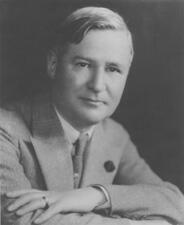
Here you will find contact information for Senator Arthur Harry Moore, including email address, phone number, and mailing address.
| Name | Arthur Harry Moore |
| Position | Senator |
| State | New Jersey |
| Party | Democratic |
| Status | Former Representative |
| Term Start | January 3, 1935 |
| Term End | January 3, 1939 |
| Terms Served | 1 |
| Born | July 3, 1877 |
| Gender | Male |
| Bioguide ID | M000893 |
About Senator Arthur Harry Moore
Arthur Harry Moore (July 3, 1877 – November 18, 1952) was an American attorney and Democratic politician who served three nonconsecutive three-year terms as governor of New Jersey (1926–1929, 1932–1935, and 1938–1941) and one term as a United States Senator from New Jersey from 1935 to 1939. He is regarded as the longest-served modern governor of New Jersey and the only one elected to three terms. A central figure in the state’s early twentieth-century Democratic organization, particularly in alliance with Jersey City mayor Frank Hague, Moore played a prominent role in New Jersey’s response to Prohibition, the Great Depression, and the early New Deal era, and contributed to the legislative process during his single term in Congress.
Moore was born in the Lafayette section of Jersey City, New Jersey, on July 3, 1877, to Robert White Moore and Martha (née McCoomb) Moore, who were of Scots-Irish descent. Known by the nickname “Red,” he attended local public schools but left formal schooling at about age thirteen to work as a clerk. Determined to continue his education, he studied in his spare time at the Cooper Union in New York City, where he developed skills in bookkeeping and typing that aided his early career. His oratorical ability emerged at a young age, and in local political circles he became known as “the boy orator of Lafayette,” a reputation that helped launch him into public life.
Moore’s political career began in Jersey City’s Democratic organization. He became active in local politics and, in 1907, when his longtime friend H. Otto Wittpenn was elected mayor of Jersey City, Moore entered City Hall as Wittpenn’s personal secretary. Following the death of Hudson County Democratic leader Robert Davis in 1911, Moore advanced to the post of city collector, deepening his involvement in municipal administration and party affairs. In 1913, Jersey City adopted the commission form of government, and Moore successfully ran for one of the inaugural seats on the new five-member governing body. As director of Parks and Public Property, he promoted recreational facilities and opportunities for city youth, with particular attention to handicapped children. His advocacy in this area later culminated in the establishment of the A. Harry Moore School in Jersey City in 1931, one of the first schools in the United States designed specifically to meet the needs of handicapped children.
During this period, Moore forged a durable political alliance with fellow commissioner Frank Hague, an alliance that would shape both men’s rise to statewide influence. After Wittpenn’s unsuccessful run for governor in 1916 and subsequent retirement from politics, Hague ran for mayor of Jersey City, and Moore led Hague’s slate of commission candidates. The Hague slate swept the municipal elections of 1917, 1921, and 1925, entrenching Hague as mayor for three decades and solidifying Moore’s position as a leading figure in Hudson County politics. At the same time, Moore pursued a legal education, attending evening classes at the New Jersey Law School in Newark (now Rutgers Law School). He passed the state bar examination in 1922 and received his LL.B. degree in 1924, thereafter practicing law while continuing his political ascent.
By the early 1920s, Moore was being discussed as a potential candidate for governor. With Hague firmly in control of the state Democratic organization, 1925 was chosen as the year to secure Moore’s nomination. In the 1925 gubernatorial election, Moore ran as an outspoken opponent of Prohibition—a “wringing wet” candidate—against Republican state senator Arthur Whitney of Morris County, who was backed by the Anti-Saloon League. Republicans also campaigned against the perceived threat of “Hagueism” in state government. Although Moore carried only three counties, his overwhelming plurality of 103,995 votes in Hudson County gave him a comfortable statewide victory, and he began his first term as governor in 1926. With Hague as his principal political benefactor, Moore made clear that he would adhere closely to the Democratic organization on appointments and patronage, remarking after the election that “in patronage matters I am strictly organization.” Nonetheless, he generally adopted a conservative approach that won a positive reception from the Republican-controlled New Jersey Senate, which held broad advice-and-consent powers over appointments.
Moore’s first gubernatorial term addressed several major policy issues. In 1927, he clashed with the legislature over how to secure adequate potable water supplies for northern New Jersey. A proponent of home rule, Moore argued that municipalities should resolve the problem themselves or through inter-municipal cooperation, while the legislature favored a constitutional amendment to create state-controlled regional water supply districts. Moore’s position ultimately prevailed in a November 1927 referendum. He and Hague also supported a constitutional amendment to authorize municipal zoning in the wake of the United States Supreme Court’s decision in Village of Euclid v. Ambler Realty Co.; the amendment was ratified by the voters, establishing a framework for local land use control. In transportation policy, Moore oversaw reforms led by his eventual successor Morgan F. Larson, including the creation of a new highway construction program. Although he favored modernization, Moore vetoed a gasoline tax bill to fund the program as an excessive burden on taxpayers; the measure was later enacted along with a $30 million bond issue. During his tenure, New Jersey’s physical connections to New York City were significantly expanded, with the dedication of the Holland Tunnel, Goethals Bridge, and Outerbridge Crossing, and the commencement of construction on the George Washington Bridge, in cooperation with New York governor Al Smith. Concerned about rising crime and disorder, especially in nightclubs, Moore called for expansion of the state police force, founded in 1921. He also became nationally visible through his involvement in the sensational Hall–Mills murder case, appointing Alexander Simpson as special prosecutor in 1926; Simpson’s failure to secure convictions was widely viewed as an embarrassment to the state administration.
Barred by New Jersey’s constitution from seeking a second consecutive term, Moore left office in 1929. The Hague machine suffered a setback when Republican Morgan F. Larson was elected governor that year, aided by national Republican strength under presidential candidate Herbert Hoover. However, the onset of the Great Depression soon after left Republicans in full control of state government and bearing much of the political blame for the economic collapse. During Larson’s administration, Moore maintained a high public profile through an active speaking schedule, involvement in fraternal organizations, and a weekly radio program on WOR. By the end of 1930, he had reestablished himself as the leading Democratic contender for the governorship. In the 1931 election, Moore ran a polished campaign that emphasized patriotic and religious themes and employed anecdotal, emotional appeals. He sharply criticized President Hoover and Governor Larson for the state’s economic distress, while Republicans again warned against “Hagueism.” Moore won a decisive victory, carrying all but four counties and securing a record plurality of 230,053 votes with 57.8 percent of the statewide vote.
Moore’s second term as governor, beginning in 1932, was dominated by the challenges of the Great Depression. He maintained a fiscally conservative philosophy, advocating reductions or postponements of expenditures to allow local governments and the private sector to recover. The 1932 legislature granted him broad discretionary authority to curb spending, and by 1934 he had reduced state appropriations from $34.5 million to $20.7 million. He cut funding for state programs, particularly highway construction, in order to prioritize municipal aid and direct relief to the unemployed and impoverished. This approach brought him into philosophical conflict with President Franklin D. Roosevelt’s New Deal, which emphasized increased public spending and expanded federal regulatory authority. Although Moore was wary of the New Deal’s growing welfare-state components, he worked vigorously to ensure that New Jersey received its share of federal public works projects and relief funds. He sought, with limited success, to use the crisis to reorganize state and local government, proposing reforms to the court system, a home rule constitutional amendment, stronger executive control over the state bureaucracy, and the adoption of a sales or income tax as a permanent revenue base. Of these initiatives, only a statute modernizing municipal finance was enacted. Moore also oversaw the implementation of New Jersey’s Alcoholic Beverage Control Commission system following the repeal of national Prohibition, aiming to preserve some regulatory elements of the earlier regime. His administration confronted two highly publicized disasters: the 1932 kidnapping and murder of Charles A. Lindbergh Jr., son of aviator Charles Lindbergh and grandson of the late U.S. Senator Dwight Morrow, and the 1934 fire and sinking of the SS Morro Castle off the New Jersey coast, during which Moore personally directed rescue efforts from Perth Amboy.
While serving his second gubernatorial term, Moore was persuaded by Hague to run for the United States Senate in 1934. Despite a generally strong year for New Jersey Republicans, which included the election of Harold G. Hoffman as Moore’s successor in the governorship, Moore won the Senate seat and entered Congress in 1935 as a Democrat. His service in the Senate, which lasted from 1935 to 1939, coincided with a pivotal period in American history marked by the deepening New Deal and rising international tensions. As a member of the Senate, Moore participated in the legislative process and represented the interests of New Jersey constituents, focusing especially on securing federal projects and funding for his home state. Nonetheless, he found his years in Washington largely unsatisfying, referring to the Senate as “a cave of winds.” Ideologically conservative on fiscal and regulatory matters, he was often uncomfortable as a partisan supporter of the expanding New Deal. He cast notable dissenting votes, including opposition to the Social Security Act—he was the only Democrat to vote against it—as well as against the public utility holding company bill and the 1935 amendments to the Agricultural Adjustment Act. He also opposed President Roosevelt’s 1937 Judicial Procedures Reform Bill, commonly known as the court-packing plan. Throughout his Senate tenure, Moore concentrated on channeling federal resources to New Jersey, including support for major public works such as the Jersey City Medical Center and Roosevelt Stadium.
In 1937, while still serving in the Senate, Moore accepted Hague’s invitation to seek a third term as governor. He resigned his Senate seat before the end of his term, stepping down in 1938 to assume the governorship once again. His Republican opponent in the 1937 gubernatorial election was Reverend Lester H. Clee of Essex County, a relative of Moore’s by marriage. Despite their personal connection, the campaign was bitter and hard-fought. Moore defended himself against charges that he was hostile to the New Deal and to President Roosevelt, and he ultimately prevailed, again relying heavily on a large plurality from Hudson County. Allegations of voter fraud emerged from the election and cast a shadow over his final term. Hague used his influence to block various court actions and legislative investigations into the conduct of the election. In 1940, when a United States Senate investigating committee attempted to reopen the matter, it found that the Hudson County poll books had been destroyed by fire, effectively foreclosing further inquiry. Moore’s third term, running from 1938 to 1941, thus unfolded amid ongoing controversy over electoral integrity as well as continued debates over the scope of government intervention in economic and social affairs on the eve of World War II.
Arthur Harry Moore left office in 1941 at the conclusion of his third gubernatorial term, having established a record unmatched in modern New Jersey history for longevity in the state’s highest office. In his later years, he remained a prominent figure in New Jersey Democratic circles and in Jersey City civic life, drawing on his long experience in law and politics. He died on November 18, 1952, closing a career that had spanned local, state, and national office and that had left a lasting imprint on New Jersey’s political and governmental development in the first half of the twentieth century.