Representative Arthur Ravenel Jr.
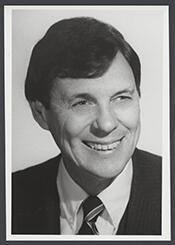
Here you will find contact information for Representative Arthur Ravenel Jr., including email address, phone number, and mailing address.
| Name | Arthur Ravenel Jr. |
| Position | Representative |
| State | South Carolina |
| District | 1 |
| Party | Republican |
| Status | Former Representative |
| Term Start | January 6, 1987 |
| Term End | January 3, 1995 |
| Terms Served | 4 |
| Born | March 29, 1927 |
| Gender | Male |
| Bioguide ID | R000072 |
About Representative Arthur Ravenel Jr.
Arthur Ravenel Jr. (March 29, 1927 – January 16, 2023) was an American businessman and Republican politician from Charleston, South Carolina, who served as a Representative from South Carolina in the United States Congress from 1987 to 1995. Over four terms in the U.S. House of Representatives, he represented South Carolina’s 1st Congressional District and contributed to the legislative process during a significant period in American political history, focusing particularly on constituent services. His long public career also included service in the South Carolina House of Representatives, multiple terms in the South Carolina Senate, and later local office on the Charleston County school board.
Ravenel was born on March 29, 1927, in Charleston, South Carolina, to Arthur Ravenel Sr. and Mary Allen Boykin. Raised in the Lowcountry, he came of age during the Great Depression and World War II, experiences that shaped his early sense of public service and civic responsibility. During the waning days of World War II, he enlisted in the United States Marine Corps, serving from 1945 to 1946. After his military service, he returned to Charleston and pursued higher education, reflecting an early commitment to professional advancement and community leadership.
In 1950, Ravenel received a Bachelor of Science degree from the College of Charleston. Following his graduation, he entered the private sector as a realtor and general contractor. His work in real estate and construction placed him at the center of Charleston’s postwar growth and development, giving him practical experience with issues of land use, infrastructure, and economic expansion that would later inform his legislative priorities. His business career ran in parallel with his early political activity and helped establish his reputation as a pragmatic, locally focused public figure.
Ravenel’s political career began in the Democratic Party. First elected at age 25, he served as a Democratic member of the South Carolina House of Representatives from 1953 to 1959. In 1960, amid shifting political alignments in the South, he became a Republican. Over the next two decades he ran repeatedly for public office, experiencing both setbacks and eventual success. He lost elections for the South Carolina State Senate in 1962, 1974, and 1976, for the United States House of Representatives in a 1971 special election, and for mayor of Charleston in 1971. These defeats did not end his political ambitions, and he remained a persistent figure in state and local politics.
Ravenel achieved a major breakthrough in 1980, when he was elected as a Republican to the South Carolina Senate. He served in the state Senate from 1980 until 1986, building a base of support in the Charleston area and gaining experience in state-level policymaking. In 1986, he successfully ran for the U.S. House of Representatives from South Carolina’s 1st District, a Charleston-based seat that became open when incumbent Republican Tommy Hartnett ran for lieutenant governor. Taking office in January 1987, Ravenel served four consecutive terms in Congress, from 1987 to 1995. During his tenure in the House of Representatives, he participated in the democratic process on national issues while placing particular emphasis on constituent services, rarely sponsoring major legislation but maintaining strong ties to his district. He was reelected three times without serious opposition, reflecting his popularity at home. In 1994, he chose not to run for reelection to Congress and instead sought the Republican nomination for governor of South Carolina. He finished second in the primary to then–State Representative David Beasley and lost the subsequent runoff; Beasley, regarded as more conservative than Ravenel, went on to win the general election.
After leaving Congress, Ravenel returned to state politics. In 1996, he was elected again to his old seat in the South Carolina Senate, where he served until 2005. During this period, he became closely associated with one of the state’s most significant infrastructure projects: the construction of a new bridge between Charleston and Mount Pleasant to replace the aging John P. Grace Memorial Bridge and Silas N. Pearman Bridge. Ravenel said he had run for the state Senate in 1996 specifically to secure funding for this new bridge, as the existing structures were nearing the end of their useful lives and had been widely criticized as safety hazards. Through his efforts in passing legislation to finance the project, he played a central role in advancing the construction of what would become a landmark cable-stayed bridge over the Cooper River. In recognition of his leadership on the project, fellow lawmakers voted to name the structure the Arthur Ravenel Jr. Bridge. The decision generated some controversy, with critics arguing that the bridge should not be named for a sitting legislator. The head of the South Carolina Infrastructure Bank remarked in 1999 that the bridge should “reflect all the qualities of the state and not some state senator who happens to be in the Legislature the time the structure is being built.” Ravenel himself made light of the dispute, later joking, after being diagnosed with a serious illness, that he might die to the satisfaction of “those people who say you shouldn’t name things after people before they’re dead.”
In his later years, Ravenel remained active in public life. In 2006, at the age of 79, he staged a political comeback by being elected to a seat on the Charleston County school board, only a year after suffering a bout of Guillain–Barré syndrome. In the same election, his son Thomas Ravenel, also a Republican, was elected state treasurer of South Carolina; the younger Ravenel resigned from that office after only six months following serious legal allegations. Arthur Ravenel was also known for his membership in Moultrie Camp of the Sons of Confederate Veterans and for his support of the Confederate flag being flown at the South Carolina statehouse. His statements on race and civil rights drew significant criticism. In 2000, in response to a reporter’s question, he referred to the NAACP as the “National Association for Retarded People.” When asked to apologize, Ravenel, who had a son with Down syndrome, offered an apology specifically to those with mental conditions rather than to the organization. On another occasion, he remarked that his fellow white congressional committee members operated on “black time,” which he characterized as meaning “fashionably late.” Decades later, his public image again drew scrutiny when, in August 2020, several episodes of the reality television series “Southern Charm,” including one featuring Ravenel, were removed from streaming and video-on-demand services over “racially charged moments.” In the episode in which he appeared, Ravenel left a $5 tip at a restaurant and told his son Thomas that he liked “to get rid” of $5 bills because Abraham Lincoln is on the front, then looked at the camera and smiled wryly.
Arthur Ravenel Jr. died in Charleston on January 16, 2023, at the age of 95. He was buried in the cemetery of the Huguenot Church in Charleston, closing a long life that spanned military service, business enterprise, and more than half a century of engagement in South Carolina and national politics.