Senator Arthur Vivian Watkins
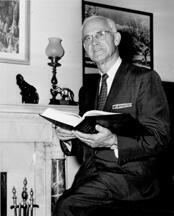
Here you will find contact information for Senator Arthur Vivian Watkins, including email address, phone number, and mailing address.
| Name | Arthur Vivian Watkins |
| Position | Senator |
| State | Utah |
| Party | Republican |
| Status | Former Representative |
| Term Start | January 3, 1947 |
| Term End | January 3, 1959 |
| Terms Served | 2 |
| Born | December 18, 1886 |
| Gender | Male |
| Bioguide ID | W000190 |
About Senator Arthur Vivian Watkins
Arthur Vivian Watkins (December 18, 1886 – September 1, 1973) was a Republican U.S. Senator from Utah who served two terms in the United States Senate from January 3, 1947, to January 3, 1959. During this significant period in American history, he participated actively in the legislative process and represented the interests of his Utah constituents as a member of the Republican Party. His Senate career was marked by his influential role in federal Indian policy, his leadership in the censure proceedings against Senator Joseph McCarthy, and his support for early civil rights legislation, including his vote in favor of the Civil Rights Act of 1957.
Watkins was born on December 18, 1886, in Midway, Wasatch County, Utah Territory, into a Latter-day Saint family. He grew up in rural Utah at a time when the territory was transitioning toward statehood and integration into the broader political and economic life of the United States. His early life in a predominantly Mormon community shaped his religious convictions and outlook, including his later views on Native American policy, which he sometimes framed in explicitly religious terms. As he later wrote in connection with what he termed the “Indian problem,” he believed that past federal policies had been gravely mistaken and that “the time has come for us to correct some of these mistakes and help the Indians stand on their own two feet and become a white and delightsome people as the Book of Mormon prophesied they would become,” adding that he saw the Gospel of Jesus Christ as the “motivating factor” in this transformation.
Watkins pursued higher education in Utah and studied law, preparing for a professional career in the legal field. As a young man, he served as a missionary for the Church of Jesus Christ of Latter-day Saints in New York. During this missionary service he met Andrea Rich, whom he later married in Salt Lake City on June 18, 1913. The couple had six children. His missionary experience on the East Coast exposed him to national political and social currents beyond Utah and reinforced his belief in the importance of English-language education and self-sufficiency, themes that would later appear in his approach to public policy. After returning to Utah, he completed his legal training, was admitted to the bar, and began practicing law, establishing himself in his profession and in local civic life.
Before his election to the Senate, Watkins built a career that combined law, public service, and party activity. Practicing as an attorney in Utah, he became involved in Republican Party politics and held various legal and governmental roles that brought him into contact with state and federal issues. His work as a lawyer and his engagement in civic affairs helped cultivate a reputation for diligence and procedural fairness, qualities that later contributed to his selection for sensitive assignments in the Senate. By the mid-1940s, he had become a prominent Republican figure in Utah, positioned to seek higher office as the post–World War II political landscape took shape.
Watkins entered the United States Senate after winning election as a Republican from Utah and took office on January 3, 1947. He served two consecutive terms, remaining in the Senate until January 3, 1959. His tenure coincided with the early Cold War, the Korean War, the rise of McCarthyism, and the beginnings of the modern civil rights movement. As a senator, he participated in the democratic process through committee work, floor debates, and the sponsorship and support of legislation affecting both Utah and the nation. He was particularly influential in shaping federal policy toward American Indian tribes. Convinced that tribal peoples should be assimilated into mainstream American society, he became a leading proponent of terminating federal recognition of certain tribes and abrogating treaty rights, arguing that such measures would encourage self-reliance and integration, even as these policies proved highly controversial and had lasting consequences for Native communities.
One of Watkins’s most notable assignments in the Senate came in 1954, when he chaired the special committee that bore his name, commonly referred to as the Watkins Committee, which was charged with examining the conduct of Senator Joseph McCarthy of Wisconsin. McCarthy had gained national prominence by making extensive allegations of communist infiltration of the federal government, the military, and cultural institutions, including art groups. Under Watkins’s chairmanship, the committee investigated McCarthy’s behavior, including his refusal to appear before the Subcommittee on Privileges and Elections to answer questions about his personal character and his general obstruction of that panel’s work during its 1951–1952 investigation of him. The committee also considered McCarthy’s public attacks on fellow senators, specifically his charging three members of the Select Committee with “deliberate deception” and “fraud” for not disqualifying themselves, and his statement to the press on November 4, 1954, that the special Senate session scheduled to begin November 8, 1954, was a “lynch-party.” Acting on the committee’s recommendations, the Senate on December 2, 1954, voted 67 to 22 to “condemn” McCarthy on both counts. All Democrats present voted in favor of condemnation, while Republicans were divided; Senator John F. Kennedy of Massachusetts, hospitalized for back surgery, was absent and did not indicate how he would have voted. The censure marked a decisive turning point in the decline of McCarthy’s influence, and Watkins’s role as chair placed him at the center of one of the era’s most consequential institutional rebukes of a sitting senator.
In domestic policy, Watkins aligned with mainstream Republican positions of his time but also supported certain measures that expanded federal protections of individual rights. Notably, he voted in favor of the Civil Rights Act of 1957, the first federal civil rights legislation enacted since Reconstruction. The act sought to protect voting rights for African Americans, particularly in the South, and created the Civil Rights Division in the Department of Justice and the U.S. Commission on Civil Rights. Watkins’s support for the legislation placed him among those senators willing to endorse incremental federal action on civil rights during a period of intense regional and partisan division over the issue. He continued to advocate for what he saw as moral and social uplift in various policy areas, including his controversial efforts to reshape federal Indian policy along assimilationist lines.
After losing his bid for a third term in 1958, Watkins left the Senate in January 1959 and returned to private life in Utah. He remained engaged in civic and religious activities and continued to be regarded as an influential elder statesman within Utah’s Republican and Latter-day Saint communities. His personal life was marked by both long-standing family ties and later-life change. His first wife, Andrea Rich Watkins, with whom he had six children, died on March 1, 1972. Later that year, he married Dorothy Eva Watkins in Salt Lake City, and the couple relocated to Orem, Utah. In his later years he continued to reflect on the intersection of his religious beliefs and public service, including his long-standing interest in the spiritual and material condition of Native Americans.
Arthur Vivian Watkins died on September 1, 1973, in Orem, Utah. His career in the United States Senate from 1947 to 1959 left a complex legacy, encompassing his central role in the censure of Joseph McCarthy, his advocacy of termination and assimilation policies toward American Indian tribes, and his support for early federal civil rights legislation. As a senator from Utah, he contributed to the legislative process during a transformative period in American political and social history, and his record continues to be studied for its impact on congressional oversight, minority rights, and federal–tribal relations.