
On This Page
Flip phones may feel old-fashioned compared to modern smartphones, but they are still widely used today for simplicity, long battery life, and easier calling experiences.
Some users switch to flip phones intentionally to avoid distractions, while others keep them as backup devices, travel phones, or emergency communication options.
At the same time, many people become confused about network compatibility and SIM setup when using older-style phones again.
So, do flip phones have SIM cards? Can I just put my SIM in a flip phone? These questions have become more common as wireless networks continue changing toward LTE, 5G, and eSIM technology.
Find out how flip phones work with modern SIM cards to avoid activation problems before switching devices or carriers!
1. Do Flip Phones Use SIM Cards?
Yes, most modern flip phones still use SIM cards for connecting to wireless networks.
It also depends partly on the phone’s age and network technology.
Older flip phones from many years ago sometimes relied on different carrier activation systems instead of removable SIM cards. However, most newer LTE-compatible flip phones now use nano SIM or micro SIM cards similarly to smartphones.
Some newer flip phones may also support:
- LTE calling
- VoLTE service
- Limited hotspot functionality
- Basic internet access
Modern carrier-supported flip phones are usually much more compatible with current SIM technology than older 2G or 3G devices.
While older carrier-locked models sometimes used different activation systems, most newer devices connected to LTE networks now support removable SIM cards normally, which is why do flip phones have SIM cards usually has a yes answer on current models.
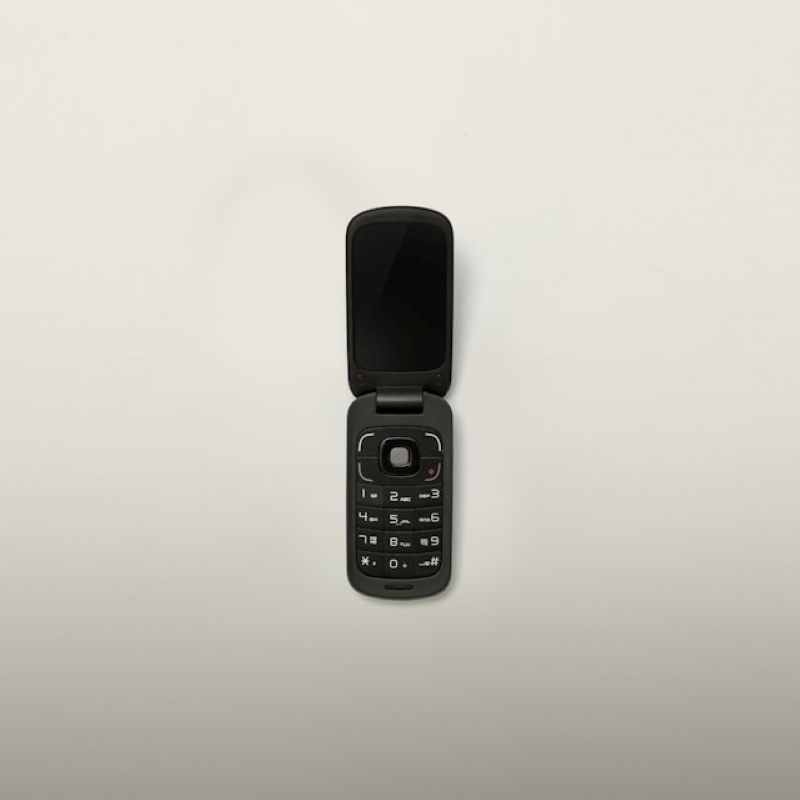
Older flips phones usually do not support eSIMs. (Image by Unsplash)
2. Where Is the SIM Card on a Flip Phone?
The location of a SIM card depends on the phone model and manufacturer. On many flip phones, the SIM card slot is usually located:
- Underneath the battery cover
- Beside the battery compartment
- Behind the removable back panel
Some newer flip phones may place the SIM tray along the phone edge similarly to smartphones, but battery-compartment placement remains more common on traditional flip phone designs.
Users typically need to:
- Power the phone off completely
- Remove the back cover carefully
- Remove the battery if necessary
- Insert the SIM into the labeled SIM slot
Because many flip phones use removable batteries, accessing the SIM card is often simpler than on modern sealed smartphones.
3. Can You Put Your Current SIM Card Into a Flip Phone?
Another reason people search “do flip phones have SIM cards” is because some flip phones now support VoLTE and even limited mobile data access, making them more compatible with modern wireless networks than many users expect.
In many situations, yes. A current SIM card may work inside a compatible flip phone if both the phone and carrier support the same network technology.
However, successful activation still depends on several compatibility factors.
When Switching SIM Cards Usually Works?
Moving a SIM card into a flip phone often works smoothly when:
- The phone is carrier unlocked
- The SIM size matches properly
- The carrier supports the device
- The flip phone supports LTE or VoLTE
Many users are usually able to make calls and send texts successfully if the phone supports the same carrier network.
Some newer flip phones are specifically designed for LTE calling, modern SIM compatibility, and current wireless carrier support, which makes switching easier than many users expect.
Problems That May Prevent Compatibility
Not every flip phone works correctly with modern SIM cards.
Compatibility problems may happen because:
- The phone only supports older 2G or 3G networks
- The carrier no longer supports the device
- VoLTE is unavailable
- The phone is carrier locked
- The SIM size does not fit properly
4. Why Some Flip Phones No Longer Work on Certain Networks?
Why are SIM cards being phased out? Many older flip phones stopped functioning properly after U.S. carriers began shutting down older 2G and 3G networks.
The Federal Communications Commission (FCC) explains that many carriers retired older network technologies to expand LTE and 5G infrastructure.
As a result, some older flip phones may still physically accept SIM cards but remain unable to:
- Place calls reliably
- Connect to LTE networks
- Support VoLTE calling requirements
This network transition also explains why SIM cards might be phased out even though the real change often involves older network technologies rather than SIM cards disappearing completely.
In reality, many carriers are moving more toward eSIM activation and LTE/5G-only device support instead of removing SIM functionality altogether.
5. Choosing the Right Flip Phone & SIM Carrier
A flip phone can still work well today, but choosing the right model matters much more than it did years ago.
Many older flip phones were designed before LTE and VoLTE became standard, which means some devices can no longer connect properly even if the SIM card still fits physically. Because of that, users looking for a reliable flip phone should focus on newer LTE-compatible models instead of older 2G or 3G devices.
- Apple iPhone SE: a compact iPhone option with eSIM support, simple navigation, and long-term iOS updates
- Samsung Galaxy A14 5G: suitable for users who want a larger display, strong battery life, and modern LTE/5G compatibility
- Motorola Moto G Stylus: a straightforward Android device with a simple interface and reliable everyday performance
- TCL 50 XE 5G: an entry-level option for users upgrading from older phones to LTE or 5G networks
- SIM card activation
- Monthly talk, text, and data plans
- LTE and 5G-ready devices
- BYOD support
- eSIM-compatible phones on supported models
The application process generally starts by checking eligibility, entering a ZIP code to confirm local availability, selecting a compatible device or plan, uploading verification documents, and activating service after approval.
Available devices, supported features, SIM options, and monthly data amounts may vary by state and may change over time depending on inventory availability.
Start your application online and get the best free phone services now.
Final Thoughts
The answer to “do flip phones have SIM cards” is yes for most modern flip phones currently designed for LTE networks.
However, not every older flip phone remains compatible with today’s wireless infrastructure. Network shutdowns, VoLTE requirements, and carrier restrictions may still prevent some older devices from functioning properly even when a SIM card fits physically.
Even though newer eSIM devices are becoming more common, do flip phones have SIM cards remains highly relevant because many LTE-compatible flip phones still rely on physical nano SIM cards for activation today.
Checking carrier compatibility, LTE support, and SIM requirements before switching devices can help avoid activation issues while making flip phones much easier to use on modern wireless networks.