
On This Page
Does iPhone 8 have eSIM? If you’re still using this older device, you may be wondering whether it supports modern connectivity features like digital SIM cards.
In this post, you will learn which models support eSIM, and whether switching to an eSIM can save you money, especially when traveling internationally.
1. Does iPhone 8 have eSIM?
Unfortunately, the iPhone 8 does not have eSIM capability. It was released in 2017, before Apple began integrating embedded SIM (eSIM) hardware into its smartphones.
This model relies exclusively on a physical nano-SIM card for cellular service. Because it lacks the necessary internal hardware components, you cannot activate a digital plan or add an eSIM through a software update.
Apple first introduced eSIM support in 2018 with the release of the iPhone XS, XS Max, and XR.
All subsequent models, including the iPhone 11 through the latest iPhone 16 and 17 series, support eSIM technology.
2. How Do I Enable eSIM on My iPhone 8?
You cannot enable eSIM on an iPhone 8 because it lacks the necessary internal hardware to support digital SIM technology. Apple only began including eSIM chips in models released in 2018, starting with the iPhone XS, XS Max, and XR.
If you need a second phone line on an iPhone 8, you would have to use an external hardware solution, such as a Bluetooth-based Dual SIM adapter or a specialized case like the E-Clips Box. These accessories allow you to connect a second SIM externally, though Apple does not officially support them.
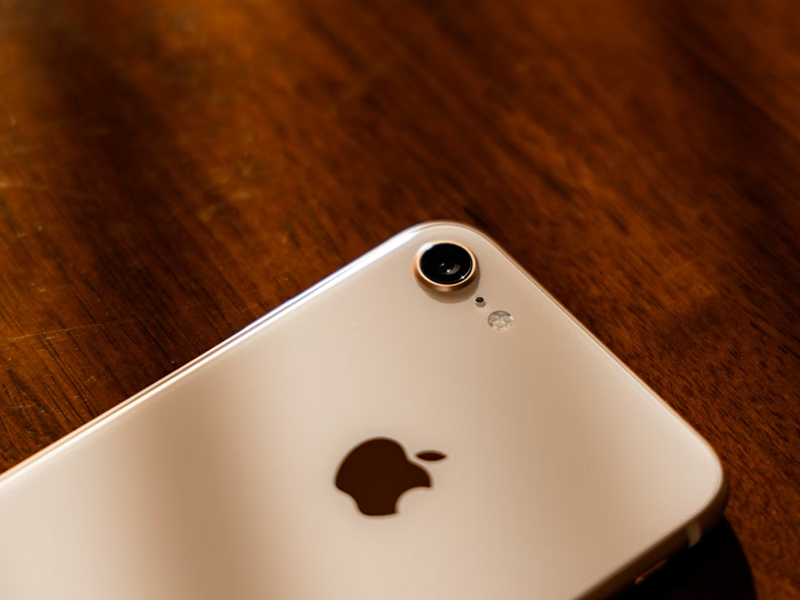
You can’t enable eSIM on an iPhone 8 (Image by Unsplash)
3. Comparing Modern Tech: Which iPhones are eSIM Only?
When comparing modern tech, it is important to understand how cellular connectivity has evolved. While many users ask, does iPhone 8 have eSIM, the answer is no; that model relies entirely on a physical SIM card.
Key eSIM-Only iPhone Models
Currently, the iPhone 14 series, iPhone 15 series, and the iPhone 16 series are eSIM-only, but only for models purchased in the United States. This includes all versions: the standard, Plus, Pro, and Pro Max models.
Internationally, these same models still include a physical SIM tray alongside eSIM support. This means if you buy an iPhone 15 in the UK or Canada, it is not “eSIM only,” whereas the same device bought in a US Apple Store will lack a physical slot.
Important Notes
To use an eSIM-only iPhone, your carrier must support eSIM Quick Transfer or provide a digital activation code (QR code). Most major carriers and many budget-friendly MVNOs now support this technology, making the transition from a physical card relatively seamless.
One major benefit of these models is the ability to store multiple digital profiles, allowing you to switch between different data plans or international roaming packages without swapping tiny pieces of plastic. However, if you travel to a region with limited eSIM infrastructure, you may need to rely on a roaming plan from your primary provider.
4. Travel & Savings: Are eSIMs Cheaper Than Roaming?
Yes, for most travelers, eSIMs are significantly cheaper than traditional international roaming. Standard roaming passes from major U.S. carriers often cost $10–$15 per day, which can result in bills exceeding $100 for a 10-day trip. In contrast, travel eSIM plans can offer the same amount of data for as little as $15–$25 for an entire month.
Lifeline is a government assistance program designed to ensure that quality telecommunications services are available to low-income households at affordable prices. Eligibility is typically for those at or below 135% of the Federal Poverty Guidelines or those enrolled in programs such as Medicaid, SNAP, or SSI.
The Application Process
- **Select Your Plan: **Choose the Lifeline combination plan that best fits your needs. This is where you can see which devices are currently available for your region.
- **Provide Personal Information: **Fill out the application with your full name, address, and last four digits of your Social Security number. Remember, the Lifeline service is limited to one discount per household.
- **Upload Proof of Eligibility: **Since only eligible consumers may enroll, you must upload digital copies of documents. This typically includes a Medicaid card, a SNAP award letter, or proof of income (such as a tax return).
- **Submit and Wait for Approval: **If approved, your new device will be shipped directly to your door.
6. Frequently Asked Questions (FAQ)
Can I convert my physical SIM to eSIM on an iPhone 8?
No, the iPhone 8 cannot convert a physical SIM to an eSIM because it lacks the required hardware for eSIM functionality.
Can I use an eSIM for international travel?
Yes, eSIM is a popular choice for travelers because it allows you to quickly activate local or global data plans without swapping SIM cards.
Is eSIM better than a physical SIM?
eSIM offers more flexibility since you can store multiple plans and switch between them digitally. However, physical SIM cards may still be useful in regions where eSIM is not widely supported.
Should I upgrade from iPhone 8 to use eSIM?
If you want modern features like eSIM, better performance, and improved battery life, upgrading from the iPhone 8 to a newer iPhone is a good idea.
Final Words
So, does iPhone 8 have eSIM? No, it relies entirely on a physical SIM and cannot be upgraded to support eSIM.
If you want the flexibility of digital SIM technology, you’ll need a newer iPhone model. The good news is that eSIM-supported devices offer more convenience and can reduce roaming costs when traveling. Upgrading from an iPhone 8 may be a good move for better connectivity and savings.