
On This Page
If you are asking, does iPhone 8 have eSIM capability? It’s important to understand that this model does not include eSIM support. The iPhone 8 depends entirely on a physical nano-SIM card for cellular service and cannot activate a plan digitally. Since it was introduced before Apple added eSIM hardware to later iPhone generations, remote carrier provisioning is not possible on this device. To get connected, users must insert a compatible nano-SIM provided by their carrier.
1. Does iPhone 8 Have eSIM?
No, the iPhone 8 and iPhone 8 Plus do not support eSIM technology. Both models rely exclusively on a physical nano-SIM card for cellular connectivity and require a traditional SIM card for carrier activation.
The limitation is primarily due to hardware design and release timing. The iPhone 8 series was introduced in 2017, before Apple integrated eSIM components into its smartphones.
eSIM functionality requires dedicated embedded SIM hardware and compatible firmware, which were not built into the iPhone 8’s internal architecture. Apple later introduced eSIM support beginning with newer generations, which is why digital SIM activation is not available on the iPhone 8 lineup.
2. What SIM Type Does iPhone 8 Use?
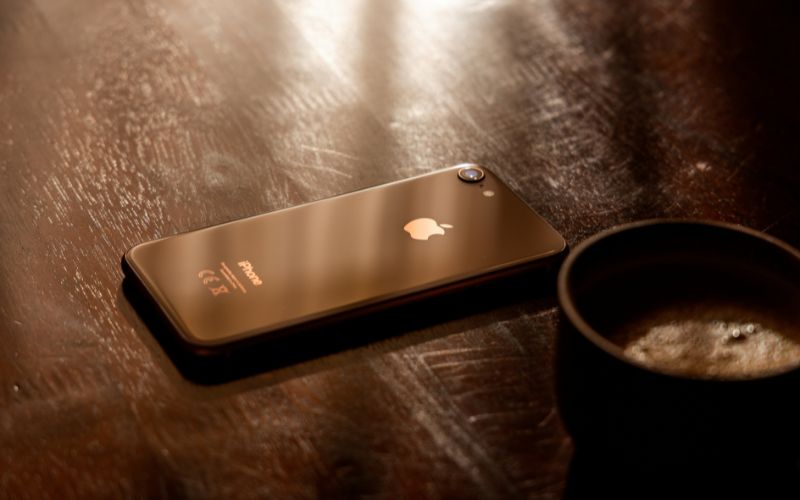
Does iPhone 8 have eSIM? You can use a Nano SIM on an iPhone 8. (Image by Unsplash)
The iPhone 8 and iPhone 8 Plus use a Nano-SIM (4FF) for cellular connectivity. They are not compatible with Micro-SIM or standard SIM cards, as those formats are physically larger and will not fit in the SIM tray. In addition, the** iPhone 8 does not support eSIM** technology, so all carrier activation must be completed using a physical SIM card.
- SIM Type: Nano-SIM (4FF)
- Tray Location: Right side of the device
The SIM tray is positioned along the right edge of the phone and can be accessed using a SIM ejector tool or a small paperclip. Always ensure the Nano-SIM is properly aligned with the notched corner before reinserting the tray to avoid connection issues.
3. Can You Use Two Phone Numbers on an iPhone 8?
Yes, you can use two phone numbers on an iPhone 8, but not through built-in eSIM functionality. If you are wondering, does iPhone 8 have eSIM? The answer is no, native Dual SIM support requires an iPhone XS, XR, or later, as those models include the necessary eSIM hardware and software integration. The iPhone 8 does not have this capability built into the device.
To use two numbers on an iPhone 8, you would need a specialized dual SIM adapter or dual SIM case, such as devices similar to Speed X-Twin 8 or SBS Second SIM-Case. These accessories allow a second SIM card to connect externally through hardware modifications or Bluetooth forwarding. However, this setup is not officially supported by Apple and may have limitations in stability, battery usage, or call management compared to true dual-SIM functionality found in newer iPhone models.
4. Thinking About Upgrading From iPhone 8? Affordable Options Below
If you’ve realized that your iPhone 8 lacks modern features like eSIM, Dual SIM flexibility, or updated performance, upgrading can noticeably improve your mobile experience. Newer iPhone models offer better connectivity, faster processing power, enhanced cameras, and support for the latest wireless technologies.
Through the Lifeline Program, eligible customers may qualify for free or discounted monthly wireless service based on federal income guidelines or participation in approved assistance programs. This government-supported benefit is designed to help individuals and families stay connected to essential services such as work, healthcare, school, and emergency communication.
Feel free to check the list of iPhone models below to find the one that suits your preferences and enjoy a smoother, more capable smartphone experience.
*Free devices available on select models. Some models may be offered at a discounted rate.
5. Final Words
For anyone asking, does iPhone 8 have eSIM functionality? It’s important to remember that this model was released before Apple introduced digital SIM technology to its smartphones. As a result, it operates exclusively with a physical nano-SIM, meaning carrier activation must be completed by inserting a traditional SIM card into the tray. While it does not offer the flexibility of remote eSIM activation or dual line management found in newer models, the iPhone 8 can still handle everyday calling, texting, and mobile data reliably.