

On This Page
Let’s be honest: braces are expensive. For many Indiana Medicaid families, the question “Does Medicaid cover braces in Indiana?” can mean the difference between getting necessary care and going without.
Orthodontic treatment typically costs thousands of dollars, which most low-income families on Medicaid simply don’t have. But when your child struggles to chew because of a severe overbite, or develops speech problems from extreme crowding, or experiences chronic jaw pain from misalignment, you know these are medical problems that affect daily life, nutrition, and even self-confidence.
Here’s what you need to know: Yes, Indiana Medicaid does cover braces, but only when your child’s orthodontic issues impact their health or function. We’ll outline the requirements and explain how to access this benefit.
1. Indiana Medicaid Dental Coverage: Does Medicaid Cover Braces in Indiana?
Indiana Medicaid operates through the Indiana Health Coverage Programs (IHCP). Dental benefits are included, but orthodontic services are handled very differently from routine cleanings or fillings.
General dental care focuses on prevention and basic treatment. Orthodontic care, however, is only covered under narrow medical guidelines. That is why so many people search, “Does Medicaid cover braces in Indiana?” and receive confusing or contradictory answers.
Does Medicaid Cover Braces in Indiana?
The truth is: Indiana Medicaid does not cover braces for cosmetic reasons. Orthodontic services are only approved when they are required to correct serious medical or structural problems involving the jaw, teeth, or facial development.
Coverage is limited to members under 21 and is available only when strict medical criteria are met.
When Are Braces Considered Medically Necessary?
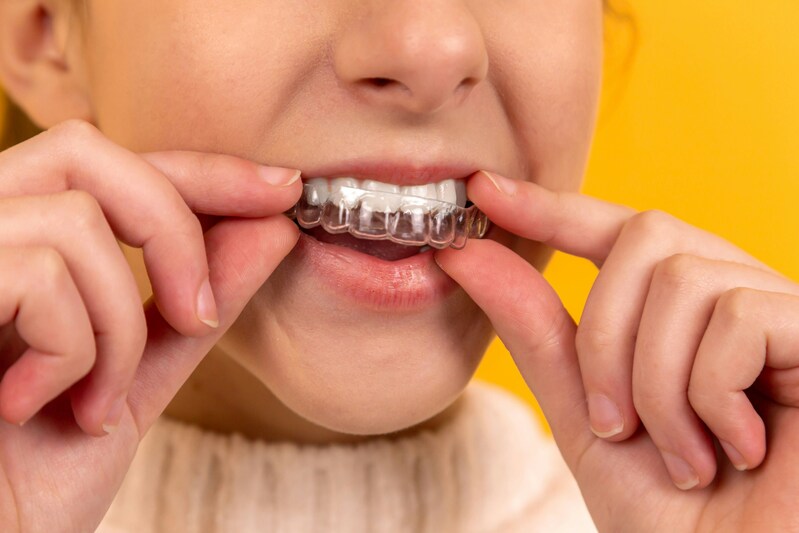
Who qualifies for orthodontic coverage under Indiana Medicaid? (Image by Unsplash)
Indiana Medicaid defines orthodontic necessity based on functional impairment and craniofacial disorders.
Braces may be considered medically necessary when they are part of treatment for conditions such as:
- Cleft lip and cleft palate
- Craniofacial syndromes such as Crouzon, Apert, or Treacher Collins
- Pierre Robin sequence
- Hemifacial microsomia
- Cleidocranial dysplasia
- Severe skeletal asymmetry
- Syndromes such as Down syndrome, when combined with serious malocclusion
Beyond diagnosis, the patient must also show moderate to severe malocclusion, such as:
- Overjet greater than 6mm
- Underbite
- Crossbite with significant discrepancy
- Open bite greater than 4mm
- Severe overbite causing tissue trauma
- Impacted or blocked tooth eruption
- Skeletal facial imbalance
Indiana Medicaid requires that these conditions be evaluated by professionals experienced in craniofacial care. That is why many routine orthodontic referrals are denied, even if teeth appear very crooked.
2. Who Qualifies for Orthodontic Coverage Under Indiana Medicaid?
To qualify, a patient must meet all major eligibility rules:
First, the patient must be under 21 years old. Indiana Medicaid does not approve orthodontic services for adults under its standard orthodontic policy.
Second, the patient must be formally diagnosed with an approved craniofacial condition or severe skeletal abnormality.
Third, the orthodontic problem must cause functional or medical complications.
Fourth, treatment must be provided by a licensed practitioner experienced in craniofacial orthodontics, often connected to a hospital-based craniofacial team.
Finally, the case must be supported by extensive medical documentation, including photographs, X-rays, and a step-by-step treatment plan.
3. Step-by-Step: How to Get Braces Approved Through Indiana Medicaid
Because orthodontic treatment is limited, approval is granted through a formal process.
The first step is obtaining an evaluation from a dentist or orthodontist familiar with Indiana Medicaid policies. If they suspect a qualifying condition, they will refer the patient for appropriate diagnostic work.
Next, a practitioner associated with craniofacial treatment evaluates the patient and establishes a medical diagnosis.
A prior authorization request is then submitted to Indiana Medicaid. This includes:
- Full diagnostic documentation
- Medical reports
- Facial and dental photographs
- Panoramic and cephalometric X-rays
- A detailed treatment plan and estimated duration
Indiana Medicaid reviews the case and determines whether it meets the orthodontic criteria. Only after formal approval can treatment begin.
4. What If Indiana Medicaid Does Not Approve Braces?
Many applications are denied because the orthodontic issue does not meet the program’s strict medical threshold. If Indiana Medicaid does not approve braces, families still have options:
- Some pursue second medical opinions, especially from craniofacial specialists.
- Others explore alternative dental treatment plans focused on function rather than orthodontics.
- Some families seek payment plans, dental schools, or nonprofit clinics for reduced-cost orthodontic services.
5. Free Phone in Indiana Through Government Assistance Program
If you qualify for Medicaid in Indiana, you could be eligible for other assistance programs designed to reduce everyday expenses.
This can make it easier to manage medical appointments, access telehealth services, and stay connected with family.
*Offers may vary and are subject to future updates.
Conclusion
So, does Medicaid cover braces in Indiana? Yes, but only in narrowly defined medical cases involving serious craniofacial or skeletal conditions, and only for members under 21.
Understanding these rules helps families approach orthodontic care realistically. Instead of relying on rumors or assumptions, reviewing official criteria and working with qualified providers gives the best chance of a successful application.