
On This Page
Does Medicaid cover DNA testing? It’s your question. Medicaid coverage has actually expanded in recent years. Every state runs its Medicaid program differently, and what’s covered in California might not be covered in Texas or New York.
Your approval depends on meeting strict medical necessity criteria, providing proper documentation from your healthcare provider, and successfully navigating the prior authorization process.
1. What Types of Genetic Testing Does Medicaid Cover?
Medicaid covers several types of genetic testing to support early diagnosis, disease prevention, and personalized care.
Does Medicaid cover DNA testing? The answer depends on medical necessity and state policy, but coverage commonly includes prenatal and newborn screening, cancer-related genetic tests, advanced genomic sequencing, and pharmacogenomic testing.
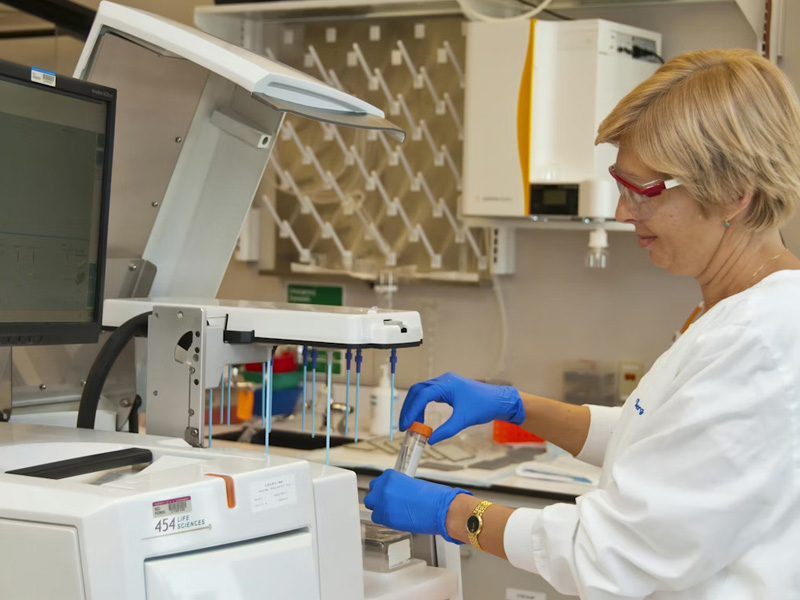
Does Medicaid cover DNA testing? (Image by Unsplash)
Prenatal & Newborn Screening
Medicaid coverage for genetic testing continues to evolve as medical science advances.
While benefits vary by state, many programs now cover a wide range of medically necessary genetic and genomic tests to support early diagnosis, disease prevention, and personalized treatment planning.
Most Medicaid programs cover fundamental prenatal tests such as amniocentesis, fetal ultrasounds, and chromosomal analysis when medically necessary due to advanced maternal age or family history.
Newborns are typically eligible for automatic coverage, which includes standard state-mandated screenings for metabolic and genetic disorders.
Cancer Genetic Testing
Medicaid often covers testing for high-risk hereditary conditions, most notably BRCA1/BRCA2 mutations (breast and ovarian cancer) and Lynch syndrome (colorectal cancer) for individuals with a strong personal or family history.
States such as Illinois have expanded coverage to include more evidence-based clinical genetic tests for inherited mutations, as recommended by healthcare professionals.
Advanced Genomic Sequencing
Coverage for advanced sequencing, such as Whole Exome Sequencing (WES) and Whole Genome Sequencing (WGS), is expanding, particularly for pediatric patients with undiagnosed rare diseases or congenital anomalies.
For families asking does Medicaid cover DNA testing, recent legislative efforts and state-specific updates, such as those in California and South Carolina, have clarified that these advanced diagnostic tools are covered under Medicaid’s Early and Periodic Screening, Diagnostic, and Treatment (EPSDT) benefit for eligible children.
Pharmacogenomics (PGx)
Pharmacogenomic testing, which analyzes how a patient’s genes affect their response to drugs, is covered by a growing number of Medicaid programs. For 2026, specific tests like AlloMap (for heart transplant rejection surveillance) have been added to coverage in states like North Carolina.
Contact your state’s Medicaid office to find out which genetic testing options may be available to you.
2. When Does Medicaid Pay for DNA Testing? (Eligibility Criteria)
Does Medicaid cover DNA testing? In most cases, Medicaid covers DNA and genetic testing when it is considered medically necessary to diagnose a specific condition or inform an active treatment strategy.
Coverage across most states requires that test results directly influence clinical decision-making, ensuring the testing has a measurable impact on patient management.
General Medical Necessity Criteria
To qualify for coverage, the testing must typically be individualized and consistent with a patient’s symptoms or a confirmed diagnosis of an illness under treatment.
It is often only covered if no equally effective, less costly, or more conservative treatment options are available to the beneficiary.
Cancer Risk and Hereditary Conditions
Most state Medicaid programs, with very few exceptions, such as Alabama, cover BRCA genetic testing for individuals with a known family mutation or a personal history of certain cancers.
Many states have also expanded coverage for Lynch syndrome mutations and other hereditary markers.
Pediatric and Newborn Screening
Newborn screening is a mandatory benefit in all states under the Early and Periodic Screening, Diagnostic, and Treatment (EPSDT) program.
Pregnancy and Prenatal Testing
DNA testing during pregnancy, such as cell-free DNA screening, is generally covered if other prenatal tests indicate a high risk for chromosomal disorders.
Coverage for expanded carrier screening for those considering pregnancy is often limited to once per lifetime and may require specific age or risk-based eligibility.
Exclusions and Common Denials
Medicaid generally does not pay for DNA testing intended solely for the “convenience” of the patient or provider. Additionally, testing used exclusively to establish paternity is typically not covered by standard Medicaid health benefits, although it may be funded through separate state child support programs.
If you are a current Medicaid recipient, you are eligible for a significant government-supported benefit: a free smartphone with free monthly service. This is made possible through the Lifeline Program, a federal initiative that ensures essential communication remains affordable for low-income individuals and families.
- Free Monthly Data: Typically, up to 30GB* of free data every month, based on your location.
- Free Smartphone: High-quality devices from brands like Apple (iPhone 8, iPhone 7) or Samsung (Galaxy S9, Galaxy A42). Models vary by state and availability.
- Unlimited Talk & Text: Stay connected with family and doctors without worrying about minutes.
- Free International Calling: Access to over 200 countries and territories (including Mexico and Canada).
- No Costs or Contracts: No monthly bills, no activation fees, and no credit checks.
- Fast & Free Shipping: Your device is shipped directly to your door at no cost.
*Offers may vary and are subject to future updates.
FAQs
What is not covered under Medicaid?
Medicaid generally does not cover DNA testing for non-medical reasons, such as paternity tests, ancestry research, or general population screenings without symptoms.
Tests considered “investigational,” repeated tests after a negative result, and multigene panels without proven medical necessity are also typically excluded from coverage.
Does Medicaid cover DNA testing for autism?
Yes, Medicaid can cover genetic testing for autism if a physician deems it medically necessary to guide treatment or management.
While coverage exists under the Early and Periodic Screening, Diagnostic, and Treatment (EPSDT) benefit, actual testing rates remain low due to varying state-specific requirements and prior authorization processes.
Can Medicaid help with genetic counseling?
Medicaid coverage for genetic counseling varies significantly by state. Many states cover counseling when it is performed by a physician or supervised by one. Some programs specifically include it for high-risk conditions like hereditary breast and ovarian cancer (BRCA), but direct reimbursement for independent genetic counselors is not yet universal.
Final Words
Whether Medicaid covers DNA testing depends largely on medical necessity, clinical guidelines, and state-specific policy.
While Medicaid increasingly covers evidence-based genetic and genomic testing, non-medical uses, such as ancestry or paternity testing, are generally excluded.
Patients who wonder, “Does Medicaid cover DNA testing?” should consult their healthcare provider and the state Medicaid program to confirm eligibility, any prior authorization requirements, and the types of tests covered to ensure appropriate access to genetic services.
Related SenGov Guides
- Does Illinois Medicaid Cover Ozempic? Coverage Rules & Eligibility
- Does Medicaid Cover Allergy Testing? Complete Coverage Guide in 2026
- Does Medicaid Cover Genetic Testing While Pregnant? Critical Coverage Rules Every Expecting Mom Should Know 2026
- Does Medicaid Cover Vasectomy 2026? Coverage Rules, Eligibility, and What to Expect