

On This Page
For people with limited mobility, stairs can quickly become a daily safety risk. Many households start looking for stair lifts after an injury, surgery, or long-term health condition, which often leads to the question does Medicaid cover stair lifts.
While Medicaid does provide support for certain mobility-related needs, stair lifts fall into a gray area that depends on how the equipment is classified and what each state program allows. Understanding where stair lifts fit within Medicaid rules, and what alternatives may exist, can help families plan safer living arrangements without relying on assumptions about coverage.
1. Does Medicaid Cover Stair Lifts
Yes, Medicaid can cover stair lifts in certain situations. However, coverage usually does not come through a standard state Medicaid plan. Instead, stair lifts are typically covered under Home and Community-Based Services (HCBS) waivers when they are considered medically necessary to help an individual remain safely in their home and avoid institutional care.
HCBS waivers are designed to support seniors and individuals with disabilities who would otherwise qualify for nursing home placement. Under these programs, states may approve home modifications such as:
- Stair lifts
- Ramps
- Bathroom safety modifications
- Widened doorways
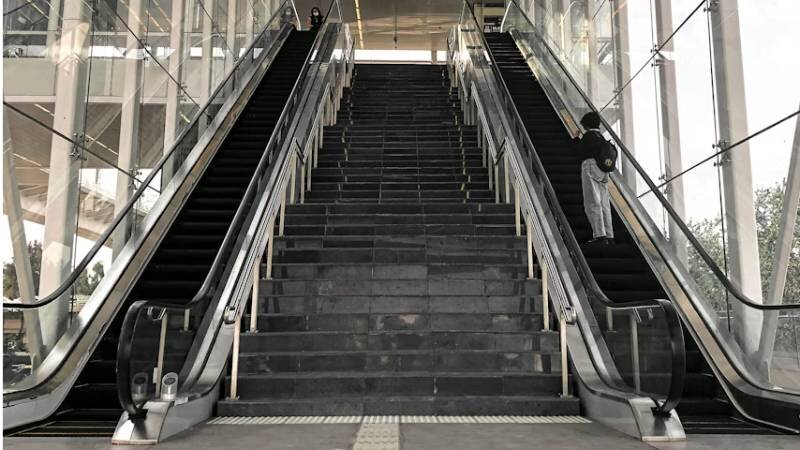
Does Medicaid cover stair lifts?(Image by Unsplash)
2. Why Stair Lifts Are Often Denied Under Traditional Medicaid Coverage
While Medicaid can cover stair lifts through HCBS waiver programs, they are typically not covered under standard state Medicaid plans. This distinction often causes confusion.
Home Modifications vs Medical Equipment
Traditional Medicaid state plans primarily cover medical services and durable medical equipment (DME). Stair lifts are usually classified as home modifications, not portable medical equipment.
Because stair lifts are permanently installed and alter the structure of a home, they do not fall under routine DME benefits. As a result, state plan Medicaid generally excludes them from automatic coverage.
Medical Necessity Alone Is Not Enough
Even if a physician determines that a stair lift reduces fall risk or improves mobility, medical necessity alone does not guarantee approval under a standard Medicaid plan.
For coverage to apply, the item must:
- Be medically necessary
- Fall within a covered benefit category
- Meet state-specific policy definitions
Under waiver programs such as HCBS, stair lifts may qualify because they are considered home accessibility modifications that prevent institutionalization. But outside of those waiver pathways, coverage is uncommon.
This is why some applicants are told stair lifts are not covered, while others receive approval through long-term care waiver programs.
3. How to Qualify for a Free Stair Lift
If you are trying to qualify for a free stair lift through Medicaid, the path is not through a standard Medicaid benefit. Instead, approval usually happens through a Home and Community-Based Services (HCBS) waiver program. That means the goal is not just proving mobility issues, but proving that the modification helps you remain safely at home and avoid institutional care.
Here is how the qualification process typically works:
Step 1: Meet Medicaid Financial Eligibility
First, you must qualify for Medicaid itself. This includes meeting your state’s income and, in many long-term care programs, asset limits. For HCBS waivers, applicants often must meet criteria similar to nursing home eligibility, even if they intend to remain at home.
Step 2: Qualify for Long-Term Care Level of Need
HCBS waivers are designed for individuals who would otherwise require institutional care. You may need to demonstrate:
- Significant mobility limitations
- High fall risk
- Difficulty accessing essential areas of your home
- Inability to safely use stairs
A formal functional assessment is usually conducted by a state caseworker or contracted evaluator.
Step 3: Demonstrate Medical Necessity
A physician or specialist typically must document that:
- The stair lift is necessary for safety
- It prevents injury or hospitalization
- It supports independence at home
- It reduces the risk of nursing home placement
Medical necessity alone is not enough under a standard plan, but it becomes critical under a waiver program.
Step 4: Show That the Modification Prevents Institutionalization
This is one of the most important criteria. Medicaid waiver programs approve home modifications when they are cost-effective compared to nursing facility care. If installing a stair lift allows you to safely access your bedroom or bathroom and remain at home, the state may determine it is financially reasonable.
Step 5: Apply Through the Correct Waiver Program
Each state has specific HCBS waivers, often with:
- Enrollment caps
- Waiting lists
- Spending limits
- Pre-approval requirements
Some states fully cover installation up to a capped amount, while others may require cost-sharing or limit modifications to essential accessibility improvements.
Step 6: Undergo Home Assessment and Approval
Before installation, most programs require:
- A home evaluation
- Contractor estimates
- Pre-authorization approval
- Verification that the stair lift meets safety standards
No installation should occur before written approval, or reimbursement may be denied.
4. Will Medicaid Pay for a Lift Chair?
Yes, Medicaid is more likely to pay for a lift chair than a stair lift, but coverage depends on how the device is classified. Lift chairs are often treated as durable medical equipment (DME) rather than a home modification, which places them in a different benefit category.
In many states, Medicaid may cover the mechanical lifting component of a lift chair if it is prescribed and considered medically necessary to help someone safely stand due to severe mobility limitations. However, Medicaid typically does not cover the full furniture cost, such as upholstery or comfort features.
The key difference comes down to classification. Stair lifts permanently modify the home and are usually only covered through HCBS waiver programs, while lift chairs may qualify under standard DME rules if state criteria are met.
5. Why Staying Connected Matters When Requesting Mobility Support
For many households, the question “does Medicaid cover stair lifts” does not end after reading policy rules. It often continues through phone calls, follow-ups, and conversations with multiple agencies. Staying connected matters because answers about stair lift coverage are rarely delivered in a single response.
Early on, communication usually determines how the question is handled. When people ask does Medicaid cover stair lifts, agencies may first need to confirm mobility limitations, living conditions, or whether the request falls under standard Medicaid benefits or a separate assistance program. These clarifications are commonly handled by phone rather than online portals, and missed communication can slow the process before it fully begins.
As requests move forward, communication becomes central to how decisions are explained. Medicaid offices, waiver programs, or housing support agencies may call to clarify why stair lifts are not covered under traditional Medicaid rules and whether alternative options exist. For many applicants, these conversations provide the first clear explanation of why Medicaid treats stair lifts differently from other mobility equipment.
In later stages, staying reachable affects what alternatives are discovered. When the answer to does Medicaid cover stair lifts is no, caseworkers often discuss other possibilities by phone, such as waiver programs, partial funding, safety modifications, or referrals to nonprofit support. These options are not always listed publicly and are frequently shared through direct communication.
Across all stages, connectivity does not change Medicaid policy, but it shapes how clearly, quickly, and completely information about stair lift coverage is delivered.
When decisions depend on timing, follow-up, and conversation rather than automated approvals, reliable connectivity supports smoother progress and a clearer understanding of next steps.
Conclusion
Understanding does Medicaid cover stair lifts helps set realistic expectations when planning mobility support at home. While Medicaid typically does not pay for stair lifts directly, knowing why coverage is limited and what alternatives exist allows individuals to explore other programs without unnecessary delays.
Staying connected throughout the process plays an important role in identifying options, responding to follow-ups, and accessing mobility support that can improve safety and independence at home.