
On This Page
How many seconds in a day is a simple question, but the answer reveals how time is structured clearly and logically. Breaking a day into hours, minutes, and seconds helps you better understand how time adds up.
This guide explains the exact number of seconds in a day, shows the step-by-step calculation, and highlights a few situations where this number can vary slightly. With a clear breakdown, the conversion becomes easy to remember and apply.
1. How Many Seconds in a Day?
The exact answer to how many seconds in a day is: 1 day = 86,400 seconds
This number comes from a simple breakdown of how time is structured. A standard day is made up of:
- 24 hours in a day
- 60 minutes in each hour
- 60 seconds in each minute
When you multiply these values together, you get: 24 × 60 × 60 = 86,400 seconds
This calculation shows how seconds build up from smaller units of time into a full day.
If you are wondering how many seconds are in a day, this number stays consistent for a normal 24-hour day. It does not change based on location, time zone, or daily routine. Whether you are in the US or anywhere else in the world, a standard day still contains 86,400 seconds.
Understanding this breakdown can be useful in many situations. For example, it helps when working with time-based data, programming, scheduling, or even fitness tracking. It also gives a clearer sense of how time is distributed throughout the day, especially when you think about how quickly seconds add up into hours.
2. Does This Change for Leap Seconds or Time Adjustments?
In most everyday situations, the answer to how many seconds in a day remains 86,400. However, there are rare cases where this number can change slightly due to adjustments in how time is measured.
One example is the use of leap seconds. Leap seconds are occasionally added to Coordinated Universal Time (UTC) to keep atomic time aligned with the Earth’s rotation. When a leap second is added, a day may contain: 86,401 seconds instead of 86,400
This does not happen often, and most people never notice it in daily life. It is mainly relevant in fields like astronomy, satellite systems, and precise timekeeping.
Another type of time adjustment involves daylight saving time. When clocks move forward or backward by one hour, it may seem like the length of a day has changed. However, this is only a shift in clock time, not an actual change in the number of seconds in a full 24-hour period.
For practical purposes, especially in everyday use, you can rely on the standard value of 86,400 seconds. The rare exceptions only matter in highly technical contexts where precise timing is critical.

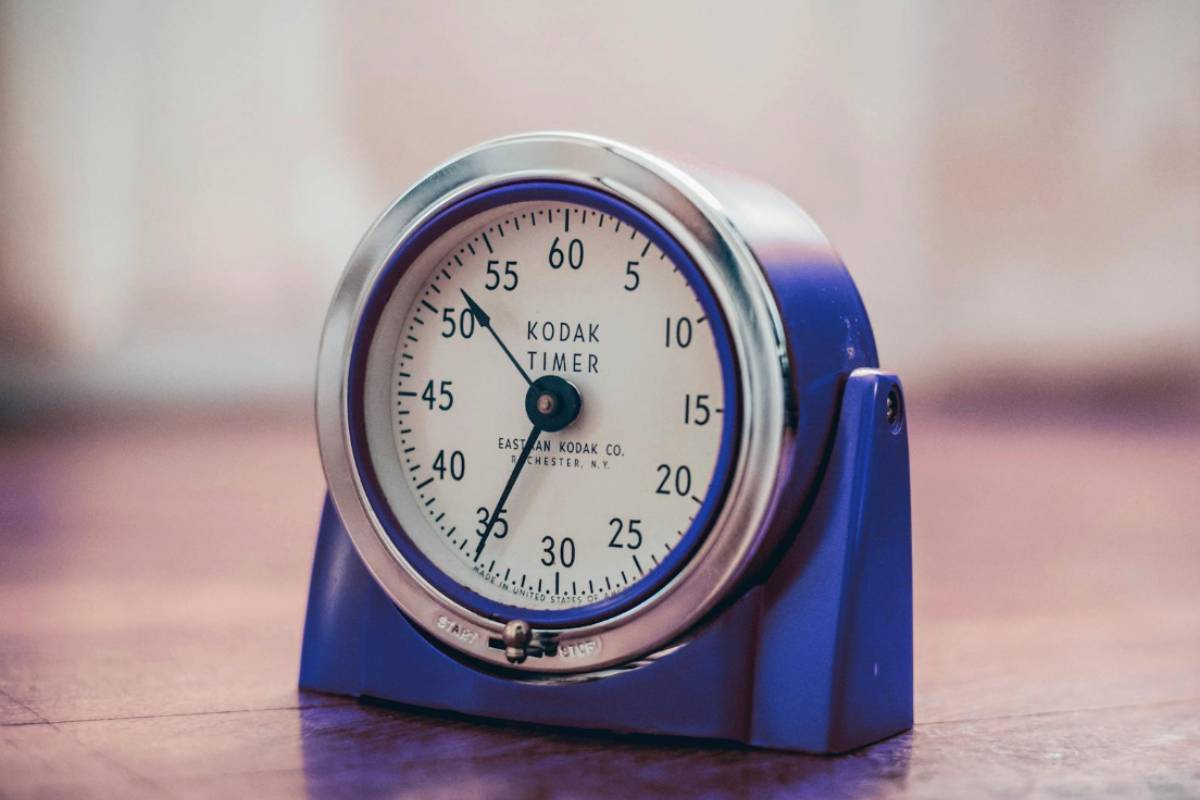
How many seconds are in a day? A normal day has 86,400 seconds, but during rare leap second adjustments, it can briefly contain 86,401 seconds instead. (Image by Pexels)
»> Also read: How Many Feet in a Mile? Quick Answer and Easy Way to Remember 2026
3. Why Knowing Seconds in a Day Can Be Useful
Understanding how many seconds are there in a day may seem like a simple fact, but it has practical value in many real-life situations. Breaking time down into seconds helps you see how your day is structured and how small units of time add up.
One of the most common uses is in time management. When you think of a day as 86,400 seconds instead of just 24 hours, it gives a clearer sense of how much time you actually have. This perspective is often used in productivity and goal setting, where even a small number of seconds can add up over time.
Another important use is in technology and programming. Many systems measure time in seconds rather than hours or days. For example, timestamps, system logs, and countdown timers all rely on seconds as the base unit. Knowing the total number of seconds in a day helps when converting between different time formats.
This conversion is also useful in fitness tracking and daily routines. Devices like smartwatches and fitness apps often track activity, rest time, or workouts down to the second. Understanding how seconds relate to a full day can help you interpret this data more clearly.
In addition, science and data analysis often rely on precise time measurements. Whether it is measuring speed, tracking experiments, or analyzing trends, seconds provide a consistent and accurate unit for calculations.
Even in everyday situations, knowing how many seconds in a day can improve your awareness of time. It helps you estimate durations more accurately and better understand how quickly time passes during different activities.
Conclusion
Knowing how many seconds in a day gives you a clearer understanding of how time is structured and how small units build into a full day. With 86,400 seconds in a standard day, this simple number can be useful in areas like time management, fitness tracking, and everyday calculations.
Once you understand this breakdown, it becomes easier to work with time in different formats and make more accurate estimates. Over time, this knowledge helps you stay more aware of how you use your time and how it adds up throughout the day.
FAQs
How many seconds in half a day?
Half a day contains 43,200 seconds, since it is half of 86,400 seconds. This is useful when working with shorter time periods or splitting daily schedules.
How many seconds in an hour?
One hour equals 3,600 seconds, calculated by multiplying 60 minutes by 60 seconds. This is a key step in understanding how seconds add up to a full day.
How many seconds in a minute?
One minute contains 60 seconds, which is the basic unit used to build larger time measurements like hours and days.