
On This Page
Cleaning the oven is one of those chores many people delay until the smell of burnt grease or visible smoke makes it impossible to ignore. Food splatters harden over time, grease sticks to the walls, and the glass door slowly turns cloudy.
The good news is that learning how to clean an oven does not have to mean harsh chemicals or hours of scrubbing. With the right method, even a neglected oven can become manageable.
1. How to Clean an Oven for the Best Results
If the oven has not been cleaned in a while, start with a full reset instead of spot-cleaning random areas. A structured approach saves time and gives better results.
- Turn the oven off and let it cool fully.
- Remove oven racks, trays, and loose crumbs.
- Wipe out dry debris with a cloth or vacuum attachment.
- Apply your chosen cleaner or homemade paste to greasy surfaces.
- Let it sit long enough to loosen burnt residue.
- Wipe clean with a damp cloth.
- Rinse surfaces again to remove leftover residue.
- Return racks only after everything is dry.
Let the oven cool fully before cleaning and checking product instructions for surface-safe methods.
If buildup is heavy, patience works better than force. A paste of baking soda and water spread across dirty surfaces can help soften grime overnight. The next day, wipe away loosened residue and use a non-abrasive sponge where needed.
Steam can also help. Place a heat-safe dish of hot water with lemon slices inside a warm (not hot) oven for 20–30 minutes. The moisture may loosen stuck grease and make wiping easier.
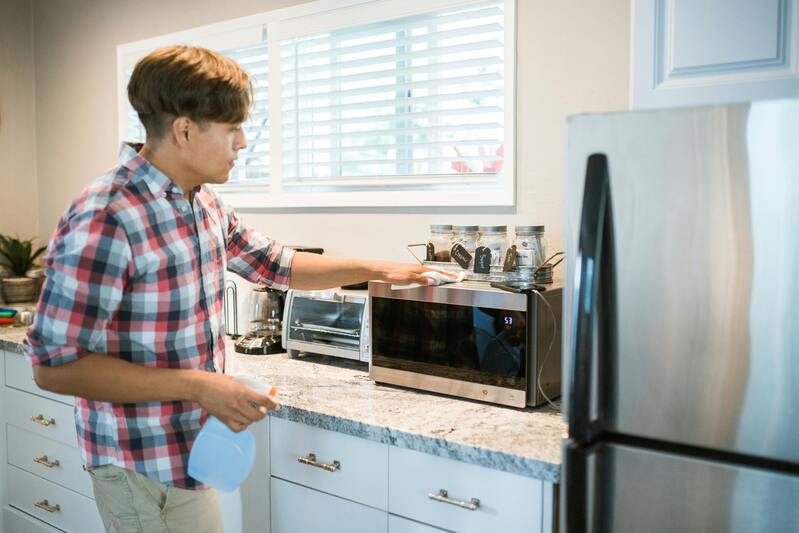
Easy methods for grease, glass doors, and burnt oven messes. (Image by Pexels)
2. How to Clean an Oven Quickly When You’re Short on Time
Sometimes you do not need perfection, you just need the oven presentable and usable again.
If speed matters, focus on the surfaces that create the most visible mess and odor:
- Bottom floor where spills burn repeatedly
- Interior glass door
- Front lip and handle
- Greasy side splatters near airflow areas
A quick clean can often be done in 15–20 minutes by spraying or applying cleaner, letting it sit briefly, then wiping the priority areas first.
But how to clean an oven without oven cleaner? If you prefer to avoid strong commercial sprays, there are effective alternatives.
A common method is baking soda mixed with enough water to form a paste. Spread it over greasy spots, let it sit for several hours or overnight, then wipe clean.
White vinegar can help loosen leftover baking soda residue and add extra cleaning power when sprayed lightly afterward.
3. The Dirtiest Oven Spots Most People Miss
Even when the main cavity looks clean, several hidden areas often stay greasy.
The door edges and gasket area collect residue that many people overlook. The underside of the handle can also build sticky grime from daily use.
Crumbs and grease often gather where the oven door meets the lower frame. Hinges may trap debris as well. Another commonly missed area is the rack supports along the side walls. Grease there can continue producing odor when heated.
Many people clean only the visible glass and forget the surrounding edges where grime builds fastest. Checking these smaller areas often makes the whole oven feel cleaner.
So, how to clean an oven door? The glass door often serves as the primary focal point for anyone entering your space. To restore its crystal-clear shine, you should follow these specific steps:
- Prepare the cleaner: You first mix baking soda with water to create a thick paste, or you can select a high-quality degreaser.
- Apply the mixture: You spread this paste evenly across the glass surface using a soft cloth.
- Allow dwell time: You let the solution sit for 15 to 20 minutes so it can break down stubborn grime.
- Wipe the surface: You use a microfiber cloth or a non-scratch sponge to scrub away the residue.
- Dry and buff: You immediately buff the glass with a clean, dry towel to prevent streaks.
Furthermore, if a stubborn haze remains after the first attempt, you should repeat the process rather than applying excessive pressure. This approach protects the glass from scratches while ensuring a perfect finish.
4. Should You Use the Self-Clean Cycle?
The self-clean setting can be useful, but it is not always the best first option. This cycle uses extremely high heat to burn food residue into ash. After cooling, the ash is wiped away.
It can work well for moderate buildup, but there are tradeoffs:
- Strong odor during the cycle
- Heat released into the kitchen
- Smoke if grease levels are heavy
- Some users prefer avoiding strain on older appliances
If the oven is heavily coated in grease, manual cleaning first is often smarter. For light maintenance, self-clean can be convenient when used carefully according to the manufacturer’s instructions.
5. How Often Should You Clean an Oven?
Aside from hygiene, regular maintenance is a safety necessity.
According to the National Fire Protection Association (NFPA), failing to clean appliances is a leading cause of home structure fires involving cooking equipment.
Since household habits vary, you should determine your cleaning frequency based on how often and what types of food you prepare. You can follow these specific recommendations to maintain an effective cleaning routine:
- Light use: You should perform a deep clean every 4–6 months if you rarely use the oven.
- Regular family cooking: You need to clean the appliance every 2–3 months to manage standard grease buildup.
- Heavy roasting or frequent spills: You must conduct a spot clean every month and schedule deeper sessions as soon as significant residue appears.
Small wipe-downs after spills can dramatically reduce the need for major deep cleans later. If smoke appears during preheating or burnt smells linger, it is usually time to clean sooner.
Knowing how to clean an oven quickly for small maintenance sessions can save hours later.
6. Final Thoughts
Learning how to clean an oven becomes much easier when you stop thinking of it as one giant unpleasant job. Use deep cleaning when buildup is serious. Use quick maintenance when time is short. Focus on softening grease before scrubbing, and do not forget the hidden areas around the door and frame.
Whether you are tackling months of burnt mess or simply figuring out how to clean an oven door, the right method saves effort and keeps your kitchen fresher. A cleaner oven also cooks better, smells better, and makes everyday meals more enjoyable.