
On This Page
Small dents, cracks, and drywall damage can make a room look unfinished, but many wall repairs are easier than people expect. Learning how to patch a hole in the wall helps homeowners handle minor damage without paying for expensive repairs or professional labor.
1. How to Patch a Hole in the Wall? Essential Tools & Materials for Fixing
Preparing the right tools before starting drywall repair can make the entire process faster, cleaner, and easier to manage. If you are learning how to patch a hole in the wall, having the proper supplies ready from the beginning can help create a smoother repair and a more natural-looking finish that blends with the surrounding surface.
Basic Drywall Repair Supplies
Small drywall holes usually require only a few common household repair materials. Anyone researching *how to patch up a hole in the wall *should first gather simple supplies that help create an even surface before sanding and repainting. Using the correct items also reduces visible patch marks after the wall dries.
- Joint compound or spackle
- Putty knife
- Sandpaper or sanding sponge
- Drywall patch kit
- Utility knife
- Primer and matching paint
- Clean cloth for dust removal
These materials are often enough for nail holes, dents, and smaller wall cracks found in bedrooms, hallways, or living spaces.
Optional Tools for Larger Repairs
Bigger drywall openings often need extra equipment to improve support and create a stronger finish. Additional tools can help stabilize replacement sections and make sanding, cutting, and measuring more accurate during the repair process.
- Drywall saw
- Measuring tape
- Drywall screws
- Power drill
- Drywall tape
- Replacement drywall panel
- Stud finder
- Safety goggles and a dust mask
Using these tools carefully can help larger wall repairs look smoother and more professional after painting is completed.
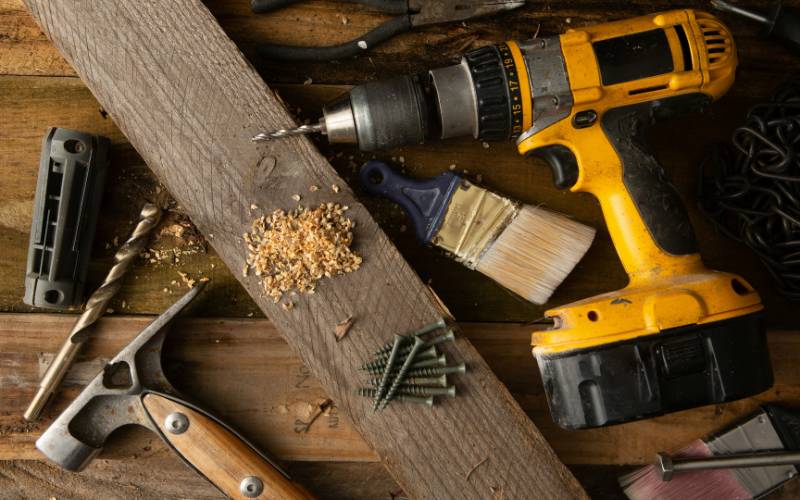
Some important tools and materials you should prepare for patching a hole in the wall. (Image by Unsplash)
2. How to Patch a Small Hole in the Wall?
Minor wall damage can usually be repaired quickly without advanced construction experience or expensive equipment. Following each step carefully helps create a smoother surface and improves how well the patched area blends with the rest of the wall.
- **Clean loose debris: **Remove dust, chipped paint, and broken drywall pieces from the damaged section before starting repairs. A cleaner surface allows the repair material to attach more evenly and reduces rough texture after drying.
- **Apply spackle with a putty knife: **Spread a thin layer of spackle over the hole using a putty knife. Smooth the surface gently while feathering the edges outward to help the repaired area blend more naturally into the wall.
- **Let dry completely: **Allow enough drying time before sanding or repainting the surface. Rushing this step can cause cracking, uneven texture, or visible repair marks later.
- Sand smooth: Use fine-grit sandpaper or a sanding sponge to flatten the dried spackle carefully. Light sanding helps remove bumps and prepares the wall for a cleaner paint finish.
- **Repaint if needed: **Apply primer and matching paint if the patched section still stands out after sanding. Repainting can improve color consistency and restore a more finished appearance.
3. How to Patch a Large Hole in the Wall?
Larger drywall damage usually requires more preparation and stronger support materials than smaller wall repairs. Understanding how to patch a hole in the wall correctly can help create a smoother finish while preventing cracks or uneven surfaces from appearing later.
- Trim damaged drywall edges: Cut away loose or broken drywall around the hole using a utility knife or drywall saw. Creating cleaner edges helps the patch fit more securely and improves the overall repair appearance.
- **Apply a mesh patch or drywall backing: **Place a mesh patch or drywall backing behind the damaged section to provide support for the repair material. This step helps stabilize larger openings and reduces the chance of sagging after drying.
- **Cover with joint compound: **Spread joint compound evenly over the patch using a putty knife. Apply thin layers while smoothing the edges outward so the repaired section blends more naturally into the surrounding wall.
- Sand and blend the area: Allow the compound to dry fully before sanding the surface carefully. Light sanding helps flatten rough spots and creates a smoother texture for painting.
- Prime and paint: Apply primer first to help the paint adhere evenly across the repaired area. Finish with matching wall paint to restore a cleaner and more consistent appearance.
4. How Much Does It Cost to Patch a Hole in the Wall?
Drywall repair costs can vary significantly depending on the hole size, wall condition, labor rates, and the amount of finishing work required after patching. Smaller dents and nail holes are usually inexpensive to repair, while larger drywall damage often requires additional cutting, support materials, sanding, and repainting.
According to Mr. Handyman’s drywall repair cost guide, professional drywall repair commonly ranges from about $100 to $500. Small repairs may average between $50 and $300, while larger holes over five inches can cost around $50 to $75 per square foot. DIY repair kits are typically much cheaper, often costing between $10 and $30, depending on the included materials and patch size.
Many homeowners now rely on online repair videos, mobile tutorials, and step-by-step guides while handling simple drywall projects at home. Having dependable phone access can make it easier to watch repair instructions, compare tools, search for material costs, and follow DIY tutorials during each stage of the project.
Accessing DIY resources becomes much more convenient when you can stay connected throughout home repair projects. Eligible users can apply for affordable service and available device options through a simple online process.
- Check eligibility through household income guidelines or participation in programs such as Medicaid, SNAP, or SSI
- Select a qualifying plan and complete the online application with your personal information
- Upload proof documents only if additional verification is requested during the approval process
- Once approved, delivery typically takes 7-10 business days, and activation instructions are usually included with the device or service information
Final Words
Learning how to patch a hole in the wall can help homeowners handle small drywall damage without expensive repair costs. Using the right materials and following proper repair steps can create a smoother and cleaner finish.