
On This Page
The evolution of mobile technology has introduced a more convenient way to stay connected: the digital SIM. However, before switching to a new plan, you must answer the crucial question: Is my phone eSIM compatible?
Understanding if your hardware supports this feature is the first step toward faster activation and more flexible service. In this guide, we will break down how to identify eSIM hardware in your settings.
1. How To Check If My Phone Is eSIM Compatible
Wondering, is my phone eSIM compatible? Modern devices often support this digital SIM technology, but you can easily verify your hardware’s capability by checking your device settings for specific identifiers.
iOS method
To verify compatibility on an iPhone, open the Settings app and navigate to Cellular (or Mobile Data in some regions). Look for an option labeled Add eSIM or Add Cellular Plan; if either of these buttons is present, your device is equipped with eSIM hardware and is ready for activation.
Android method
With Android, a reliable way to confirm compatibility is by checking for an EID (Embedded Identity Document) number.
Go to Settings > About Phone > Status > EID and scroll down to the bottom of the page. If you see a 32-digit EID number listed, it serves as a unique hardware identifier confirming that an eSIM chip is physically built into your device.
Way to confirm compatibility is by checking for an EID (Image by Unsplash)
2. Popular Devices Compatible With eSIM
Wondering, is my phone eSIM compatible? Most flagship smartphones released after 2018 support this technology, allowing you to activate digital cellular plans without needing a physical nano-SIM card.
Apple
Most iPhones starting from the iPhone XS, XS Max, and XR are eSIM compatible. This includes all models in the iPhone 11, 12, 13, 14, and 15 series. Notably, US models of the iPhone 14 and 15 have moved entirely to eSIM, removing the physical SIM tray altogether.
Samsung
Samsung introduced eSIM support with the Galaxy S20 series and has included it in every subsequent S-series flagship, including the S21, S22, S23, and S24. Additionally, foldable devices like the Galaxy Z Flip and Z Fold series across all generations are equipped with eSIM capabilities.
Google Pixel
Google was an early adopter, offering eSIM support starting with the Pixel 3. Every model since then, including the Pixel 3 through the latest Pixel 8 and 8 Pro, supports digital SIMs. The budget-friendly a series, such as the Pixel 4a through 7a, also includes this feature.
Others
Is my phone eSIM compatible? Many other manufacturers have joined the trend, including Motorola with its Razr line and Sony with the Xperia 1 and 5 IV models. Newer devices from brands like Huawei, Xiaomi, and Oppo also frequently include eSIM, though compatibility can sometimes vary based on the specific region or carrier.
Most modern smartphones from major brands are eligible, provided they are carrier-unlocked and contain the necessary internal eSIM hardware.
For eSIM support, you may also need to verify your device model or check your phone’s settings.
Device Eligibility
Generally, most flagship devices manufactured after 2020 are ready for activation. This includes the iPhone 11 series and newer, as well as the Samsung Galaxy S20 series and its successors.
If you own one of these recent models and it is fully unlocked, you can likely skip the physical SIM card entirely.
List of popular phones compatible with eSIM (Image by Unsplash)
What is Lifeline?
Lifeline is a government assistance program designed to make communication services more affordable for low-income households. Importantly, Lifeline itself does not directly provide free phones. Instead, it offers a monthly service discount that participating providers can apply to phone or internet services.
Eligibility is based on income level or participation in federal assistance programs such as SNAP or Medicaid.
Qualified users receive more than the standard government minimum, often getting up to 15GB–30GB* of high-speed data alongside unlimited nationwide talk and text with no monthly bills or contracts.
*Offers may vary and are subject to future updates.
The eSIM advantage
This digital eSIM advantage means you can connect your compatible device to the network immediately upon approval, ensuring you never lose access to essential communication.
Applying for free service and activating your digital SIM is a streamlined process that can be completed entirely online. Follow these four simple steps to get connected immediately.
Step 2: Start the application
Fill out the online enrollment form with your personal details and provide proof of eligibility, such as a benefit award letter or a recent tax return.
Step 4: Scan and go
Simply open your phone’s camera or cellular settings, scan the code, and follow the on-screen prompts to download your electronic profile and activate your free monthly service instantly.
6. FAQs About Is My Phone eSIM Compatible
How do I quickly check if my phone supports eSIM?
The fastest way is to dial *#06# on your keypad. If an EID number appears on your screen alongside your IMEI, your device is equipped with eSIM hardware.
Does the iPhone 11 support eSIM?
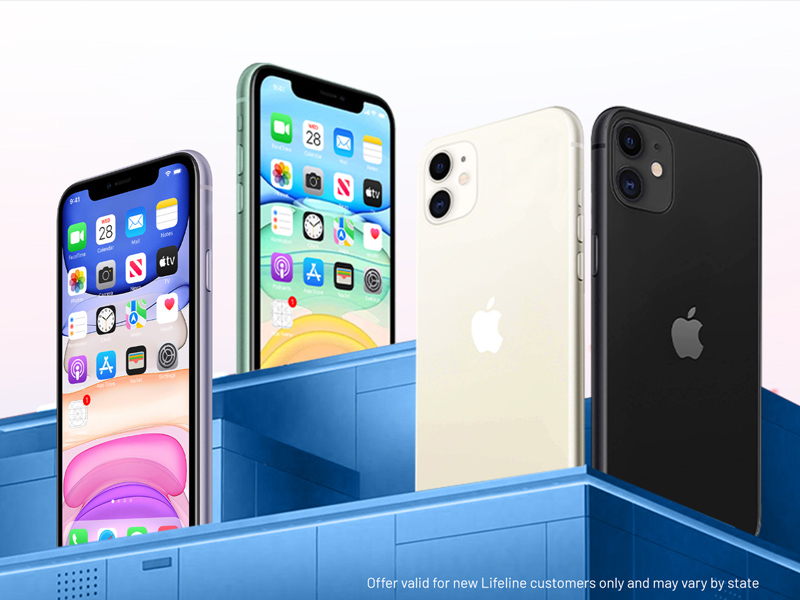
Yes, the iPhone 11, 11 Pro, and 11 Pro Max are all eSIM compatible. These models feature Dual SIM capabilities, allowing for one physical nano-SIM and one digital eSIM.
Can I have both a physical SIM and an eSIM active?
Yes. Most compatible devices support Dual SIM technology, allowing you to use a physical SIM card for one number and an eSIM for another simultaneously on the same device.
Final Thoughts
Whether you are bringing your own device or applying for free government service, eSIM technology ensures you stay connected with minimal effort and maximum efficiency.