

On This Page
Both Medicare Plan F and Plan G are among the most comprehensive Medicare Supplement plans available, helping cover expenses like copayments, coinsurance, and hospital costs. This post outlines the pros and cons of each option and helps you evaluate Medicare Plan F vs Plan G.
1. What Is Medicare Plan F?
Medicare Plan F is a Medicare Supplement Insurance plan, also known as Medigap, designed to help cover healthcare costs that Original Medicare does not pay. This includes expenses such as deductibles, copayments, coinsurance, and excess charges.
Medicare Plan F is often considered one of the most comprehensive Medigap plans because it covers nearly all out-of-pocket costs that Medicare approves. However, it is accessible only to those who qualified for Medicare before January 1, 2020.
While Plan F typically has higher monthly premiums than other Medigap options, many beneficiaries value its predictable coverage and reduced unexpected medical expenses.
2. What Is Medicare Plan G?
Medicare Plan G is a Medigap plan that helps cover many out-of-pocket costs left behind by Original Medicare, including coinsurance, copayments, and hospital expenses. It offers coverage that is very similar to Medicare Plan F, with one key difference: Plan G does not cover the Medicare Part B deductible.
Beneficiaries must pay this deductible themselves before Plan G coverage fully applies.
Despite this difference, Medicare Plan G has become one of the most popular Medicare Supplement plans because it often comes with lower monthly premiums and strong long-term value. It is available to all eligible Medicare beneficiaries, including those who became eligible after January 1, 2020.
3. Putting Medicare Plan F Vs Plan G On A Scale
When comparing the Medicare Plan F Vs Plan G pros and cons, the biggest difference is simple: Plan F covers the Medicare Part B deductible, while Plan G does not. However, Plan G is often more accessible and may offer better premium value for many beneficiaries.
| Factor | Medicare Plan F | Medicare Plan G |
|---|---|---|
| Cost | Usually higher premium | Often lower premium |
| Coverage | Covers Part B deductible | Does not cover Part B deductible |
| Benefits | Most comprehensive Medigap option | Nearly identical to Plan F |
| Eligibility | Limited to those eligible before Jan. 1, 2020 | Available to new Medicare beneficiaries |
| Best for | Predictable out-of-pocket costs | Strong value and broad access |
Medicare Plan F Vs Plan G cost
Medicare Plan F generally costs more because it provides first-dollar coverage, meaning beneficiaries typically pay little to no out-of-pocket expenses for Medicare-approved services. In contrast, Plan G requires that beneficiaries first pay the annual Medicare Part B deductible before their coverage takes effect.
For many people, however, the premium savings with Plan G may outweigh the deductible difference. In some cases, the yearly premium difference between the two plans can exceed the deductible amount itself, making Plan G a more cost-effective option over time.

A key factor to consider when evaluating Medicare Plan F vs Plan G is the monthly premium (Image by Pexels)
Coverage & Benefits
Both Plan F and Plan G offer comprehensive Medigap coverage designed to reduce healthcare expenses left behind by Original Medicare, such as coinsurance, copayments, and hospital costs. The key difference in coverage is the Part B deductible. For 2026, the Part B deductible is $283.
Aside from that difference, coverage levels are nearly identical. Because of its broad protection, Plan F has long been viewed as the most complete Medigap option.
Eligibility
Eligibility rules are another major difference between these two Medigap plans. Medicare Plan F is only available to individuals who became eligible for Medicare before January 1, 2020. Congress phased out Plan F for newly eligible beneficiaries to reduce Medicare spending growth.
Meanwhile, Medicare Plan G remains widely available to all eligible Medicare beneficiaries, including new enrollees. Because more people can enroll in Plan G, it has become one of the fastest-growing and most popular Medigap plans in the United States today.
Overall, Plan G may be the better choice for many beneficiaries because it offers nearly the same coverage as Plan F with lower premiums and broader eligibility. Plan F may still suit those who qualify and prefer the most predictable out-of-pocket costs.
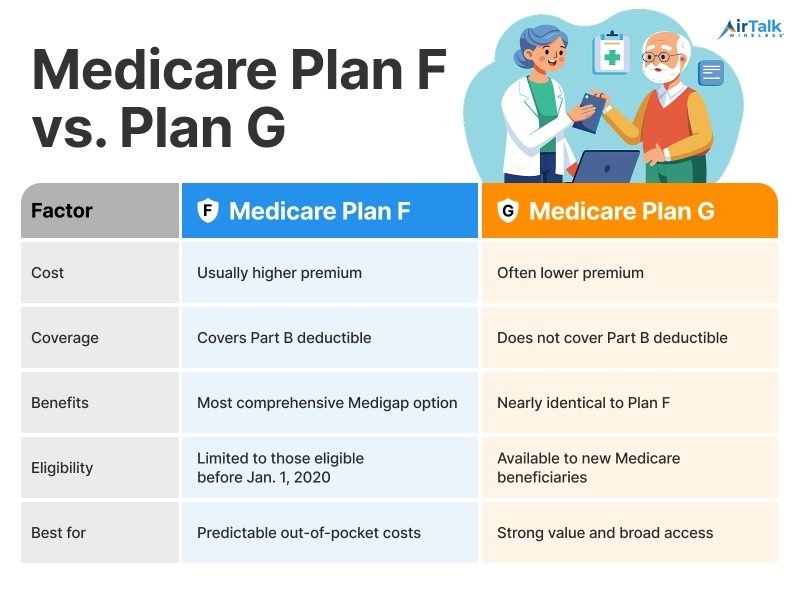
A summary of Medicare Plan F and Plan G comparison.
4. Discover Another Support Program You May Qualify for
Over the last five years, the average cost of living has risen by 20%, driven primarily by increases in the prices of food, insurance, and services.
To support low-income people, the government has developed some assistance programs, including the Lifeline Program, which helps eligible residents receive free or discounted communication services.
5. FAQs
Should I change from Medicare plan F to G?
Switching from Medicare Plan F to Plan G may help some beneficiaries lower monthly premium costs while still keeping very similar coverage. However, whether switching makes sense depends on your current premium, healthcare needs, and whether you can qualify medically for a new plan in your state.
Is Plan F Better Than Plan G?
Plan F is not always better than Plan G. While Plan F covers the Medicare Part B deductible and Plan G does not, Plan G often has lower monthly premiums that may save money overall for many beneficiaries.
What Is the Difference Between Plan F and Plan G?
The main difference between Plan F and Plan G is that Plan F covers the Medicare Part B deductible, while Plan G requires you to pay that deductible yourself. Aside from that difference, the two Medigap plans generally offer very similar coverage benefits.
Conclusion
Choosing between Medicare Plan F vs Plan G often comes down to balancing monthly premiums, out-of-pocket costs, and long-term affordability. Although the plans offer very similar coverage, many seniors find that Plan G may provide better value over time. Reviewing your healthcare usage, budget, and eligibility status can help you decide which option works best.