

On This Page
You may have heard about P-EBT as a helpful support program for families during difficult times. It played an important role in helping households maintain access to food when school meals were disrupted.
In this article, we’ll take a closer look at** what is P-EBT **and how it has supported families in meeting everyday nutrition needs.
1. What Is P-EBT?
P-EBT (Pandemic Electronic Benefit Transfer) is a temporary food assistance program created to help families with children who lose access to free or reduced-price school meals during disruptions such as school closures, reduced schedules, or virtual learning.
Instead of receiving meals at school, eligible households were provided with grocery benefits through the EBT system. These benefits were loaded onto EBT cards, allowing families to purchase approved food items at authorized retailers, similar to regular SNAP benefits.
P-EBT was designed to ensure that children continued to receive nutritional support even when in-person school meals were not available. The program played an important role during the COVID-19 pandemic by helping families cover everyday food needs during uncertain and challenging periods.

**What is P-EBT? A temporary food assistance program created to help families with children who lose access to free or reduced-price school meals during disruptions (Image by Unsplash) **
2. Who Can Apply for a P-EBT Card?
Families wondering* how to get P EBT card* benefits typically needed to meet certain school meal or SNAP-related eligibility requirements during the pandemic. In many cases, children qualified if they attended a school participating in the National School Lunch Program and were approved for free or reduced-price meals.
Some younger children under age six could also receive benefits if their households already participated in SNAP and lived in areas affected by child care or school disruptions. Eligibility rules and benefit distribution timelines often varied by state.
3. Common P-EBT Problems Families Experienced
Many families relied on P-EBT benefits during the pandemic, but the program also created several unexpected challenges. From delayed payments to card activation issues, households often faced confusion while trying to access their grocery assistance smoothly.
Delayed or Missing Benefits
One of the most common complaints involved late benefit deposits or missing payments. Because every state handled P-EBT distribution differently, processing timelines often varied depending on school records, eligibility verification, and application volume. Some households received benefits much later than expected, especially during periods of high demand.
Parents also experienced confusion when benefits were issued for one child but not another in the same household.
Incorrect school attendance data, address mismatches, or outdated enrollment information sometimes caused payment delays and missing deposits that required additional follow-up with local agencies.
Difficulty Tracking Card Information
Many recipients struggled with card management after receiving their P-EBT benefits. Questions about activation steps, forgotten PIN numbers, and* how to check P EBT balance* information became especially common among first-time EBT users unfamiliar with the system.
Some households accidentally discarded mailed cards or did not realize benefits had already been loaded onto existing EBT accounts. In other cases, technical issues prevented families from accessing account details quickly, making grocery planning more difficult during urgent situations.
Limited Customer Service Support
State agencies experienced extremely high call volumes throughout the pandemic, making it difficult for many families to reach customer support representatives. Long hold times and inconsistent updates often left households uncertain about their eligibility or payment status.
Because official assistance lines were overwhelmed, many parents turned to school districts, local nonprofits, or online community groups for guidance.
*»> Also read: *How to Use EBT Without Card? Digital EBT Access Guide 2026
4. What’s the Difference Between SNAP and P-EBT?
Although SNAP and P-EBT are both food assistance programs that use EBT cards, they were created for different purposes and eligibility situations. Many families confused the two programs during the pandemic because both provided grocery support through similar payment systems.
Understanding the differences between SNAP and P-EBT can help households better identify which benefits they may qualify for and how each program was designed to support families during different circumstances.
| Feature | SNAP | P-EBT |
|---|---|---|
| Full program name | Supplemental Nutrition Assistance Program | Pandemic Electronic Benefit Transfer |
| Main purpose | Provides ongoing monthly food assistance for low-income individuals and families | Provided temporary grocery benefits during COVID-19 disruptions |
| Program type | Permanent federal nutrition assistance program | Temporary emergency pandemic response program |
| Who qualifies | Low-income households meeting income and eligibility rules | Children who lost access to free or reduced-price school or child care meals |
| Benefit distribution | Monthly benefits are loaded onto an EBT card | Temporary benefits issued through EBT cards during eligible periods |
| Eligibility basis | Household income, expenses, and financial situation | School meal eligibility and pandemic-related school disruptions |
| Benefit duration | Ongoing as long as eligibility requirements are met | Limited to approved pandemic periods |
| Primary goal | Help families afford groceries year-round | Replace meals missed because of school closures or virtual learning |
| Managed by | State SNAP agencies under USDA guidelines | State agencies are working with schools and the USDA on pandemic guidance |
| Availability | Still active nationwide | Mostly ended after pandemic emergency programs expired |
5. Frequently Asked Questions About P-EBT
P-EBT helped millions of families access grocery support during COVID-19 school disruptions, but many households still had questions about eligibility, payments, and card usage. Here are some of the most frequently asked questions about how the P-EBT program worked and how benefits were distributed.
Was P-EBT the same as regular SNAP?
No, P-EBT and SNAP were not the same program. SNAP provides ongoing monthly food assistance for eligible low-income households, while P-EBT was a temporary pandemic program designed to replace missed school or child care meals. Although both programs used EBT cards, eligibility rules and benefit periods were different.
Why did I get a P-EBT card without applying?
Many eligible families received P-EBT benefits automatically because state agencies used information already on file from schools, SNAP, Medicaid, or other assistance programs. If a child met the program requirements, benefits could be issued without a separate application.
Because eligibility rules varied by state, households that received an unexpected card should contact their state’s P-EBT office to verify eligibility and benefit details.
Could families check P-EBT balances online?
Yes, many states offered online portals or mobile apps that allowed families to review their P-EBT balance and transaction history. Recipients could also check available funds by calling the customer service number printed on the back of the EBT card. However, online access systems and account setup requirements often varied depending on the state.
Will the P-EBT card be reloaded every month?
Not necessarily. Unlike SNAP benefits, P-EBT payments were usually issued based on approved school closure periods or virtual learning schedules rather than following a permanent monthly schedule. Some households received multiple deposits over time, while others received larger one-time benefit payments.
What are the P-EBT deposit dates?
Deposit schedules varied by state and were often released in phases depending on student eligibility, school attendance records, and local processing timelines. Some households received benefits earlier than others based on age groups or school districts. Families usually need to check official state announcements for the most up-to-date payment schedule information.
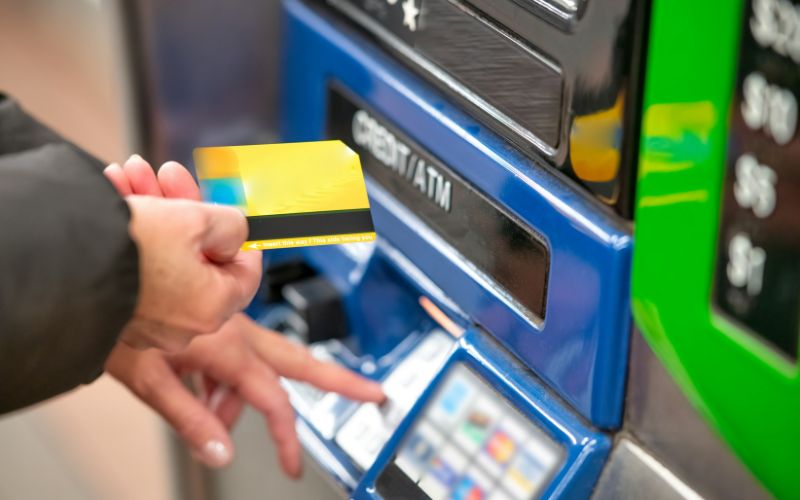
Eligible TANF cash benefits can often be withdrawn at participating ATMs using an EBT card and PIN. (Image by Unsplash)
Final Words
The P-EBT program played an important role in helping families manage grocery expenses during the challenges of the COVID-19 pandemic. By providing temporary food assistance for children affected by school and child care disruptions, the program helped many households access daily meals during uncertain times.