Representative Asa Leonard Allen
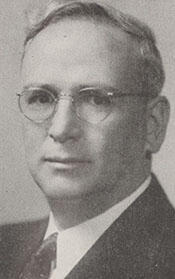
Here you will find contact information for Representative Asa Leonard Allen, including email address, phone number, and mailing address.
| Name | Asa Leonard Allen |
| Position | Representative |
| State | Louisiana |
| District | 8 |
| Party | Democratic |
| Status | Former Representative |
| Term Start | January 5, 1937 |
| Term End | January 3, 1953 |
| Terms Served | 8 |
| Born | January 5, 1891 |
| Gender | Male |
| Bioguide ID | A000114 |
About Representative Asa Leonard Allen
Asa Leonard Allen (January 5, 1891 – January 5, 1969) was an educator, attorney, and Democratic member of the United States House of Representatives from Louisiana. He served eight consecutive terms in Congress from January 3, 1937, to January 3, 1953, representing the now-defunct 8th congressional district, centered on Alexandria. His congressional career spanned a significant period in American history, encompassing the Great Depression, World War II, and the early Cold War, during which he participated in the legislative process and represented the interests of his Louisiana constituents.
Allen was born in a log cabin near Winnfield, the seat of Winn Parish, Louisiana, to Asa L. Allen and the former Sophronia Perkins. He grew up in a rural environment in north-central Louisiana and was part of a politically prominent family; his older brother, Oscar Kelly Allen, later served as governor of Louisiana. Raised in Winn Parish, he attended the local public schools, which laid the foundation for his later career in education and public service.
After completing his early schooling, Allen enrolled at Louisiana State University in Baton Rouge, where he earned a bachelor’s degree in 1914. The following year, in 1915, he married Lottie Mae Thompson. The couple had two sons: Harwell L. Allen, who went on to become a district judge, and Lyndon Blaine Allen. His early adult years combined family life, professional advancement, and growing involvement in civic and religious affairs.
Allen began his professional career as an educator. From 1914 to 1917, he taught in the rural schools of neighboring Grant Parish. He subsequently served as principal in schools in Georgetown and Verda, communities near Montgomery, Louisiana. Demonstrating administrative ability and commitment to public education, he was appointed superintendent of the Winn Parish school system, a position he held from 1917 to 1922. During this period, he studied law independently, and in 1922 he was admitted to the bar. He then established a law practice in Winnfield, where he also served for a time as city attorney, further embedding himself in the civic and political life of his hometown.
Allen’s formal entry into national politics came in the mid-1930s. A loyal member of the Long political organization that dominated Louisiana politics in that era, he was chosen as a delegate to the 1936 Democratic National Convention, which renominated President Franklin D. Roosevelt and Vice President John Nance Garner. That same year he sought election to Congress and won, taking office in January 1937 as the representative of Louisiana’s 8th congressional district. He was reelected seven times, serving eight terms in total. During his tenure in the House of Representatives, he contributed to the legislative process on issues affecting both his district and the nation and rose to become chairman of the Committee on the Census. His service included the wartime and immediate postwar years, when Congress grappled with matters of national security, economic recovery, and demographic change.
Allen’s congressional record reflected the political and social currents of his time. In 1943, he was among the members of the House of Representatives who opposed the repeal of the Chinese Exclusion Act, a landmark immigration restriction originally enacted in the nineteenth century. He also introduced the Renunciation Act of 1944 in the House, legislation that addressed the status of certain U.S. citizens, particularly Japanese Americans, who formally renounced their citizenship during World War II. After eight terms, he chose not to seek a ninth in 1952. In deference to the wishes of the Long political faction and its leadership, he stepped aside so that George Shannon “Doc” Long, an older brother of Huey Pierce Long Jr. and Earl Kemp Long, could run for the 8th district seat.
Beyond politics, Allen was deeply involved in religious and fraternal organizations. A prominent Baptist, he served as a vice president of the Louisiana Baptist Convention, reflecting his influence in denominational affairs. He was also active in Masonic circles as a Scottish Rite Mason and a Shriner. These affiliations underscored his standing in the community and his engagement with civic and charitable activities outside the formal sphere of government.
Asa Leonard Allen died in Winnfield, Louisiana, on his 78th birthday, January 5, 1969. He was interred at Winnfield Cemetery in his native community. His legacy in Louisiana public life was later recognized when, in 1994, he was posthumously inducted into the Louisiana Political Museum and Hall of Fame in Winnfield; his brother, former Governor Oscar K. Allen, had been an original inductee the previous year. The municipal building in Winnfield was named in his honor, commemorating his long service as an educator, attorney, and congressman from Louisiana.