Senator Asa Biggs
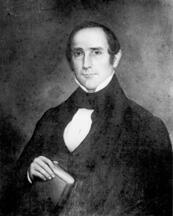
Here you will find contact information for Senator Asa Biggs, including email address, phone number, and mailing address.
| Name | Asa Biggs |
| Position | Senator |
| State | North Carolina |
| Party | Democratic |
| Status | Former Representative |
| Term Start | December 1, 1845 |
| Term End | March 3, 1859 |
| Terms Served | 2 |
| Born | February 4, 1811 |
| Gender | Male |
| Bioguide ID | B000456 |
About Senator Asa Biggs
Asa Biggs (February 4, 1811 – March 6, 1878) was an American attorney, politician, and jurist who served as a member of both chambers of the United States Congress and as a United States district judge of the United States District Court for the Albemarle, Cape Fear and Pamptico Districts of North Carolina. A lifelong resident of North Carolina, he emerged from the antebellum legal and political culture of the state to become a prominent Democratic officeholder at both the federal legislative and judicial levels during a period of mounting sectional tension in the United States.
Born in 1811, Biggs grew up in eastern North Carolina, in a region whose economy and society were closely tied to agriculture and maritime trade. His early life in this environment helped shape his political outlook and his later advocacy for the interests of his state and section. As a young man he read law, the customary path to the bar in the early nineteenth century, and undertook the study of legal practice and procedure that would underpin his subsequent career as an attorney and public official. In 1832 he traveled from North Carolina to New York, a journey he later recorded in detail, reflecting both his curiosity about the broader nation and his engagement with contemporary political and economic developments.
Biggs was admitted to the bar and established himself as an attorney in North Carolina, building a reputation in local and state legal circles. His practice exposed him to issues of commercial law, property, and the legal framework of slavery that dominated southern jurisprudence in the antebellum era. His growing prominence in the legal profession naturally led him into politics, where he aligned with the Democratic Party, then the dominant political force in much of the South. As a Democrat, he supported states’ rights principles and the party’s emphasis on limited federal government, while also working within the national political system to advance the interests of his constituents.
Biggs’s federal legislative career began in the United States House of Representatives, where he served as a member of Congress from North Carolina before his elevation to the Senate. He subsequently served as a Senator from North Carolina in the United States Congress from 1845 to 1859. A member of the Democratic Party, Asa Biggs contributed to the legislative process during two terms in office, participating in debates and votes on issues that foreshadowed the coming sectional crisis, including questions of territorial expansion, the status of slavery in the territories, and the balance of power between free and slave states. His service in Congress occurred during a significant period in American history, encompassing the Mexican–American War, the Compromise of 1850, and the intensifying national dispute over slavery. As a member of the Senate, Asa Biggs participated in the democratic process and represented the interests of his North Carolina constituents, reflecting the priorities of a slaveholding, agrarian state within the broader national dialogue.
After his congressional service, Biggs continued his public career on the federal bench. He was appointed a United States district judge for the United States District Court for the Albemarle, Cape Fear and Pamptico Districts of North Carolina, a jurisdiction that covered key coastal and riverine regions of the state. In this capacity he presided over admiralty, commercial, and federal criminal matters at a time when maritime trade, coastal shipping, and questions of federal authority were central to the region’s economy and politics. His judicial service further solidified his reputation as a significant legal figure in North Carolina and placed him at the intersection of federal law and the distinctive concerns of a southern coastal state on the eve of the Civil War.
In his later years, Biggs remained an important figure in North Carolina’s legal and political memory. He authored an autobiographical account, “Autobiography of Asa Biggs, Including a Journal of a Trip from North Carolina to New York in 1832,” which was later edited by Robert D. W. Connor and published by the North Carolina Historical Commission in 1915 as Bulletin No. 19. This work provides insight into his early experiences, his views on law and politics, and his observations of American society in the decades before the Civil War. His life and career have also been treated in reference works such as the Dictionary of American Biography, and he is profiled in the Biographical Directory of the United States Congress and the Biographical Directory of Federal Judges, a publication of the Federal Judicial Center.
Asa Biggs died on March 6, 1878, leaving a legacy as a lawyer, legislator, and judge who helped shape North Carolina’s role in the national government during a transformative era. His former residence, the Asa Biggs House and Site in Williamston, North Carolina, was added to the National Register of Historic Places in 1979, recognizing both its architectural significance and its association with his long public career. Through his legislative service, judicial work, and published autobiography, Biggs remains a notable figure in the political and legal history of North Carolina and the United States.