Representative Asahel Wheeler Hubbard
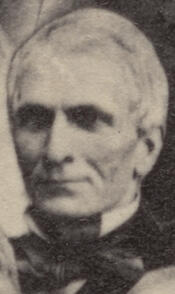
Here you will find contact information for Representative Asahel Wheeler Hubbard, including email address, phone number, and mailing address.
| Name | Asahel Wheeler Hubbard |
| Position | Representative |
| State | Iowa |
| District | 6 |
| Party | Republican |
| Status | Former Representative |
| Term Start | December 7, 1863 |
| Term End | March 3, 1869 |
| Terms Served | 3 |
| Born | January 19, 1819 |
| Gender | Male |
| Bioguide ID | H000877 |
About Representative Asahel Wheeler Hubbard
Asahel Wheeler Hubbard (January 19, 1819 – September 22, 1879) was an American attorney, businessman, politician, and jurist who served as the U.S. representative for Iowa’s 6th congressional district from 1863 to 1869. A member of the Republican Party, he represented his constituents during a critical period in American history, participating in the legislative process over three consecutive terms in the United States House of Representatives.
Hubbard was born on January 19, 1819, in Haddam, Connecticut. He attended local public schools in his native town and later pursued further studies at a select school in Middletown, Connecticut. His early education provided the foundation for a varied career that would span manual trades, teaching, law, business, and public office.
Hubbard began his working life as a stonecutter before moving west in 1838 to Rushville, Indiana. In Rushville he was employed as a book agent and also taught school, occupations that supported him while he studied law. He was admitted to the bar in 1841 and commenced the practice of law in Rushville. His legal career soon led him into public service; he served as a member of the Indiana House of Representatives from 1847 to 1849, marking his entry into elective office and legislative work.
In 1857 Hubbard relocated to Sioux City, Iowa, where he engaged in the real estate business at a time when the community and region were rapidly developing. His standing in the legal profession and in local affairs led to his appointment as judge of Iowa’s fourth judicial district, a position he held from 1859 to 1862. As a jurist, he presided over a broad range of civil and criminal matters during the years immediately preceding the Civil War, gaining further prominence in the state.
Following the 1860 United States census, Iowa’s representation in the U.S. House of Representatives increased from two to six seats. In this context, Hubbard was elected as the first congressman to represent Iowa’s newly created 6th congressional district. A Republican, he was elected to the Thirty-eighth, Thirty-ninth, and Fortieth Congresses and served from March 4, 1863, to March 3, 1869. His service in Congress thus spanned the Civil War and the early Reconstruction era. During his tenure, Hubbard was influential in securing legislation that hastened the construction of several lines of railroad through his district, reflecting his commitment to internal improvements and regional development. He also played a key role in securing for Sioux City a branch of the Union Pacific Railroad, an achievement of lasting economic significance for his constituency. He chose not to be a candidate for renomination in 1868, concluding his congressional service at the end of his third term.
After leaving Congress, Hubbard remained active in business and civic affairs in Sioux City. In 1871 he was one of the organizers of the First National Bank of Sioux City and served as its president until January 15, 1879. In addition to his banking interests, he was involved in railroad building in Iowa and held an interest in a mining property in Leadville, Colorado, reflecting his continued engagement with the economic development of the West and Midwest. His activities in finance, transportation, and mining underscored the breadth of his business pursuits in the postwar period.
Hubbard was the father of Elbert H. Hubbard, who would later serve as a congressman from Iowa, extending the family’s involvement in national public life into another generation. Asahel Wheeler Hubbard died in Sioux City, Iowa, on September 22, 1879. He was interred in Floyd Cemetery in Sioux City. In 1880, the community of Hubbard, Nebraska, was named in his honor, commemorating his contributions to the region’s political and economic development.