Representative Asbury Francis Lever
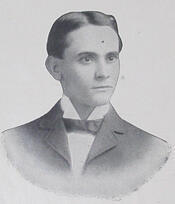
Here you will find contact information for Representative Asbury Francis Lever, including email address, phone number, and mailing address.
| Name | Asbury Francis Lever |
| Position | Representative |
| State | South Carolina |
| District | 7 |
| Party | Democratic |
| Status | Former Representative |
| Term Start | December 2, 1901 |
| Term End | March 3, 1921 |
| Terms Served | 10 |
| Born | January 5, 1875 |
| Gender | Male |
| Bioguide ID | L000259 |
About Representative Asbury Francis Lever
Asbury Francis “Frank” Lever (January 5, 1875 – April 28, 1940) was a Democratic member of the United States House of Representatives from South Carolina who served ten terms in Congress between 1901 and 1921. Born near Springhill in Lexington County, South Carolina, he was the son of a farmer, Asbury Francis Washington Lever, and Mary Elvira Derrick. Raised in a rural community, he attended the local county schools before enrolling at Newberry College, from which he graduated with honors in 1895. After college he taught school for two years, an early experience that helped shape his later interest in education and rural improvement.
Lever entered public life at a relatively young age. He was a delegate to the Democratic State conventions in 1896 and 1900, signaling his early engagement in party politics. In 1897 he moved to Washington, D.C., where he served as private secretary to Representative J. William Stokes of South Carolina, a position he held until 1901. While working on Capitol Hill, Lever pursued legal studies at the Law Department of Georgetown University in Washington, D.C., graduating in 1899. He was admitted to the bar in South Carolina that same year, although he chose not to practice law, instead continuing his work in politics and public service.
Lever’s formal legislative career began in his home state. In 1901 he was elected a member of the South Carolina House of Representatives. That same year, following the death of Representative J. William Stokes, Lever was elected as a Democrat to the Fifty-seventh Congress to fill the resulting vacancy. He took his seat in the U.S. House of Representatives on November 5, 1901. He was subsequently reelected to the Fifty-eighth and to the eight succeeding Congresses, serving continuously from November 5, 1901, until his resignation on August 1, 1919. Throughout this period, he represented the interests of his South Carolina constituents during a significant era in American history, participating actively in the legislative process as the nation confronted issues of agricultural reform, economic change, and World War I.
During his long tenure in the House of Representatives, Lever emerged as a leading figure in education and agricultural policy. He served as chairman of the House Committee on Education during the Sixty-second Congress from 1911 to 1913. He then became chairman of the powerful House Committee on Agriculture in the Sixty-third, Sixty-fourth, and Sixty-fifth Congresses. His major legislative achievements focused on strengthening state and federal efforts in agricultural development and rural life. Among the most notable measures associated with his work were the Smith-Lever Act of 1914, which established the Cooperative Extension Service to bring agricultural research and education directly to farmers; the Cotton Futures Act of 1914; the Cotton Warehouse Act of 1916; the Federal Farm Loan Act of 1916, which laid the foundation for what became the Farm Credit Administration; and the Food and Fuel Control Act of 1917, which created a Food Administration and a Fuel Administration to manage vital resources during World War I. These laws significantly shaped federal agricultural policy and contributed to the transformation of rural America.
Lever’s congressional service formally extended from 1901 to 1921, encompassing ten terms in office, although he left the House before the end of his final term. On August 1, 1919, he resigned his seat to accept appointment as a member of the Federal Farm Loan Board, an agency created under the Federal Farm Loan Act to oversee the new system of federal land banks and farm credit institutions. In this capacity he continued his longstanding commitment to improving credit access and economic conditions for farmers. He served on the Federal Farm Loan Board until 1922, helping to implement and stabilize the farm credit system he had helped design in Congress.
After leaving the Federal Farm Loan Board, Lever remained deeply involved in agricultural finance, higher education, and public service. In 1922 he was elected president of the First Carolinas Joint Stock Land Bank at Columbia, South Carolina, further extending his work in rural credit and land finance. He also served as a field representative of the Federal Farm Board, another federal body concerned with agricultural stabilization and farm economics. Later, he became a director of the public relations administration of the Farm Credit Administration, continuing his association with federal farm credit policy until his death. Parallel to his governmental and financial roles, Lever maintained close ties to higher education in his home state. He served as chair of the Board of Trustees of Newberry College and was a life trustee of Clemson College from 1913 to 1940, reflecting his enduring interest in education and its role in rural advancement.
In his personal life, Lever married Lucile Scurry Butler in 1911, and the couple had two children. Despite his ongoing public commitments, he briefly sought higher office within South Carolina, entering the race for the Democratic nomination for governor in 1930. Ill health, however, forced him to end his campaign before it could be carried to completion. His later years were marked by continued involvement in agricultural policy and educational governance, even as his health declined.
Asbury Francis Lever died on April 28, 1940, at “Seven Oaks” in Lexington County, South Carolina. He was interred at Woodland Cemetery (Cemetery Hill) on the campus of Clemson Agricultural College of South Carolina in Clemson, South Carolina. His legacy is particularly associated with the Cooperative Extension Service, which became a central institution in disseminating agricultural knowledge and improving rural life across the United States. In recognition of his contributions, the Liberty ship SS A. Frank Lever was named in his honor during World War II. Lever Hall, a high-rise dormitory on the Clemson University campus, also bears his name, and the Clemson University Library preserves his papers, underscoring his lasting impact on both national agricultural policy and the educational institutions of South Carolina.