Representative Ashbel Parmelee Fitch
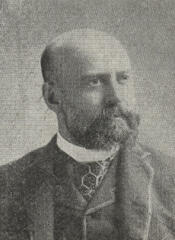
Here you will find contact information for Representative Ashbel Parmelee Fitch, including email address, phone number, and mailing address.
| Name | Ashbel Parmelee Fitch |
| Position | Representative |
| State | New York |
| District | 15 |
| Party | Democratic |
| Status | Former Representative |
| Term Start | December 5, 1887 |
| Term End | March 3, 1895 |
| Terms Served | 4 |
| Born | October 8, 1848 |
| Gender | Male |
| Bioguide ID | F000157 |
About Representative Ashbel Parmelee Fitch
Ashbel Parmelee Fitch (October 8, 1848 – May 4, 1904) was an American lawyer, financier, and politician who served four terms as a Representative from New York in the United States Congress and later as Comptroller of New York City. A member of the Democratic Party during his congressional career, he became known for his advocacy of tariff reform, his defense of immigrant rights, and his efforts to promote New York City’s commercial prominence.
Fitch was born on October 8, 1848, in Mooers, Clinton County, New York. He moved with his family to New York City in his youth, where he was raised and educated. He attended public schools in the city and later pursued higher education both in the United States and abroad. Fitch studied at the University of Michigan and then continued his studies in Europe, attending the University of Jena and the University of Berlin in Germany. This extended period of study overseas exposed him to European political and economic thought, which later informed his positions on trade and finance.
After completing his education, Fitch returned to New York City and studied law. He was admitted to the bar and commenced practice as an attorney, establishing himself in the city’s legal and financial circles. His legal work and growing reputation as a skilled advocate and student of economic issues led him into public life. By the mid-1880s he had become active in politics in New York, aligning with the Democratic Party and emerging as a prominent voice on questions of national finance and tariff policy.
Fitch was elected as a Democrat to the Fiftieth Congress and was subsequently re-elected to the Fifty-first, Fifty-second, and Fifty-third Congresses, serving from March 4, 1887, until January 30, 1894, as a U.S. Representative from New York. His service in Congress occurred during a significant period in American history marked by industrial expansion, intense debate over tariff policy, and large-scale immigration. As a member of the House of Representatives, he participated in the legislative process and represented the interests of his New York constituents, many of whom were directly affected by federal trade and immigration policies.
During his congressional tenure, Fitch worked actively to have New York City selected as the site for the 1892 World Exposition, reflecting his commitment to enhancing the city’s status as a global commercial and cultural center. He defended immigrant rights at a time of rising nativist sentiment, arguing that newcomers were essential to the nation’s economic growth and urban development. A consistent advocate of tariff reform, he supported efforts to reduce protective tariffs and urged passage of the Mills Tariff Reform Bill, aligning himself with the broader Democratic push to lower duties and ease the burden on consumers and import-dependent industries. In recognition of his abilities, he was chosen to chair the Committee on Private Land Claims and the Committee on Election of President, Vice President, and Representatives, positions that placed him at the center of important questions involving property rights and the federal electoral framework.
Fitch resigned from Congress on January 30, 1894, to assume the office of Comptroller of New York City, a key municipal post responsible for overseeing the city’s finances. As Comptroller, he applied his legal and financial expertise to the management of New York’s fiscal affairs during a period of rapid urban growth and significant public investment in infrastructure. His tenure reflected his broader interest in sound public finance and efficient administration, and it further solidified his reputation as a capable manager of large and complex financial operations.
After leaving municipal office, Fitch turned more fully to private finance. In 1899 he became the founding president of the Trust Company of America, an important New York financial institution organized during an era of expanding trust and banking activity. He remained president of the Trust Company of America from its founding until his death in May 1904, guiding its early development and operations. In addition to this role, he served as a director of several enterprises, including the American Light and Traction Company and the Lion Brewery, reflecting his broad engagement with the city’s industrial and utility sectors and his stature within New York’s business community.
Ashbel Parmelee Fitch died in New York City on May 4, 1904, while still serving as president of the Trust Company of America. His career spanned law, politics, and finance, and his work in Congress, as Comptroller of New York City, and as a financial executive linked him closely to the economic and political transformations of the late nineteenth and early twentieth centuries.