Representative Asher Crosby Hinds
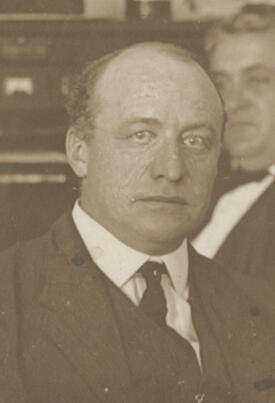
Here you will find contact information for Representative Asher Crosby Hinds, including email address, phone number, and mailing address.
| Name | Asher Crosby Hinds |
| Position | Representative |
| State | Maine |
| District | 1 |
| Party | Republican |
| Status | Former Representative |
| Term Start | April 4, 1911 |
| Term End | March 3, 1917 |
| Terms Served | 3 |
| Born | February 6, 1863 |
| Gender | Male |
| Bioguide ID | H000630 |
About Representative Asher Crosby Hinds
Asher Crosby Hinds (February 6, 1863 – May 1, 1919) was an American newspaperman, parliamentary expert, and Republican politician who served three terms as a United States Representative from Maine from 1911 to 1917. His congressional service occurred during a significant period in American history, and he became known both for his work as a legislator and for his influential role in shaping and interpreting the procedural rules of the U.S. House of Representatives.
Hinds was born in Benton, Kennebec County, Maine, on February 6, 1863. He was educated in the public schools and at the Coburn Classical Institute in Waterville, Maine, an academy that prepared students for collegiate study. He then attended Colby College, also in Waterville, from which he graduated in 1883. His early education, grounded in classical studies and rigorous academic training, provided the foundation for his later expertise in parliamentary law and legislative procedure.
After completing his college education, Hinds entered journalism. In 1884 he began newspaper work in Portland, Maine, where he gained experience in political reporting and public affairs. His familiarity with politics and government, developed through his work as a newspaperman, led to opportunities in the nation’s capital. On September 3, 1891, he married Harriett Louise Estey; the couple had two children, and his family life ran parallel to a steadily advancing career in congressional administration and procedure.
Hinds’s formal association with the U.S. House of Representatives began when he was appointed a clerk to the Speaker of the House from 1889 to 1891. He later returned to the Speaker’s office in an even more central role, serving as clerk at the Speaker’s table from 1895 to 1911. In that capacity he advised successive Speakers on points of order and parliamentary rulings, and he became one of the leading authorities on House procedure. His expertise was reflected in his editorial work on the Rules, Manual, and Digest of the House of Representatives in 1899, a key reference work for members and staff. He later edited the monumental five-volume Hinds’ Precedents of the House of Representatives of the United States, published in 1907, which systematically compiled and analyzed the procedural rulings and practices of the House. A later scholarly study in 2013 concluded that Hinds’ Precedents successfully altered the behavior of House members, who became less willing to appeal decisions of the chair, thereby strengthening the authority of presiding officers and clarifying procedural norms.
In addition to his procedural and editorial work, Hinds wrote on public policy and related subjects. His publications included The Canadian Agreement as Related to the Farm Home and Cost of Living in Cities (1911), which addressed issues of trade and its impact on agriculture and urban life, and Predaceous Fishes and Aquatic Animals (1914), reflecting a broader range of interests beyond parliamentary law. These works, alongside his House manuals and precedents, contributed to his reputation as a careful analyst and writer on technical and policy matters.
Hinds transitioned from staff expert to elected official when he was chosen as a Republican to represent Maine in Congress. He was elected to the Sixty-second, Sixty-third, and Sixty-fourth Congresses, serving from March 4, 1911, to March 3, 1917. As a member of the House of Representatives, he participated in the democratic process during a transformative era in American politics, representing the interests of his Maine constituents while bringing to the chamber an unparalleled command of its rules and precedents. His three terms in office coincided with the presidency of Woodrow Wilson and the Progressive Era, a time of significant legislative activity and institutional change, during which his procedural knowledge informed both debate and decision-making.
After leaving Congress in 1917, Hinds continued to reside in Washington, D.C. He remained closely associated with the institutional life of the capital, his earlier works on House procedure continuing to guide members, clerks, and parliamentarians. He lived in Washington until his death on May 1, 1919. Asher Crosby Hinds was buried in Evergreen Cemetery in Portland, Maine, returning in death to the state that had shaped his early life and that he had represented in the national legislature.