Senator Asher Robbins
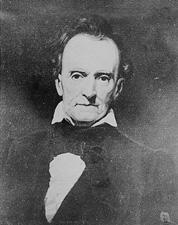
Here you will find contact information for Senator Asher Robbins, including email address, phone number, and mailing address.
| Name | Asher Robbins |
| Position | Senator |
| State | Rhode Island |
| Party | Whig |
| Status | Former Representative |
| Term Start | December 5, 1825 |
| Term End | March 3, 1839 |
| Terms Served | 3 |
| Born | October 26, 1761 |
| Gender | Male |
| Bioguide ID | R000297 |
About Senator Asher Robbins
Asher Robbins (also known as Ashur Robbins; October 26, 1761 – February 25, 1845) was a United States senator from Rhode Island who served in the United States Congress from 1825 to 1839. Born in Wethersfield, Connecticut, on October 26, 1761, he came of age during the American Revolutionary era, an experience that framed his later public career in the early decades of the Republic. Details of his family background in Wethersfield are sparse in the historical record, but his subsequent academic and professional achievements indicate an early education sufficient to gain him admission to one of the leading colonial colleges.
Robbins pursued higher education at Yale College, from which he graduated in 1782. Immediately after graduation, he entered academic life, serving as a tutor at Rhode Island College (now Brown University) from 1782 to 1790. His eight-year tenure as a tutor reflected both his scholarly aptitude and the close ties he developed with Rhode Island, the state that would become the center of his professional and political life. During or following this period, Robbins studied law, preparing for entry into the legal profession at a time when formal legal education was typically obtained through apprenticeship and independent study rather than through specialized law schools.
After completing his legal studies, Robbins was admitted to the bar in 1792 and commenced the practice of law in Providence, Rhode Island. His legal work in Providence established his reputation within the state’s professional and political circles. In 1795 he moved to Newport, Rhode Island, a significant commercial and maritime center, where he continued to practice law. His growing prominence led him to seek federal office; in 1800 he stood as a Federalist candidate for Rhode Island’s at-large congressional district, reflecting his early alignment with the Federalist Party during the formative years of the nation’s party system, although he was not elected at that time.
Robbins’s public career advanced substantially in the early nineteenth century. In 1812 he was appointed United States district attorney, a federal prosecutorial post that underscored the confidence placed in his legal abilities by national authorities. He subsequently entered state politics as a member of the Rhode Island General Assembly, serving from 1818 to 1825. In the Assembly he participated in shaping state legislation during a period marked by post–War of 1812 economic adjustment and the early stirrings of broader democratic reform. His legislative experience at the state level provided a foundation for his later work in the United States Senate.
In 1825 Robbins was elected to the United States Senate from Rhode Island to fill the vacancy caused by the resignation of Senator James De Wolf. Initially elected as an Adams candidate, he later aligned with the Anti-Jacksonian faction and ultimately with the Whig Party as the nation’s party system evolved. He was reelected to the Senate in 1827 and again in 1833, serving three full terms from October 31, 1825, to March 3, 1839. During these fourteen years, a significant period in American history encompassing the presidencies of John Quincy Adams, Andrew Jackson, and Martin Van Buren, Robbins contributed to the legislative process and participated in the democratic governance of the expanding republic. He represented the interests of Rhode Island’s constituents in debates over economic policy, federal power, and the role of the executive. While in the Senate, he served as chairman of the Committee on Engrossed Bills during the Twenty-second Congress, overseeing the final preparation of legislative texts before their enactment, a position that required attention to detail and familiarity with the legislative process.
As a member of the Senate and later as a Whig, Robbins took part in the broader national discourse surrounding the policies of President Andrew Jackson. He was among the authors of “A Statement of Some Leading Principles and Measures Adopted by General Jackson,” a document critical of Jacksonian measures and reflective of the opposition’s constitutional and policy concerns. His party evolution—from Federalist to Adams supporter, then Anti-Jacksonian, and finally Whig—mirrored the realignment of American political parties in the early nineteenth century, as older Federalist and Democratic-Republican labels gave way to new coalitions organized around issues such as the national bank, internal improvements, and executive authority.
After concluding his service in the United States Senate in 1839, Robbins returned to Rhode Island politics and public service. He again became a member of the Rhode Island General Assembly from 1840 to 1841, continuing to influence state affairs late in his life. In 1841 he was appointed postmaster of Newport, a federal administrative position he held until his death. His long career, spanning academic work, legal practice, state legislative service, and national office, reflected a sustained engagement with public life over more than half a century.
Asher Robbins died in Newport, Rhode Island, on February 25, 1845, while still serving as postmaster. He was interred in the Common Burial Ground in Newport, a historic cemetery that contains the graves of many of the city’s prominent citizens. His family life included a notable literary connection: his daughter, Sophia Louise Little, became known as a poet, contributing to the cultural as well as the political legacy of the Robbins family.