Senator Asle Jorgenson Gronna
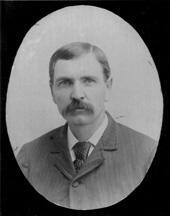
Here you will find contact information for Senator Asle Jorgenson Gronna, including email address, phone number, and mailing address.
| Name | Asle Jorgenson Gronna |
| Position | Senator |
| State | North Dakota |
| Party | Republican |
| Status | Former Representative |
| Term Start | December 4, 1905 |
| Term End | March 3, 1921 |
| Terms Served | 5 |
| Born | December 10, 1858 |
| Gender | Male |
| Bioguide ID | G000491 |
About Senator Asle Jorgenson Gronna
Asle Jorgenson Gronna (December 10, 1858 – May 4, 1922) was an American politician of Norwegian ancestry who represented North Dakota in both the United States House of Representatives and the United States Senate. A member of the Republican Party, he served in Congress from 1905 to 1921, contributing to the legislative process during five terms in office. He became nationally known as one of six senators to vote against the United States declaration of war that led to American entry into the First World War.
Gronna was born on December 10, 1858, in Elkader, Clayton County, Iowa, to Norwegian immigrant parents. During his childhood the family moved to Houston County, Minnesota, where he was raised. He attended the public schools of Houston County and continued his education at Caledonia Academy in Caledonia, Minnesota. After completing his studies there, he qualified as a schoolteacher and began his professional life teaching in Wilmington, Minnesota, gaining early experience in education and local community affairs.
In 1879, Gronna moved west to the Dakota Territory, where he combined farming with teaching and a variety of business ventures. Settling in what would become North Dakota, he became an active civic leader in the town of Lakota. He served as president of the village of Lakota and as president of Lakota’s board of education, roles that reflected his continuing interest in public service and education. His growing prominence in local affairs led to his election as a Republican to the Dakota Territorial House of Representatives in 1889, marking his formal entry into territorial and, later, state politics.
Gronna advanced to national office in 1904, when he was elected as a Republican to the United States House of Representatives from North Dakota. He took his seat in the 59th Congress in 1905 and was reelected in 1906 and 1908, serving in the 59th, 60th, and 61st Congresses. During these years in the House, he represented the interests of his largely agrarian constituents and participated actively in the legislative process at a time of significant economic and political change in the United States.
In 1911, Gronna was elected to the United States Senate to fill the vacancy caused by the death of Senator Martin N. Johnson. He entered the Senate during the 62nd Congress and was reelected in 1914, serving through the 65th Congress. His Senate tenure thus extended from 1911 until March 3, 1921, encompassing a period of profound national transformation that included the Progressive Era, World War I, and the postwar debates over America’s role in the world. He was an unsuccessful candidate for reelection in 1920 and left office at the expiration of his term in March 1921.
In Congress, Gronna developed a reputation as a Republican who reflected the attitudes of his Upper Midwest region—progressive in domestic policy and strongly isolationist in foreign affairs. He was critical of the preparedness movement prior to World War I and blamed munitions manufacturers for promoting policies that, in his view, pushed the United States toward war. During the debate over American entry into World War I, he was one of only six senators to vote against the declaration of war, placing him among the “little group of willful men” who opposed President Woodrow Wilson’s interventionist course. In 1919, he was a staunch opponent of the proposed League of Nations, arguing that membership would unduly entangle the United States in foreign relationships and limit national decision-making authority.
Gronna’s public life was closely connected to his family’s continuing involvement in North Dakota politics. He and his wife, Bertha, were the parents of five children. Two of their sons went on to hold statewide office: James D. Gronna served as Secretary of State of North Dakota, and Arthur J. Gronna served as Attorney General of North Dakota, extending the family’s influence in the state’s public affairs.
Asle Jorgenson Gronna died on May 4, 1922, one year after leaving the Senate. His career spanned the transition from territorial government to statehood in the northern plains and from a largely inward-looking republic to a nation debating its global responsibilities, and his record in Congress reflected both the progressive impulses and the isolationist sentiments of his North Dakota constituents.