Representative Atterson Walden Rucker
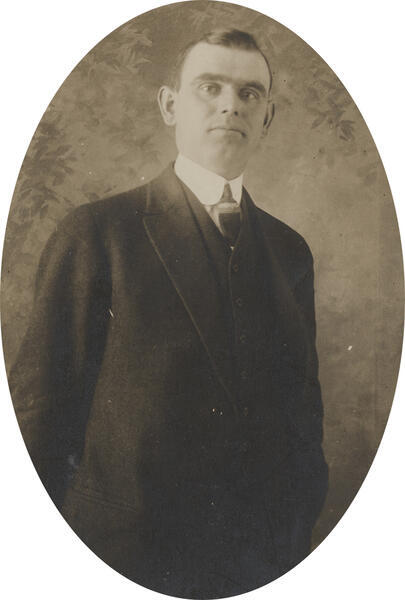
Here you will find contact information for Representative Atterson Walden Rucker, including email address, phone number, and mailing address.
| Name | Atterson Walden Rucker |
| Position | Representative |
| State | Colorado |
| District | 1 |
| Party | Democratic |
| Status | Former Representative |
| Term Start | March 15, 1909 |
| Term End | March 3, 1913 |
| Terms Served | 2 |
| Born | April 3, 1847 |
| Gender | Male |
| Bioguide ID | R000492 |
About Representative Atterson Walden Rucker
Atterson Walden Rucker (April 3, 1847 – July 19, 1924) was an American lawyer, mining executive, and Democratic politician who served as a U.S. Representative from Colorado from 1909 to 1913. His career spanned law, local judicial service, and mining development in the Rocky Mountain region, and he was also a veteran of the Confederate States Army during the Civil War.
Rucker was born in Harrodsburg, Kentucky, on April 3, 1847. In his early youth he moved with his parents to Missouri, where he attended the common schools. Growing up in a border state during a period of national turmoil, he entered military service at a young age and served four years in the Confederate States Army during the Civil War. His wartime experience preceded his entry into the legal profession in the Reconstruction era.
After the war, Rucker studied law and was admitted to the bar in 1868. He commenced the practice of law in Lexington, Missouri, in 1869, establishing himself professionally in a region still adjusting to the postwar legal and political order. In 1873 he moved to Baxter Springs, Kansas, where he resumed the practice of law. His relocations during this period reflected the broader westward movement of Americans seeking new economic and professional opportunities.
Rucker moved farther west in 1879, settling in Leadville, Colorado, where he continued to practice law and became increasingly involved in the region’s burgeoning mining industry. His legal expertise and growing interest in mining led to his appointment as judge of the court of records of Lake County, Colorado, in 1881, a position he held through 1882. In this judicial role he presided over matters in a county at the center of Colorado’s mining boom. In 1885 he moved to Aspen, Colorado, where he became largely interested in the development of mining projects, combining his legal background with executive and investment activities in the mining sector.
Building on his prominence in Colorado’s legal and business communities, Rucker entered national politics as a member of the Democratic Party. He was elected as a Democrat to the Sixty-first and Sixty-second Congresses, serving as a U.S. Representative from Colorado from March 4, 1909, to March 3, 1913. During his two terms in the House of Representatives, he participated in the legislative process during a significant period in American history, representing the interests of his Colorado constituents and contributing to the work of Congress in the years leading up to the Progressive Era reforms and the administration of President Woodrow Wilson. A member of the Democratic Party throughout his congressional career, he took part in the democratic process at the federal level as Colorado continued to develop its mining, agricultural, and industrial economy.
Rucker was an unsuccessful candidate for renomination in 1912, which brought his congressional service to a close at the end of the Sixty-second Congress in March 1913. After leaving Congress, he returned to Colorado and settled in Denver, where he resumed his career in the mining business. In his later years he remained associated with the industry that had shaped much of his professional life, reflecting the long-standing connection between his legal, business, and political activities and the economic development of Colorado.
Atterson Walden Rucker died near Mount Morrison, Colorado, on July 19, 1924. He was interred in Littleton Cemetery in Littleton, Colorado. His life traced a path from Civil War service through frontier law practice and mining development to national legislative office, marking him as a figure of the postbellum American West and early twentieth-century Colorado politics.