Senator Augustus Caesar Dodge
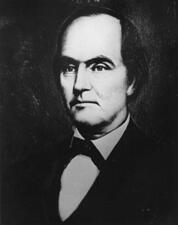
Here you will find contact information for Senator Augustus Caesar Dodge, including email address, phone number, and mailing address.
| Name | Augustus Caesar Dodge |
| Position | Senator |
| State | Iowa |
| Party | Democratic |
| Status | Former Representative |
| Term Start | December 28, 1840 |
| Term End | February 22, 1855 |
| Terms Served | 6 |
| Born | January 2, 1812 |
| Gender | Male |
| Bioguide ID | D000394 |
About Senator Augustus Caesar Dodge
Augustus Caesar Dodge (January 4, 1812 – November 21, 1883) was a Democratic delegate to the U.S. House of Representatives from Iowa Territory, a United States senator from Iowa, and a U.S. minister to Spain. He was born in what is now Ste. Genevieve, Missouri, then part of the Louisiana Territory, the son of Henry Dodge, who would later become a U.S. senator from Wisconsin. The Dodges formed a notable political family in the early Midwest, and Augustus grew up on the frontier during a period of rapid territorial expansion and conflict. Largely self-educated, he did not attend formal institutions of higher learning, instead acquiring practical experience and political awareness through work and military service.
In 1827 Dodge moved to Illinois and settled in Galena, a booming lead-mining center. There he was employed in various capacities in his father’s lead mines, gaining familiarity with land, mineral, and commercial issues that would later inform his public career. During the early 1830s he served in the Black Hawk War and other Indian wars, participating in the militia campaigns that accompanied U.S. expansion into the Upper Mississippi Valley. These experiences on the frontier, combined with his family’s growing prominence, helped establish his reputation in the region and prepared him for public office.
In 1837 Dodge moved to what is now Burlington, Iowa, then part of Wisconsin Territory, at a time when the area was being rapidly settled by migrants from the eastern states. He was appointed register of the federal land office at Burlington, a position he held until 1840. In that role he oversaw the recording and administration of land claims and sales, a critical responsibility in a territory where land policy shaped settlement patterns and economic development. His work in the land office brought him into close contact with local settlers and territorial leaders and provided a platform for his entry into elective politics.
Dodge’s congressional service began when he was elected as a Democratic delegate to the U.S. House of Representatives from Iowa Territory. He served as territorial delegate in the Twenty-seventh, Twenty-eighth, and Twenty-ninth Congresses, from March 4, 1841, until Iowa achieved statehood on December 28, 1846. As a non-voting delegate, he represented the interests of the territory in Washington, advocating for internal improvements, land measures, and policies favorable to western development. His tenure coincided with a significant period in American history marked by debates over expansion, the Mexican–American War, and the status of new territories.
Upon Iowa’s admission to the Union as a state, Dodge was elected as one of its first two United States senators. A member of the Democratic Party, he served in the Senate from December 7, 1848, to February 22, 1855, contributing to the legislative process during multiple terms in office and representing the interests of his constituents during a time of intensifying national conflict over slavery and sectional balance. During his Senate service he sat concurrently with his father, Henry Dodge of Wisconsin, making them the first and so far the only father–son pair to serve at the same time in the United States Senate, a distinction they held from 1848 to 1855. In the Senate, Augustus C. Dodge participated in debates over western expansion, public lands, and the organization of new territories, and he was involved in the broader democratic process that shaped mid-nineteenth-century national policy.
After leaving the Senate in 1855, Dodge continued his public career in diplomacy. He was appointed U.S. minister to Spain, serving from 1855 to 1859. His tenure in Madrid occurred during a period when the United States showed strong interest in Caribbean and Atlantic affairs, including discussions surrounding the possible acquisition of Cuba. As minister, Dodge represented U.S. interests at the Spanish court and took part in the complex diplomatic environment of pre–Civil War international relations.
In his later years, Dodge returned to Iowa, where he remained a respected figure in state and local affairs. He lived in Burlington, which had long been his home and political base, and maintained his association with the Democratic Party and with the generation of leaders who had guided the transition from territory to statehood. Augustus Caesar Dodge died on November 21, 1883, leaving a legacy as one of Iowa’s earliest and most prominent federal officeholders and as part of the only father–son duo to serve concurrently in the United States Senate.