Representative Augustus Frank
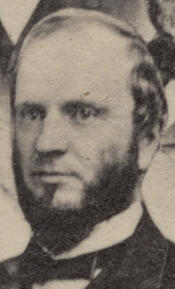
Here you will find contact information for Representative Augustus Frank, including email address, phone number, and mailing address.
| Name | Augustus Frank |
| Position | Representative |
| State | New York |
| District | 29 |
| Party | Republican |
| Status | Former Representative |
| Term Start | December 5, 1859 |
| Term End | March 3, 1865 |
| Terms Served | 3 |
| Born | July 17, 1826 |
| Gender | Male |
| Bioguide ID | F000338 |
About Representative Augustus Frank
Augustus Frank (July 17, 1826 – April 29, 1895) was an American merchant, railroad executive, banker, and politician who served as a United States Representative from New York during the American Civil War. A member of the Republican Party, he represented his state in the U.S. House of Representatives for three consecutive terms from 1859 to 1865, participating in the legislative process during one of the most significant and turbulent periods in American history.
Frank was born on July 17, 1826, in Warsaw, Wyoming County, New York, the son of Augustus and Jane (Patterson) Frank. He was educated in the common schools of his native region, receiving the basic formal instruction typical of rural New York in the early nineteenth century. After completing his schooling, he entered the world of business at a young age, laying the foundation for a career that would combine commercial enterprise with public service.
Before entering national politics, Frank engaged in mercantile pursuits in and around Warsaw. His work as a merchant helped establish him as a prominent local businessman and provided him with practical experience in trade, finance, and management. Over time, he expanded his interests beyond mercantile activity, becoming involved in banking and railroad enterprises. As a railroad executive and banker, he participated in the economic development of his region, contributing to the growth of transportation and financial infrastructure in western New York.
Frank’s political career reached its height with his election to the United States House of Representatives as a Republican from New York. He took his seat in Congress in 1859 and served through 1865, encompassing the Thirty-sixth, Thirty-seventh, and Thirty-eighth Congresses. During these three terms in office, he represented the interests of his constituents while the nation moved from sectional crisis into full-scale civil war and, ultimately, toward reunion. As a member of the House of Representatives, he participated in debates and votes on issues central to the preservation of the Union, the conduct of the war, and the reshaping of federal policy in the early stages of Reconstruction.
Serving in Congress during the American Civil War, Frank was part of the Republican majority that supported the Lincoln administration and the Union war effort. In this capacity, he contributed to the democratic process at the national level, helping to frame legislation affecting military appropriations, wartime finance, and the broader transformation of the federal government’s role in American life. His tenure coincided with major legislative initiatives that redefined the relationship between the states and the federal government and laid groundwork for postwar economic expansion.
After leaving Congress in 1865, Frank returned to his business interests in New York, resuming and expanding his work in banking and railroad management. His experience in national affairs and his established reputation as a businessman made him a significant figure in regional economic life. As a banker, he was involved in directing capital and credit in a period of rapid industrialization, and as a railroad executive he contributed to the continued development of transportation networks that linked rural communities like Warsaw to larger markets and urban centers.
Augustus Frank died on April 29, 1895, in New York. His death was noted in contemporary accounts, including the Wyoming County Times on May 2, 1895, which recorded the passing of a prominent local and national figure. Remembered as a merchant, railroad executive, banker, and three-term Republican congressman, he was closely associated with both the economic growth of western New York and the national struggle to preserve the Union during the Civil War.