Representative Augustus Peabody Gardner
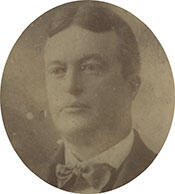
Here you will find contact information for Representative Augustus Peabody Gardner, including email address, phone number, and mailing address.
| Name | Augustus Peabody Gardner |
| Position | Representative |
| State | Massachusetts |
| District | 6 |
| Party | Republican |
| Status | Former Representative |
| Term Start | December 2, 1901 |
| Term End | March 3, 1919 |
| Terms Served | 9 |
| Born | November 5, 1865 |
| Gender | Male |
| Bioguide ID | G000050 |
About Representative Augustus Peabody Gardner
Augustus Peabody Gardner (November 5, 1865 – January 14, 1918) was an American military officer and Republican Party politician from Massachusetts who served as a Representative from Massachusetts in the United States Congress from 1901 to 1919. Over nine terms in the House of Representatives, he represented the North Shore region and contributed to the legislative process during a significant period in American history. He also served in the Massachusetts Senate and, through his marriage to Constance Lodge, was the son-in-law of Representative and later Senator Henry Cabot Lodge.
Gardner was born in Boston, Massachusetts, on November 5, 1865, to Joseph Peabody Gardner and Harriet Sears Amory, and was a descendant of early Massachusetts colonist Thomas Gardner. His mother died in 1865, the year of his birth, and his father died in 1875. After his father’s death, Augustus and his two brothers were informally adopted by their uncle, John Lowell Gardner II, and John’s wife, the noted art collector and philanthropist Isabella Stewart Gardner. Raised in this prominent Boston family, he grew up in an environment of social standing and public engagement that shaped his later political and military career.
Gardner attended Harvard University, graduating in 1886. He went on to study law at Harvard Law School, but he never entered legal practice. Instead, he devoted himself to the management of his estate and to public and civic affairs in Massachusetts. On June 14, 1892, he married Constance Lodge, daughter of then-Representative and soon-to-be Senator Henry Cabot Lodge, in a ceremony at Saint Anne’s Church in Nahant, Massachusetts. This marriage linked him closely to one of the leading Republican political families of the era and reinforced his own identification with the Republican Party.
With the outbreak of the Spanish–American War, Gardner entered military service. He served from May 12 to December 31, 1898, as a captain and assistant adjutant general on the staff of Major General James H. Wilson. In this capacity he saw action at the Battle of Coamo in Puerto Rico. His wartime experience strengthened his interest in national defense and military affairs, themes that would later figure prominently in his congressional career.
Gardner’s formal political career began soon after his return from the war. A member of the Republican Party, like his father-in-law, he was elected to the Massachusetts Senate in 1899 and served from 1900 to 1901, representing the North Shore region. In this role he gained experience in state-level legislation and party politics. His performance in the state senate and his established family connections positioned him for higher office at the national level.
Gardner was elected to the Fifty-seventh Congress by special election following the resignation of United States Representative William H. Moody. He took his seat in the House of Representatives on November 4, 1902, and was subsequently reelected to the eight succeeding Congresses, serving continuously until May 15, 1917. During his tenure, he was chairman of the United States House Committee on Industrial Arts and Expositions during the Fifty-ninth and Sixtieth Congresses. In the House, he favored limiting the powers of the Speaker, placing him in opposition to Republican Speaker Joseph G. Cannon and Cannon’s allies. He advocated restrictions on immigration and supported a substantial build-up of the American national military establishment, preferring a strong regular army over reliance on state militias. In 1913, he was the Republican nominee for Governor of Massachusetts, but he finished third in the general election behind Democrat David I. Walsh and Progressive Party candidate Charles Sumner Bird.
Gardner’s concern for international affairs and the safety of his extended family was evident at the outset of World War I. In August 1914, after hostilities in Europe began, his sister-in-law, Mrs. George Cabot Lodge, and her children—Henry, John, and Helene—were stranded in France. Gardner traveled to France to extract them and successfully brought them to safety in London. His actions reflected both his personal sense of duty and his familiarity with military and diplomatic conditions abroad.
Shortly after the United States declared war on Germany in April 1917, Gardner chose to leave legislative service for active military duty. He resigned from Congress and entered the United States Army on May 24, 1917, as a colonel in the Adjutant General’s Department. He was first assigned to the headquarters of the Eastern Department at Governors Island in New York Harbor and later served as adjutant of the 31st Division. Desiring combat duty rather than administrative service, he requested and accepted a demotion to the rank of major on December 8, 1917. He was then placed in command of the 1st Battalion, 121st Infantry, 31st Division, stationed at Camp Wheeler in Georgia.
While on active duty at Macon, Georgia, Gardner contracted pneumonia and died there on January 14, 1918. He was buried with military honors in Arlington National Cemetery. In 1923, he was posthumously awarded the Distinguished Service Medal for meritorious service during World War I; the citation noted that “his entire service was characterized by untiring zeal, devotion to duty and marked success.” In addition to the Distinguished Service Medal, his military decorations included the Spanish Campaign Medal and the World War I Victory Medal. After his death, his widow, Constance Lodge Gardner, later remarried Major General Charles Clarence Williams, who served as U.S. Army Chief of Ordnance.