Representative Augustus McCloskey
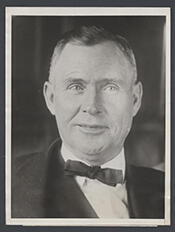
Here you will find contact information for Representative Augustus McCloskey, including email address, phone number, and mailing address.
| Name | Augustus McCloskey |
| Position | Representative |
| State | Texas |
| District | 14 |
| Party | Democratic |
| Status | Former Representative |
| Term Start | April 15, 1929 |
| Term End | March 3, 1931 |
| Terms Served | 1 |
| Born | September 23, 1878 |
| Gender | Male |
| Bioguide ID | M000341 |
About Representative Augustus McCloskey
Augustus McCloskey (September 23, 1878 – July 21, 1950) was an American lawyer, jurist, and Democratic politician who served as a U.S. Representative from Texas during the Seventy-first Congress. Born in San Antonio, Bexar County, Texas, he spent his early years in and around the city that would remain the center of his professional and political life. He attended the public school at Atascosa, Texas, and later pursued his education at St. Joseph’s Academy in San Antonio and St. Mary’s College, also in San Antonio, institutions that provided him with a foundation in classical and practical studies suited to a legal and public career.
After completing his formal education, McCloskey entered the workforce as a stenographer, a position he held from 1903 to 1907. This early employment in clerical and record-keeping work exposed him to legal and governmental processes and helped prepare him for the study of law. During this period he read law, and in 1907 he was admitted to the bar. He immediately commenced the practice of law in San Antonio, building a legal career that would span more than four decades, interrupted only by his periods of public service on the bench and in Congress.
McCloskey’s growing reputation as an attorney led to his election as judge of Bexar County, a position he held from 1920 to 1928. As county judge, he presided over local judicial and administrative matters during a decade marked by post–World War I adjustments and the onset of Prohibition, when county officials played an important role in law enforcement and local governance. His prominence in Texas Democratic politics was further underscored by his selection as a delegate to the Democratic National Convention held in Houston in 1928, where the party nominated Alfred E. Smith for President. This role placed him among the active Democratic leadership in Texas at a time when the party dominated state politics.
Building on his judicial and party experience, McCloskey sought national office and presented his credentials as a Democratic Member-elect to the Seventy-first Congress. He was seated and served as a Representative from Texas from March 4, 1929, to February 10, 1930. His term in the House of Representatives coincided with a significant period in American history, including the onset of the Great Depression following the stock market crash of October 1929. During his time in Congress, he participated in the legislative process and represented the interests of his Texas constituents as a member of the Democratic Party in a closely divided national legislature.
McCloskey’s congressional service was cut short when his election was successfully contested by his Republican predecessor, Harry M. Wurzbach. Wurzbach alleged gross fraud in Bexar County during the 1928 election. When the House committee investigating the contest demanded access to the election records and a recount of various ballots, McCloskey appeared before the committee and, rather than prolong the dispute, conceded the seat. He stated, “I am satisfied that I was not elected and that Mr. Wurzbach was elected, and I am contending no further in this matter.” Following the committee’s review, the vote totals were revised: instead of McCloskey winning by 319 votes, he was found to have lost by 61 votes. As a result, he was succeeded by Wurzbach on February 10, 1930. McCloskey did not seek renomination in 1930, bringing his brief congressional career to a close.
After leaving Congress, McCloskey resumed the practice of law in San Antonio, returning to the private bar where he had established his earlier reputation. He continued to be active in local legal affairs and later reentered public service at the municipal level. From January 1943 to July 1947, he served as judge of the corporation court of San Antonio, a city court with jurisdiction over municipal ordinances and minor offenses. In this capacity he again combined legal expertise with public responsibility, contributing to the administration of justice in the rapidly growing city during the World War II and immediate postwar years.
Following his service on the corporation court, McCloskey continued to practice law in San Antonio until his death. He died in his native city on July 21, 1950. He was interred in San Fernando Cemetery in San Antonio, closing a life and career that had been closely tied to the legal, political, and civic life of Bexar County and the state of Texas.