Senator Augustus Seymour Porter
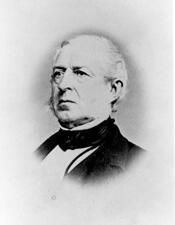
Here you will find contact information for Senator Augustus Seymour Porter, including email address, phone number, and mailing address.
| Name | Augustus Seymour Porter |
| Position | Senator |
| State | Michigan |
| Party | Whig |
| Status | Former Representative |
| Term Start | January 1, 1840 |
| Term End | March 3, 1845 |
| Terms Served | 1 |
| Born | January 18, 1798 |
| Gender | Male |
| Bioguide ID | P000437 |
About Senator Augustus Seymour Porter
Augustus Seymour Porter (January 18, 1798 – September 18, 1872) was a U.S. statesman and Whig politician who represented Michigan in the United States Senate from 1839 to 1845, serving one full term in Congress. His senatorial career unfolded during a significant period in American history, as the nation grappled with questions of internal improvements, westward expansion, and the evolving balance of power between the states and the federal government. Throughout his term, Porter participated in the democratic process and worked to represent the interests of his Michigan constituents within the broader national legislative arena.
Porter was born on January 18, 1798, in Canandaigua, New York. He was the son of Augustus Porter (1769–1849), a prominent early settler and developer in the Niagara frontier region, and his first wife, Lavinia Steele. He grew up in a family deeply involved in public affairs and frontier enterprise. His brothers were Albert Howell Porter (1801–1888) and Peter Buell Porter, Jr. (1806–1871), and his uncle, Peter Buell Porter (1773–1844), served as United States Secretary of War under President John Quincy Adams. This family background placed Augustus Seymour Porter in close proximity to both legal and political life from an early age.
Porter received his early education at Canandaigua Academy in Canandaigua, New York, an institution known for preparing young men for professional careers. He later attended Union College in Schenectady, New York, from which he graduated in 1818. After completing his collegiate studies, he pursued the study of law, was admitted to the bar, and commenced legal practice in Detroit, Michigan. His move to Detroit placed him in one of the principal urban centers of the Old Northwest, at a time when Michigan was transitioning from a frontier territory toward statehood and more formal political organization.
Porter’s public career in Michigan began at the local level. In 1830, he became recorder of Detroit, an important municipal legal and administrative post. He further engaged with the region’s civic life as treasurer of the Michigan Pioneer Society in 1837, reflecting his interest in the history and development of the state. In 1838, he was elected mayor of Detroit, demonstrating growing public confidence in his leadership. He served as mayor until his resignation in 1839, when he stepped down to pursue higher office in the United States Senate. He was succeeded as mayor by Asher B. Bates on March 14, 1839.
A member of the Whig Party, Porter was elected to the United States Senate from Michigan and formally took his seat on January 20, 1840. His service in Congress extended until March 3, 1845, encompassing one full term in office during a formative era in the nation’s political development. During his tenure, he contributed to the legislative process as part of the Whig effort to promote economic development and internal improvements. Porter served as chairman of the Senate Committee on Roads and Canals from 1841 to 1845, a position that placed him at the center of debates over federal support for transportation infrastructure. He also served on the Committee on Enrolled Bills from 1841 to 1843, participating in the final review of legislation before it was presented for enactment. He did not run for reelection in 1844, concluding his senatorial service at the end of his term in 1845.
Porter’s personal life was marked by both family connections to prominent American figures and episodes of private loss. On July 25, 1822, he married Sarah A. Mansfield, who died in 1824, only a few months after the birth of their only child, Samuel M. Porter (b. 1824), who himself died in youth. On September 24, 1832, Porter married his second wife, Sarah G. Barnard (1807–1885), his cousin and the daughter of Robert Foster Barnard (1784–1850) and Augusta Porter (1786–1833). Through this marriage, Porter was connected to several notable Americans: Sarah’s brother, Frederick Augustus Porter Barnard (1809–1889), later served as president of Columbia University, and another brother, Gen. John G. Barnard (1815–1882), became a distinguished U.S. Army engineer. Sarah G. Barnard was also a niece of Senator Henry Clay (1777–1852), one of the leading statesmen of the Whig Party. Augustus and Sarah had two daughters, Jane A. Porter (b. 1833) and Sarah Frederica Porter (b. 1836). Sarah Frederica later married Stephen E. Burrall (1826–1868) in 1863 and was living in London by 1885.
In his later years, following the conclusion of his national political career, Porter withdrew from public office and returned to family life. In 1848, he moved to his father’s residence in Niagara Falls, New York, a community closely associated with the Porter family’s early development efforts along the Niagara River. He spent the remainder of his life there, removed from the direct currents of national politics but still linked through family and reputation to the broader history of the early Republic and antebellum United States. Augustus Seymour Porter died in Niagara Falls on September 18, 1872, and was interred in Oakwood Cemetery in Niagara Falls, New York.
Through his youngest daughter, Sarah Frederica, Porter was the grandfather of Guy Augustus Porter–Burrall (1865–1890), a Cambridge University–educated lawyer and lieutenant in the British Army, and Stephen E. Porter–Burrall (1868–1896), an 1883 graduate of Eton College. The family formally assumed the compound surname Porter–Burrall by letters patent from Queen Victoria on August 16, 1886, reflecting the family’s transatlantic social standing. Porter’s widow, Sarah G. Barnard Porter, died at Newport, Isle of Wight, on April 30, 1885. Through his legal career, municipal leadership in Detroit, and single term as a Whig senator from Michigan, Augustus Seymour Porter left a record of public service characteristic of the emerging political and professional class of the early nineteenth-century United States.