Representative Austin Augustus King
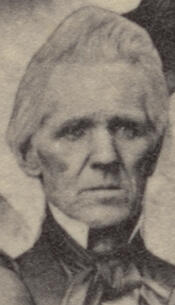
Here you will find contact information for Representative Austin Augustus King, including email address, phone number, and mailing address.
| Name | Austin Augustus King |
| Position | Representative |
| State | Missouri |
| District | 6 |
| Party | Unionist |
| Status | Former Representative |
| Term Start | December 7, 1863 |
| Term End | March 3, 1865 |
| Terms Served | 1 |
| Born | September 21, 1802 |
| Gender | Male |
| Bioguide ID | K000194 |
About Representative Austin Augustus King
Austin Augustus King (September 21, 1802 – April 22, 1870) was an American lawyer, politician, and military officer who became a leading figure in nineteenth-century Missouri. A Democrat for most of his career, he served as the tenth Governor of Missouri from 1848 to 1853 and later as a one-term United States Representative from Missouri from 1863 to 1865. During the Civil War era he was elected to Congress as a member of the Unionist coalition, reflecting his support for preserving the Union. Over the course of his public life he also served as a state legislator, circuit court judge, militia officer, and delegate to national and state political conventions.
King was born in Sullivan County, Tennessee, on September 21, 1802, one of eleven children of Walter King, a farmer, and Nancy (Sevier) King. Through his mother he was the grandson of John Sevier, the famed military leader, frontiersman, and early Tennessee politician, and this heritage of public service and military involvement strongly influenced his own career. He grew up working on the family farm and attended frontier schools in his native state. Pursuing a legal career in the customary manner of the time, he studied law under an attorney rather than at a formal law school and also took private lessons in Latin and Greek. King was admitted to the Tennessee bar in 1822 and practiced law in the Jackson, Tennessee, area for several years. On May 13, 1828, in Jackson, he married Nancy Harris Roberts, with whom he would have several children.
In 1830 King moved west to Columbia in Boone County, Missouri, where he quickly established himself in the legal and political life of the young state. He formed a successful law partnership with John B. Gordon and “rode the circuit,” traveling by horseback and occasionally by riverboat along the Missouri River to provide legal services to communities in central and eastern Missouri. Soon after his arrival he became active in Missouri Democratic politics, continuing the family tradition of public life. He also began a parallel career in the militia. With the outbreak of the Black Hawk War in 1832, King was appointed a colonel and served with the First Regiment, Third Division, Missouri State Militia, reinforcing his reputation as both a lawyer and military officer.
King entered elective office in 1834 when he was chosen to the first of two terms in the Missouri House of Representatives. Reelected in 1836, he became known as a strong advocate for improving education in the state. In November 1836 he introduced legislation to create a college dedicated to training teachers for Missouri’s common schools, an early expression of the normal school concept in the state. Throughout his political career he supported the establishment and strengthening of educational institutions, including efforts to found a college in Richmond, Missouri, support for Columbia College, and backing for the 1833 founding of Columbia Female Academy, which later became Stephens College. In 1837 King and his family moved to Ray County, Missouri, after he was appointed judge of the Missouri Fifth Circuit Court, a position he held from 1837 until 1848.
King’s judicial service placed him at the center of one of Missouri’s most controversial episodes, the 1838 Mormon War. As circuit judge he presided in Richmond, Missouri, over the preliminary proceedings against Joseph Smith, founder of the Latter Day Saint movement, and about sixty of his followers after their surrender following the Battle of Far West in Caldwell County. The defendants faced a long list of charges, including treason, murder, arson, burglary, robbery, larceny, and perjury. After an inquiry, King ordered that all but about ten of the Mormons be released, but he committed Smith and several others to the Liberty Jail in Clay County to await further proceedings. Smith later escaped custody with the connivance of his captors and fled Missouri for Illinois. While on the bench King remained active in Democratic politics, strongly supporting Martin Van Buren in the 1840 presidential campaign. He was a serious contender for the Democratic nomination for governor in 1844 but narrowly lost to John Cummins Edwards, gaining respect within the party for his gracious conduct during that divisive convention.
In 1848 King secured the Democratic nomination for governor and was elected the tenth Governor of Missouri, defeating Whig candidate James S. Rollins by nearly fifteen thousand votes. His administration, from 1848 to 1853, coincided with a period of rapid growth and development in the state. In his first year in office alone, 142 new companies received state charters. Although fiscally conservative, King recognized the importance of internal improvements and transportation infrastructure. In 1850 he recommended the issuance of $3.5 million in state bonds to finance two railroad projects, a substantial public investment in rail expansion. His tenure also saw public initiatives to drain swamplands, construct roads, and establish key state institutions, including a hospital for the mentally ill, a school for the deaf, and a home for the blind. King was disappointed, however, by the failure of his proposals to create a state Department of Education and to secure increased funding for the state university. By the time he left office, eight new counties had been organized in Missouri, underscoring the state’s continued expansion.
After leaving the governorship, King sought a seat in the United States House of Representatives from Missouri’s 4th District in 1852 but was defeated. Factional divisions between Benton Democrats and anti-Benton Democrats split the Democratic vote and enabled Whig candidate Mordecai Oliver to win the election. King returned to full-time law practice while remaining engaged in public affairs. In July 1855 he served as a delegate to the Missouri Slave Owners Convention in Lexington, where more than 200 delegates adopted resolutions defending states’ rights and endorsing a pro-slavery position for the Kansas Territory. Over time, however, King distanced himself from the most extreme pro-slavery positions; he later opposed the pro-slavery Lecompton Constitution in Kansas and criticized the practice of Missourians crossing into Kansas to influence its elections. In 1857 his first wife, Nancy Harris Roberts King, died. On August 10, 1858, in Kingston, Missouri, he married Martha Anthony Woodson. Across his two marriages he fathered nine children: sons Walter, William Augustus, Edward Livingston, Henry, Thomas Benton, and Austin Augustus Jr., and daughter Melvina Elizabeth with his first wife, and daughters Mary Bell and Nannie with his second. His son Henry died young, around age six, in 1840. Another son, Austin A. King Jr., followed the family’s martial and Unionist tradition, serving as a pro-Union officer in the Missouri State Militia and later in the Missouri Volunteer Cavalry, where he attained the rank of colonel.
As the sectional crisis deepened, King continued to participate in Democratic politics at the national level. He was a delegate to the 1860 Democratic National Convention, where he supported Stephen A. Douglas for the presidency, believing that Douglas offered the best prospect for preserving the Union. When the secession crisis erupted the following year, King publicly favored Missouri’s remaining in the Union and supported the provisional Unionist government of Governor Hamilton R. Gamble. In 1862 he briefly returned to the bench as a Missouri circuit judge before again seeking election to Congress. On November 4, 1862, running as a Democrat aligned with the Union cause, he was elected to represent Missouri’s 6th Congressional District, defeating Peace Democrat James H. Birch, Conservative Democrat Edward M. Samuel, and Emancipationist Henry B. Bouton.
King served in the United States House of Representatives from March 4, 1863, to March 3, 1865, during the Thirty-eighth Congress, a critical period of the American Civil War. Identified in contemporary terms with the Unionist Party coalition in Missouri, he participated in the legislative process at a time when Congress addressed fundamental questions of national policy and the future of slavery. During his term, Congress enacted significant measures including the Coinage Act of 1864, the establishment of the Freedmen’s Bureau, and the passage of the Thirteenth Amendment to the United States Constitution abolishing slavery. King sought reelection in 1864 but was decisively defeated, finishing a distant third behind Republican Robert T. Van Horn and fellow Democrat Elijah Hise Norton. His single term nonetheless placed him, like his grandfather John Sevier before him, in the line of family members who had served in the national legislature.
After leaving Congress, King returned to Missouri and resumed his law practice, spending his remaining years in professional and private life. He continued to reside in Ray County, where his earlier judicial and political career had been centered, and remained a respected elder statesman in Missouri Democratic and Unionist circles. Austin Augustus King died on April 22, 1870, in St. Louis, Missouri. He was buried in the city cemetery in Richmond, Ray County, Missouri. His legacy in Missouri includes not only his contributions as legislator, judge, governor, and congressman, but also his advocacy for education and internal improvements and his role in shaping the state during a period of rapid growth and national crisis. The town of Kingston, Missouri, bears his name in recognition of his influence and service.