Representative Aylett Hawes Buckner
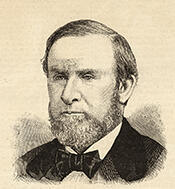
Here you will find contact information for Representative Aylett Hawes Buckner, including email address, phone number, and mailing address.
| Name | Aylett Hawes Buckner |
| Position | Representative |
| State | Missouri |
| District | 7 |
| Party | Democratic |
| Status | Former Representative |
| Term Start | December 1, 1873 |
| Term End | March 3, 1885 |
| Terms Served | 6 |
| Born | December 14, 1816 |
| Gender | Male |
| Bioguide ID | B001031 |
About Representative Aylett Hawes Buckner
Aylett Hawes Buckner (December 14, 1816 – February 5, 1894) was a U.S. Representative from Missouri who served six consecutive terms in the United States House of Representatives from 1873 to 1885. A member of the Democratic Party, he was the nephew of Aylett Hawes and a cousin of Richard Hawes and Albert Gallatin Hawes, all of whom were also involved in public life. His congressional career unfolded during a significant period in American history, in the decades following the Civil War and during the contentious Reconstruction and post-Reconstruction eras, when questions of race, citizenship, and economic policy were central to national politics.
Buckner was born in Fredericksburg, Virginia, on December 14, 1816. He pursued higher education in the nation’s capital and in his native state, attending Georgetown College in Washington, D.C., and later the University of Virginia at Charlottesville. After completing his studies, he engaged in teaching for several years, an early professional experience that preceded his move westward. In 1837 he relocated to Palmyra, Missouri, joining the growing stream of Virginians who migrated to the trans-Mississippi West in the antebellum period.
Soon after his arrival in Missouri, Buckner entered public service and the legal profession. He served as a deputy sheriff, then studied law and was admitted to the bar in 1838. He commenced the practice of law in Bowling Green, Missouri, in Pike County. In addition to his legal work, he became editor of the Salt River Journal, reflecting an early engagement with public affairs and local opinion. Buckner was elected clerk of the Pike County Court in 1841, an office that further established his standing in the community and provided administrative and judicial experience.
Buckner’s career broadened as he moved into larger arenas of law and public administration. In 1850 he moved to St. Louis, Missouri, where he continued the practice of law in the state’s principal commercial center. In 1852 he served as attorney for the Bank of the State of Missouri, a role that connected him to the state’s financial and business interests. He was appointed commissioner of public works in 1854 and served in that capacity until 1855, overseeing aspects of the state’s internal improvements at a time when transportation and infrastructure were critical to Missouri’s development. After this service, he returned to Pike County and settled on a farm near Bowling Green, combining agricultural pursuits with his legal and judicial interests.
In 1857 Buckner was elected judge of the third judicial circuit of Missouri, marking his ascent to a significant judicial position. On the eve of the Civil War, he participated in efforts to avert conflict, serving as a delegate to the convention held in Washington, D.C., in 1861 that sought to devise means to prevent the impending war. During the war years he moved to St. Charles, Missouri, in 1862 and became interested in the manufacture of tobacco in nearby St. Louis. He also engaged in mercantile pursuits, reflecting the diversification of his activities beyond law and public office. Later he moved to Mexico, in Audrain County, Missouri, which would remain closely associated with his later life.
Buckner remained active in Democratic Party politics in the years following the Civil War. He served as a member of the Democratic central committee in 1868, participating in the reorganization and strategy of the party during Reconstruction. In 1872 he was a delegate to the Democratic National Convention, which nominated Horace Greeley in an unsuccessful effort to unseat President Ulysses S. Grant. These roles positioned Buckner for national office and connected him to the broader currents of Democratic opposition to Republican Reconstruction policies.
In 1872 Buckner was elected as a Democrat to the Forty-third Congress and was subsequently reelected to the Forty-fourth, Forty-fifth, Forty-sixth, Forty-seventh, and Forty-eighth Congresses, serving from March 4, 1873, to March 3, 1885. As a Representative from Missouri, he participated in the legislative process over six terms, representing the interests of his constituents during a period of economic transformation and political realignment. During his tenure he held important committee assignments. He served as chairman of the Committee on the District of Columbia in the Forty-fourth Congress, overseeing legislation affecting the federal capital. He later chaired the Committee on Banking and Currency in the Forty-fifth, Forty-sixth, and Forty-eighth Congresses, placing him at the center of debates over national financial policy, currency, and banking regulation in the years following the Panic of 1873 and during ongoing disputes over hard money, greenbacks, and monetary stability.
Buckner’s congressional record also reflected the racial attitudes of many white southern and border-state Democrats of his era, though he was noted for particularly extreme views. He had been a slaveholder, and during his time in Congress he was a strong advocate of white racial supremacy. He enthusiastically supported restrictions on Chinese immigration and went further than many of his contemporaries in his views on African Americans. He called for the removal of African Americans from the United States, asking on the House floor, “what reason can be assigned that we do not prepare to remove, not by forced expatriation or by any form of coercion, that portion of our population that, like the Chinese, are aliens to our race, whose blood does not mingle with that of the white race without corrupting it, and whose inferiority to the white race is an admitted fact?” While other congressmen of the period opposed the expansion of rights for African Americans, even many southern members did not go so far as to advocate the removal of millions of citizens from the country, setting Buckner apart for the extremity of his racial views.
After six terms in the House of Representatives, Buckner declined to be a candidate for reelection in 1884 and retired from public life at the close of the Forty-eighth Congress in March 1885. He returned to Missouri, where he lived quietly in Mexico, Audrain County, removed from the national political stage he had occupied for more than a decade. Aylett Hawes Buckner died in Mexico, Missouri, on February 5, 1894. He was interred in Elmwood Cemetery, leaving a legacy marked by long service in law, state and national office, and by a congressional record that reflected both the economic concerns and the racial ideologies of his time.