Representative Barbara-Rose Collins
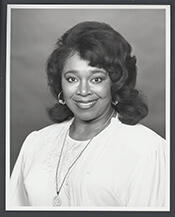
Here you will find contact information for Representative Barbara-Rose Collins, including email address, phone number, and mailing address.
| Name | Barbara-Rose Collins |
| Position | Representative |
| State | Michigan |
| District | 15 |
| Party | Democratic |
| Status | Former Representative |
| Term Start | January 3, 1991 |
| Term End | January 3, 1997 |
| Terms Served | 3 |
| Born | April 13, 1939 |
| Gender | Female |
| Bioguide ID | C000633 |
About Representative Barbara-Rose Collins
Barbara-Rose Collins (née Richardson; April 13, 1939 – November 4, 2021) was an American politician from the U.S. state of Michigan and the first Black woman from Michigan to be elected to Congress. A member of the Democratic Party, she served as a Representative from Michigan in the United States Congress from 1991 to 1997, contributing to the legislative process during three terms in office and representing the interests of her constituents during a significant period in American history.
Born on April 13, 1939, Barbara-Rose Richardson grew up in Detroit, Michigan, where she attended the city’s public schools. She came of age during the era of the civil rights movement, an experience that helped shape her later commitment to public service, social justice, and political activism. Her early life in Detroit, a major industrial and cultural center, exposed her to both the opportunities and challenges facing African American communities in the mid‑20th century United States.
Collins pursued higher education in Michigan, studying at Wayne State University in Detroit. Her academic work, combined with her engagement in community and civic affairs, laid the foundation for a career in public life. Before entering national politics, she became active in local and state political circles, where she developed a reputation as an advocate for her community and a determined voice on issues affecting urban residents, working families, and minorities.
Building on her local and state experience, Collins advanced to national office when she was elected to the United States House of Representatives as a Democrat from Michigan, taking her seat in January 1991. Her election marked a historic milestone as she became the first Black woman from Michigan to be elected to Congress. During her three terms in the House of Representatives, from 1991 to 1997, she participated fully in the democratic process, working on legislation and policy debates that reflected the concerns of her district and the broader national agenda. Her tenure coincided with a period of significant change in American domestic and foreign policy at the end of the Cold War and into the 1990s.
As a member of Congress, Collins represented a Michigan district that included parts of Detroit and surrounding communities, bringing to Washington the perspectives of an urban, industrial constituency. She engaged in legislative work that addressed economic development, social welfare, and civil rights, and she used her position to highlight the needs of underrepresented populations. Her service in Congress occurred during a time of shifting party dynamics and evolving policy priorities, and she contributed to deliberations on issues ranging from economic restructuring to social policy and federal support for cities.
After leaving Congress in 1997, Collins remained identified with public service and Democratic Party politics in Michigan. Drawing on her years of experience in elective office, she continued to be regarded as a pioneering figure for African American women in the state’s political life. Her career in Congress, together with her earlier and later work in public affairs, underscored her long-standing commitment to civic engagement and representation for her community.
Barbara-Rose Collins died on November 4, 2021. Her life and career left a lasting imprint on Michigan and on the history of African American women in the United States Congress, reflecting both her individual achievements and the broader progress of political representation for historically marginalized groups.