Representative Barber B. Conable Jr.
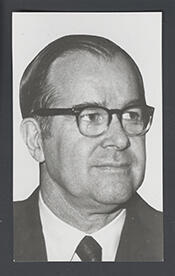
Here you will find contact information for Representative Barber B. Conable Jr., including email address, phone number, and mailing address.
| Name | Barber B. Conable Jr. |
| Position | Representative |
| State | New York |
| District | 30 |
| Party | Republican |
| Status | Former Representative |
| Term Start | January 4, 1965 |
| Term End | January 3, 1985 |
| Terms Served | 10 |
| Born | November 2, 1922 |
| Gender | Male |
| Bioguide ID | C000666 |
About Representative Barber B. Conable Jr.
Barber Benjamin Conable Jr. (November 2, 1922 – November 30, 2003) was a U.S. Congressman from New York, a member of the Republican Party, and former president of the World Bank Group. He served as a Representative from New York in the United States Congress from 1965 to 1985, completing ten consecutive terms in office and contributing significantly to the legislative process during a pivotal period in American political history.
Conable was born in Warsaw, Wyoming County, New York, on November 2, 1922. He was active in the Boy Scouts of America, achieving the rank of Eagle Scout and later receiving the Distinguished Eagle Scout Award, an honor recognizing exceptional service and achievement in adult life. He attended Cornell University, graduating in 1942. At Cornell he was president of the Quill and Dagger senior honor society and a member of the Phi Delta Theta fraternity, early indications of the leadership and public service orientation that would characterize his later career.
Immediately after his undergraduate studies, Conable enlisted in the United States Marine Corps during World War II. He was deployed to the Pacific theater, where he learned to speak Japanese and saw combat, including service in the Battle of Iwo Jima. After the war, he returned to Cornell and earned his law degree from Cornell University Law School in 1948. During his legal studies he lived at the Cornell Branch of the Telluride Association, having been admitted to the House as a law student after an unsuccessful attempt to join as an undergraduate. He later re-enlisted in the Marine Corps and served again during the Korean War, further deepening his experience in military and international affairs. In 1952, he married Charlotte Williams, who remained his wife until his death.
Following his admission to the bar, Conable entered public life in New York. In 1962, he was elected as a Republican to the New York State Senate. After serving one term in the State Senate, he successfully ran for the U.S. House of Representatives in 1964 from a Rochester-based district in western New York. He took his seat in January 1965 and was reelected nine more times, serving ten terms in the House of Representatives until his retirement from Congress in 1984. Throughout his tenure he represented the interests of his constituents while participating actively in the broader national legislative agenda during an era marked by the Vietnam War, the civil rights movement, the Watergate scandal, and significant economic and tax policy debates.
Conable quickly gained a reputation on both sides of the aisle for honesty, independence, and integrity. His colleagues at one point voted him the “most respected” member of Congress, and he was known for his personal campaign finance standards, including a self-imposed rule refusing to accept personal contributions larger than $50. A longtime ally of President Richard Nixon, he broke with Nixon in disgust after the revelations of the Watergate scandal. When the White House released a tape of Nixon instructing his chief of staff H. R. Haldeman to obstruct the FBI investigation, Conable publicly characterized it as a “smoking gun,” a phrase that entered the lexicon of American political discourse. In 1980, he appeared in economist Milton Friedman’s PBS documentary series “Free to Choose,” reflecting his engagement with contemporary debates on economic policy.
During his congressional career, Conable became a senior Republican on the powerful House Ways and Means Committee, which oversees tax, trade, and many social welfare programs. As a longtime ranking member of that committee, he played a central role in shaping federal tax policy. One of his most notable legislative achievements was his work on provisions in the U.S. tax code that enabled the development of defined-contribution retirement plans, including 401(k) and 403(b) plans. Under these provisions, contributions by both employers and employees to such plans would be tax-deferred under federal law, a change that had a lasting impact on retirement savings practices in the United States. His legislative interests also extended to Social Security, income tax policy, and fiscal responsibility, subjects on which he later wrote and spoke extensively. Conable retired from the House at the end of his tenth term, leaving Congress in January 1985 after two decades of service.
In 1986, Conable began a new phase of public service when he was appointed president of the World Bank Group, a position he held until August 31, 1991. His experience as a legislator proved crucial in this role, particularly in his dealings with the U.S. Congress, where he successfully persuaded his former colleagues to nearly double U.S. appropriations for the World Bank. His tenure coincided with major global economic and political changes, including the debt crises in developing countries and the end of the Cold War. Conable emphasized development, poverty reduction, and environmental sustainability, and he worked to strengthen the institution’s financial base and policy effectiveness.
Conable’s leadership at the World Bank was especially notable in the context of U.S.–China relations following the Tiananmen Square protests and massacre of 1989. He opposed elements within the George H. W. Bush administration and in Congress who advocated a more punitive stance toward China, arguing that some of these positions were driven by domestic political considerations related to the 1992 election. Conable believed that imposing excessive economic punishment on China was ill-advised at a moment when Deng Xiaoping was contending with domestic opponents over whether to continue the policy of reform and opening. Within the World Bank, he successfully encouraged the Board of Governors to adopt an expansive view of humanitarian and environmental lending to China, including large-scale environmental projects. Reflecting on his work there, he later remarked that among his proudest achievements was that “we planted a billion trees in China,” underscoring his commitment to long-term development and environmental stewardship.
In addition to his public offices, Conable was an author and commentator on public policy. His works included “Congress and the Income Tax” (with Arthur L. Singleton, 1989), “Controlling the Cost of Social Security” (1981, with others), and “Foreign Assistance in a Time of Constraints” (1995, co-edited with several collaborators). His major policy addresses from his World Bank presidency were collected in “The Conable Years at the World Bank: Major Policy Addresses of Barber B. Conable, 1986–91” (1991). His life and career were the subject of the biography “Window on Congress: A Congressional Biography of Barber B. Conable Jr.” by James S. Fleming (2004). Conable’s papers are held at Cornell University, providing a documentary record of his legislative and international work.
Barber Benjamin Conable Jr. died on November 30, 2003, at his winter home in Sarasota, Florida, from a staphylococcus infection. He was survived by his wife, Charlotte Williams Conable, to whom he had been married since 1952. His long career in military service, state and national politics, and international development left a substantial imprint on American public policy and on the institutions in which he served.