Representative Barnes Compton
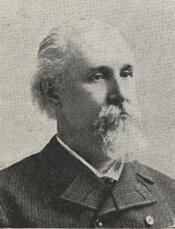
Here you will find contact information for Representative Barnes Compton, including email address, phone number, and mailing address.
| Name | Barnes Compton |
| Position | Representative |
| State | Maryland |
| District | 5 |
| Party | Democratic |
| Status | Former Representative |
| Term Start | December 7, 1885 |
| Term End | March 3, 1895 |
| Terms Served | 5 |
| Born | November 16, 1830 |
| Gender | Male |
| Bioguide ID | C000660 |
About Representative Barnes Compton
Barnes Compton (November 16, 1830 – December 2, 1898) was a Democratic member of the United States House of Representatives from Maryland’s fifth congressional district and a long-serving Treasurer of Maryland. He represented Maryland in Congress for five terms between 1885 and 1895, contributing to the legislative process during a significant period in American history and participating in the democratic governance of his state and nation.
Compton was born on November 16, 1830, in Port Tobacco, Charles County, Maryland, to Mary Clarissa (née Barnes) and William Penn Compton. Orphaned at a young age, he was raised until 1843 by his maternal grandfather, John Barnes. He was a great-grandson of Philip Key, linking him to a prominent Maryland family, and he later became a close friend of influential Maryland politician Arthur Pue Gorman. Compton attended Charlotte Hall Military Academy in St. Mary’s County, Maryland, where he received his early formal education, and went on to Princeton College, from which he graduated with a bachelor’s degree in June 1851. At a relatively young age, he became the second-largest slaveholder in Charles County, reflecting both his family’s status and the plantation-based economy of southern Maryland before the Civil War.
After completing his education, Compton returned to Charles County and engaged in agricultural pursuits as a planter. He first sought public office in 1855, running unsuccessfully for the Maryland House of Delegates on the Whig ticket. By 1859 he had aligned with the Democratic Party and was elected to the House of Delegates, serving in the sessions of 1860 and 1861. During the 1861 session, held in Frederick, Maryland, a number of legislators were suspected of Confederate sympathies and were arrested upon arrival. Compton, also suspected of Southern leanings, evaded arrest by fleeing across the Potomac River. In 1865, in the aftermath of President Abraham Lincoln’s assassination, he was arrested and imprisoned at the Old Capitol Prison in Washington, D.C., under suspicion of aiding and abetting John Wilkes Booth. The accusations were proven unfounded, and he was released after four days.
Compton resumed his political career during Reconstruction. He served in the Maryland State Senate in 1867, 1868, 1870, and 1872, and was elected president of the Senate during the 1868 session. In addition to his legislative roles, he was appointed State Tobacco Inspector in 1873 and 1874, a position of particular importance in a state where tobacco was a leading cash crop. He then served as Treasurer of Maryland from 1874 to 1885, overseeing the state’s finances for more than a decade. During this period, in 1880, he moved from Charles County to Laurel in Prince George’s County, Maryland, which became his principal residence and the base for his later political and business activities.
Compton’s service in the United States Congress began with his election as a Democrat to the Forty-ninth and Fiftieth Congresses, representing Maryland’s fifth congressional district from March 4, 1885, to March 3, 1889. He presented his credentials as a Member-elect to the Fifty-first Congress and served from March 4, 1889, until March 20, 1890. His tenure in that Congress ended when Sydney E. Mudd Sr., who had contested the election, was seated in his place after a House committee investigated allegations of voter fraud and ruled in Mudd’s favor. Compton subsequently returned to the House of Representatives, winning election to the Fifty-second and Fifty-third Congresses and serving from March 4, 1891, until his resignation effective May 15, 1894. Over these five terms in office, he represented the interests of his constituents in southern Maryland during a transformative era marked by post-Reconstruction politics, economic change, and debates over federal economic and monetary policy.
Upon resigning from Congress in 1894, Compton was appointed by President Grover Cleveland as Naval Officer of the Port of Baltimore, a federal customs post responsible for oversight of maritime trade and revenue collection. He held this position from 1894 until his death in 1898. Alongside his political and administrative work, Compton remained active in education and civic affairs. He taught agriculture at the Maryland Agricultural College, contributing to the dissemination of modern farming practices in a state still heavily dependent on agriculture. He also served on the board of trustees of Charlotte Hall Military Academy, his former school, and was a member of the School Commission of Charles County and the board of the Maryland Hospital for the Insane, reflecting a broader engagement with educational and public welfare institutions.
Compton was also involved in banking and local enterprise. In 1890, he was a cofounder and appointed director of the Citizens National Bank of Laurel, helping to foster financial development in the growing town where he resided. In 1898, he was made president of the Guarantee Building and Loan Association of Baltimore, further extending his influence into the regional financial sector. These positions complemented his long experience in public finance as state treasurer and underscored his role in Maryland’s economic as well as political life.
On October 27, 1858, Compton married Margaret Holiday Sothoron of St. Mary’s County, Maryland. The couple had four sons—John Henry Sothoron Compton, Key Compton, William Penn Compton, and Barnes Compton—and two daughters, Mary Barnes Compton and Elizabeth Somerville. Barnes Compton died of paralysis on December 2, 1898, in Laurel, Maryland. He was interred in Loudon Park Cemetery in Baltimore, closing a career that had spanned antebellum plantation life, the Civil War and Reconstruction, and the political realignments of the late nineteenth century in Maryland and the United States.