Representative Barratt O’Hara
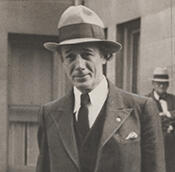
Here you will find contact information for Representative Barratt O’Hara, including email address, phone number, and mailing address.
| Name | Barratt O’Hara |
| Position | Representative |
| State | Illinois |
| District | 2 |
| Party | Democratic |
| Status | Former Representative |
| Term Start | January 3, 1949 |
| Term End | January 3, 1969 |
| Terms Served | 9 |
| Born | April 28, 1882 |
| Gender | Male |
| Bioguide ID | O000053 |
About Representative Barratt O’Hara
Barratt O’Hara (April 28, 1882 – August 11, 1969) of Chicago was an American Democratic politician who served as a U.S. Representative from Illinois and as lieutenant governor of Illinois, and was the last Spanish–American War veteran to serve in the United States Congress. Born in St. Joseph, Missouri, he moved with his family in childhood to Illinois, where he was raised and later became identified politically with Chicago. As a young man he enlisted for service in the Spanish–American War, an experience that would later distinguish him among his congressional colleagues as the final member of that generation of veterans to hold a seat in the House of Representatives.
O’Hara’s early adult years combined military service, journalism, and public affairs. After his initial wartime service, he developed a career in writing and public communication that helped establish his public profile in Illinois. His growing involvement in Democratic Party politics led to his selection for statewide office, and he emerged as a prominent figure in Illinois political life in the early twentieth century. His background as a veteran and communicator contributed to his appeal among voters and party leaders alike.
O’Hara rose to statewide prominence when he was elected lieutenant governor of Illinois, serving from 1913 to 1917. During this period he presided over the Illinois Senate and became known for his participation in progressive-era debates over labor, social welfare, and governmental reform. While holding the lieutenant governorship, he sought higher office and in 1914 was an unsuccessful Democratic candidate for the United States Senate. His ambition for national office, however, underscored his growing stature within the party and his desire to move onto the federal stage.
With the outbreak of the First World War, O’Hara returned to military service. He served as a major with the Eightieth and Twelfth Infantry Divisions and later as divisional judge advocate of the Fifteenth Division, combining command responsibilities with legal and administrative duties. In the mid-1910s he also engaged in private enterprise, serving as president of the Arizona Film Co. in 1916 and 1917, reflecting an interest in the emerging motion picture industry. After the war he remained active in Illinois politics, running unsuccessfully for governor in 1920. He continued to seek federal office and was an unsuccessful candidate for Congressman-at-large in 1936 for the Seventy-fifth Congress.
Outside elective office, O’Hara maintained a public presence through journalism and broadcasting. In the 1930s he worked as a radio commentator in Chicago from 1933 to 1935, using the then-new medium to discuss public affairs and reach a broad audience. These activities kept him in the public eye and helped sustain his political viability during periods when he did not hold elective office. His combination of military service, statewide experience, and media work positioned him for a later return to national politics.
O’Hara’s congressional career began in the post–World War II era. A member of the Democratic Party, he was first elected as a Democrat to the Eighty-first Congress, serving from January 3, 1949, to January 3, 1951, representing Illinois in the U.S. House of Representatives. He was an unsuccessful candidate for reelection in 1950 to the Eighty-second Congress, but he regained a seat two years later. He was then elected to the Eighty-third and to the seven succeeding Congresses, serving continuously from January 3, 1953, to January 3, 1969. In total, Barratt O’Hara served as a Representative from Illinois from 1949 to 1969, contributing to the legislative process during nine terms in office. His service in Congress occurred during a significant period in American history, encompassing the early Cold War, the civil rights movement, and the beginnings of U.S. involvement in Vietnam. As a member of the House of Representatives, he participated in the democratic process and represented the interests of his Illinois constituents through these transformative decades.
O’Hara’s long tenure made him a senior Democratic figure in the Illinois delegation by the 1960s. In 1968 he was an unsuccessful Democratic candidate for renomination, bringing his two-decade span of postwar congressional service to a close at the end of the Eighty-ninth Congress. His departure from the House also marked the end of an era, as he was recognized as the last surviving Spanish–American War veteran to serve in Congress, symbolically linking the late nineteenth-century conflict with the modern legislative institution of the mid-twentieth century.
Barratt O’Hara died in Washington, D.C., on August 11, 1969, only months after leaving office. He was interred in Oak Woods Cemetery in Chicago, Illinois, the city with which his public career was most closely associated. His life encompassed service in two major American wars, high office at both the state and federal levels, and participation in public discourse through print and radio, reflecting a broad and varied engagement with American political and civic life over more than half a century.