Representative Bart Stupak
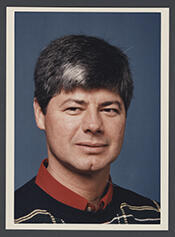
Here you will find contact information for Representative Bart Stupak, including email address, phone number, and mailing address.
| Name | Bart Stupak |
| Position | Representative |
| State | Michigan |
| District | 1 |
| Party | Democratic |
| Status | Former Representative |
| Term Start | January 5, 1993 |
| Term End | January 3, 2011 |
| Terms Served | 9 |
| Born | February 29, 1952 |
| Gender | Male |
| Bioguide ID | S001045 |
About Representative Bart Stupak
Bartholomew Thomas “Bart” Stupak (born February 29, 1952) is an American politician, attorney, and lobbyist who represented Michigan in the United States House of Representatives from 1993 to 2011. A member of the Democratic Party, he served nine consecutive terms as the U.S. Representative from Michigan’s 1st congressional district, a vast district encompassing the Upper Peninsula and the northernmost portion of the Lower Peninsula. During his tenure in Congress, Stupak participated actively in the legislative process, represented the interests of his largely rural and Great Lakes–oriented constituency, and became a prominent figure in several high-profile national policy debates.
Stupak was born in Milwaukee, Wisconsin, on February 29, 1952, and moved with his family to Michigan, where he was raised in Gladstone in the Upper Peninsula. He graduated from Gladstone High School in 1970 and attained the rank of Eagle Scout in the Boy Scouts of America, an early indication of his interest in public service and leadership. He pursued higher education at Northwestern Michigan College, a community college in Traverse City, earning an associate’s degree in 1972. He continued his studies in criminal justice at Saginaw Valley State University, from which he received a bachelor’s degree magna cum laude in 1977. Stupak then enrolled at Thomas M. Cooley Law School in Lansing, Michigan, where he earned his Juris Doctor degree in 1981, preparing for a career that would combine law enforcement, legal practice, and politics.
Before entering elective office, Stupak worked extensively in law enforcement. He began his career as a police officer in Escanaba, Michigan, in 1972. The following year he joined the Michigan State Police, serving as a state trooper from 1973 to 1984. His experience as a front-line law enforcement officer in northern Michigan shaped his later legislative priorities, particularly on issues of public safety and criminal justice. After leaving the state police, he practiced law, drawing on both his legal education and his practical experience in policing. These combined backgrounds helped establish his credibility on law-and-order issues and contributed to his later role as founder and co-chair of the Law Enforcement Caucus in Congress.
Stupak’s formal political career began at the state level. In 1988, he was elected to the Michigan House of Representatives, representing Menominee, Delta, and Dickinson counties in the Upper Peninsula, after defeating two-term Republican incumbent Jim Connors. His tenure in the state legislature further rooted him in the politics of northern Michigan and provided legislative experience that would serve him in Congress. In 1990, he sought a seat in the Michigan State Senate but lost a closely contested Democratic primary to Don Koivisto, who went on to win the general election. Undeterred, Stupak turned his attention to federal office as the long-serving Republican congressman from his region prepared to retire.
In 1992, Stupak ran for the U.S. House of Representatives in Michigan’s 1st congressional district, which had previously been designated the 11th district and was represented by retiring seven-term Republican Robert William Davis. Stupak won a heavily contested Democratic primary with 48.63 percent of the vote, defeating Mike McElroy and Daniel Herringa. In the general election he faced former Republican congressman Philip Ruppe, Davis’s predecessor, and prevailed with 53.93 percent of the vote, becoming the first Democrat to represent the district since 1967 and only the third Democrat to win it in the 20th century. He was easily reelected in 1994, a difficult year nationally for Democrats, with 56.86 percent of the vote against Republican Gil Ziegler, becoming the first Democrat in 56 years to win more than one term in this northern Michigan district. Stupak went on to secure reelection repeatedly: in 1996 he won 70.68 percent of the vote against Republican Bob Carr; in 1998 he received 58.67 percent against Republican Michelle McManus; in 2000 he garnered 58.39 percent against Republican Chuck Yob; in 2002 he defeated Republican Don Hooper with 67.67 percent; in 2004 he again defeated Hooper with 65.57 percent; in 2006 he won 69.43 percent of the vote, once more against Hooper; and in 2008 he was reelected with 65.04 percent of the vote over Republican Tom Casperson. Over nine terms, he consistently maintained strong electoral support in a politically competitive region.
During his congressional service from January 3, 1993, to January 3, 2011, Stupak became particularly associated with energy, commerce, consumer protection, and oversight issues. He served on the House Committee on Energy and Commerce, one of the chamber’s most influential panels, and sat on the Subcommittee on Commerce, Trade and Consumer Protection; the Subcommittee on Communications, Technology and the Internet; and the Subcommittee on Oversight and Investigation, which he chaired. In these roles he participated in investigations and legislative efforts related to consumer safety, corporate conduct, and regulatory policy. Reflecting his law enforcement background, he founded and co-chaired the bipartisan Law Enforcement Caucus. He also co-chaired the Congressional Northern Border Caucus, focusing on issues affecting the U.S.–Canada border, and was a member of the Congressional Motorcycle Safety Caucus. Over the course of his House career, Stupak sponsored 36 bills, none of which became law, and cosponsored 157 bills, five of which were enacted. He voted with his party approximately 96 percent of the time and abstained from about 5 percent of roll call votes.
Stupak’s legislative priorities were strongly influenced by the geography and economy of his district, which has more than 1,600 miles of Great Lakes shoreline. He was very active on issues related to the protection of the Great Lakes, opposing the sale or diversion of Great Lakes water and resisting efforts to permit oil and gas drilling beneath the lakes. His campaigns drew significant support from organized labor and regulated industries: among his top four contributing industries in the 2006, 2008, and 2010 election cycles were electric utilities and health care professionals. Of his 20 largest contributors over his political career, 16 were unions and associations, two were energy companies, one was an insurance company, and one was a telecommunications firm. On major national legislation, he voted for the Local Law Enforcement Hate Crimes Prevention Act of 2009, which expanded the definition of hate crimes to include offenses motivated by sexual orientation or gender identity, and he voted against the Dodd–Frank Wall Street Reform and Consumer Protection Act in 2009, expressing opposition to aspects of the expanded federal regulation of the financial system.
Stupak achieved national prominence during the debate over health care reform in the 111th Congress. Although he supported broad health care reform and favored both a public option and, in principle, single-payer health care, he insisted on stringent restrictions on the use of federal funds for abortion coverage. Along with Republican Representative Joseph R. Pitts, he introduced the Stupak–Pitts Amendment to the House version of the Patient Protection and Affordable Care Act, seeking to prohibit federal payments for abortion coverage in plans offered through the new insurance exchanges. The amendment was adopted by the House, but a comparable provision was not included in the Senate bill. Stupak then announced that he and a group of like-minded Democrats would withhold support from the final legislation unless similar abortion funding restrictions were incorporated, making him, in the view of many observers, “perhaps the single most important rank-and-file House member in passing the bill.” His stance provoked intense controversy: abortion-rights advocates organized a “Stop Stupak” rally on Capitol Hill in December 2009, and he later reported receiving a barrage of “obscene phone calls and threats,” stating that the pressure had made his life a “living hell” and overwhelmed his staff. In March 2010, Stupak reached an understanding with President Barack Obama, under which the President agreed to issue an executive order affirming that federal funds under the Affordable Care Act would not be used for abortion services. In return, Stupak and his allies withdrew their opposition and voted for the final bill. Anti-abortion groups denounced the compromise; the Susan B. Anthony List rescinded an award it had planned to give him and instead financed radio advertisements against him, and he became a target of the Tea Party movement.
During his years in Washington, Stupak also drew attention for his association with the C Street Center, a Washington, D.C., residence and meeting facility linked to The Fellowship (also known as The Family), a Christian organization that sponsors prayer groups and private gatherings for political figures. He rented a room at the C Street Center while serving in Congress. The Fellowship and its properties, including the Cedars estate that hosts weekly prayer events, became the subject of media scrutiny over their tax status and the subsidized housing they provided to lawmakers. Author Jeff Sharlet, who wrote about The Fellowship, stated that Stupak was a regular visitor to the Cedars. Stupak, however, denied any formal affiliation with The Family and appeared to deny knowledge of the organization, saying, “I don’t belong to any such group” and “I don’t know what you’re talking about, [The] Family and all this other stuff.”
On April 9, 2010, amid ongoing controversy over health care reform and after nearly two decades in Congress, Stupak announced that he would not seek reelection. He cited the strain of constant travel between Washington, D.C., and his far-flung northern Michigan district as a principal reason for his decision to retire at the end of his term. He completed his service in the House on January 3, 2011, and was succeeded by Republican Dan Benishek, a physician from Michigan’s Upper Peninsula. After leaving Congress, Stupak entered the private sector as a lobbyist and policy adviser. He joined the law and lobbying firm Venable LLP, where he has drawn on his experience in energy, health care, and regulatory matters, continuing to influence public policy from outside elective office.