Representative Bella S. Abzug
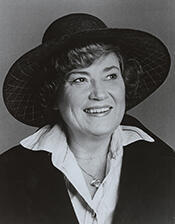
Here you will find contact information for Representative Bella S. Abzug, including email address, phone number, and mailing address.
| Name | Bella S. Abzug |
| Position | Representative |
| State | New York |
| District | 20 |
| Party | Democratic |
| Status | Former Representative |
| Term Start | January 21, 1971 |
| Term End | January 3, 1977 |
| Terms Served | 3 |
| Born | July 24, 1920 |
| Gender | Female |
| Bioguide ID | A000018 |
About Representative Bella S. Abzug
Bella Savitzky Abzug (née Savitzky; July 24, 1920 – March 31, 1998), nicknamed “Battling Bella,” was an American lawyer, politician, social activist, and a prominent leader in the women’s movement who served as a Representative from New York in the United States Congress from 1971 to 1977. A member of the Democratic Party, she became nationally known for her outspoken liberal advocacy, her distinctive hats, and her pioneering work on women’s rights, civil rights, peace, and environmental issues, including what came to be known as ecofeminism.
Abzug was born Bella Savitzky on July 24, 1920, in New York City. Both of her parents were Yiddish-speaking Jewish immigrants from Chernihiv in the Russian Empire (now Ukraine). Her mother, Esther (née Tanklevsky or Tanklefsky), a homemaker, had immigrated from Kozelets in 1902, and her father, Emanuel Savitzky, a butcher, emigrated in 1906 and ran the Live and Let Live Meat Market on Ninth Avenue. As a young girl, she worked the cash register at her father’s deli and developed a reputation for being highly competitive, often besting other children in various contests. Raised in an Orthodox Jewish environment, she was deeply influenced by religious practice and its gendered restrictions. She later recalled that sitting in the women’s section of the synagogue balcony first stirred her feminist consciousness. When her father died, the 13-year-old Bella was told that women could not recite the Kaddish in her Orthodox congregation, a rite reserved for sons. Because her father had no sons, she defied tradition by going to synagogue every morning for a year to say the prayer, an early and emblematic act of rebellion against gender norms.
Abzug was educated in New York City public schools and graduated from Walton High School in The Bronx, where she served as class president. During these years she took violin lessons and attended Florence Marshall Hebrew High School after her regular classes at Walton. She went on to major in political science at Hunter College of the City University of New York, where she was student council president and active in the American Student Union. At the same time, she attended the Jewish Theological Seminary of America, reflecting her continued engagement with Jewish learning and social ethics. At Walton High School she first met Mim Kelber, who would become a lifelong friend and collaborator; the two later attended Hunter College together and would eventually co-found major women’s advocacy initiatives, including the Women’s Environment and Development Organization (WEDO). Abzug continued her education at Columbia Law School, earning a law degree in 1944, at a time when very few women entered the legal profession. In 1944 she married Martin Abzug, a novelist and stockbroker whom she had met on a bus in Miami, Florida, while both were en route to a Yehudi Menuhin concert; they remained married until his death in 1986 and had two daughters.
Admitted to the New York Bar in 1945, Abzug began her legal career in New York City at the firm of Pressman, Witt & Cammer, frequently handling labor law matters. As a lawyer she specialized in labor rights, tenants’ rights, and civil liberties cases, and she quickly became known as an outspoken advocate for liberal causes. Early in her career she took on civil rights cases in the American South, most notably appealing the conviction of Willie McGee, a Black man sentenced to death in 1945 for the alleged rape of a white woman in Laurel, Mississippi, by an all-white jury that deliberated for only two and a half minutes. Although she lost the appeal and McGee was executed, the case underscored her commitment to racial justice and due process. She worked with the American Civil Liberties Union and the Civil Rights Congress and was one of the few attorneys during the McCarthy era willing to openly challenge the House Un-American Activities Committee. Abzug was an early participant in Women Strike for Peace, opposing nuclear testing and the Vietnam War, and she became a prominent critic of the military draft. Her vigorous public stance on these and other issues placed her on President Richard Nixon’s master list of political opponents. Throughout these years she also supported the Equal Rights Amendment and became increasingly involved in feminist organizing, helping to lay the groundwork for her later political career.
Nicknamed “Battling Bella” for her combative style and forceful rhetoric, Abzug entered electoral politics in 1970, challenging 14-year incumbent Leonard Farbstein in the Democratic primary for a congressional district on Manhattan’s West Side. Her first campaign slogan, “This woman’s place is in the House—the House of Representatives,” captured both her feminist message and her flair for political theater. In a significant upset, she defeated Farbstein in the primary and went on to defeat talk show host Barry Farber in the general election. She took office in January 1971, beginning the first of three consecutive terms in the U.S. House of Representatives. Her service in Congress occurred during a turbulent period in American history marked by the Vietnam War, the Watergate scandal, and the rise of the modern women’s movement. As a member of the House of Representatives from New York, she participated actively in the legislative process and represented the interests of her urban, largely liberal constituency.
Abzug’s congressional career was shaped by redistricting and intense intra-party competition. In 1972, her original district was eliminated, and she chose to run in the Democratic primary against Representative William Fitts Ryan, who also represented part of Manhattan’s West Side. Although Ryan was seriously ill, he defeated Abzug in the primary. Ryan died before the general election, however, and at the party’s convention to select a new Democratic nominee, Abzug prevailed over his widow, Priscilla Ryan. In the general election, Priscilla Ryan challenged Abzug on the Liberal Party line but was unsuccessful. Abzug was reelected easily in 1974, and for her last two terms she represented a district that included part of the Bronx as well as Manhattan. During her tenure she was recognized by her colleagues as one of the most influential members of the House; U.S. News & World Report reported that she was voted the third most influential member by fellow representatives.
In Congress, Abzug emerged as a legislative pioneer on women’s rights, civil liberties, and government accountability. She was one of the first members of Congress to support gay rights, and in 1974 she joined fellow Democratic New York City Representative Ed Koch in introducing the first federal gay rights bill, known as the Equality Act of 1974. She sponsored the Equal Credit Opportunity Act (ECOA), which made it unlawful to discriminate against any applicant, with respect to any aspect of a credit transaction, on the basis of race, color, religion, national origin, sex, marital status, or age, thereby significantly expanding economic opportunities for women and minorities. She also cosponsored H.R. 13157, which established the Clara Barton National Historic Site, the first National Park Service site dedicated to the achievements of a woman. As chair of the Subcommittee on Government Information and Individual Rights, she led historic hearings on government secrecy and worked to strengthen congressional oversight of the executive branch. In February 1975 she was part of a bipartisan delegation sent to Saigon by President Gerald Ford to assess conditions in South Vietnam near the end of the Vietnam War. A strong supporter of Zionism, Abzug had been active in the Socialist-Zionist youth movement Hashomer Hatzair as a young woman, and in 1975 she vocally opposed United Nations General Assembly Resolution 3379, which declared that “Zionism is a form of racism and racial discrimination,” insisting instead that “Zionism is a liberation movement.”
Abzug’s personal style and public persona were as notable as her legislative record. Although hats were formally banned on the House floor, she was famous for her colorful and vibrant hats and was seldom seen without one, later remarking that when forced to remove her hat before entering the chamber she felt “naked and unrecognizable.” She often reminded admirers, “It’s what’s under the hat that counts!” Her aggressive manner and sharp tongue were widely remarked upon; she herself observed, “I’ve been described as a tough and noisy woman, a prizefighter, a man-hater, you name it. They call me Battling Bella.” She was also known for caustic remarks toward staff and colleagues and was reported to have been verbally abusive to staff members, including referring to aide Doug Ireland with a crude epithet. She once quipped that if male lawmakers wished to continue the tradition of swimming naked in the congressional pool, that would be fine with her, a characteristic blend of humor and pointed commentary on male privilege. In 1974, artist Jeff London created a sculptural “People Furniture” piece depicting Abzug having a good idea, reflecting her cultural visibility at the time.
Abzug’s congressional career ended when she sought higher office. In 1976 she ran for the Democratic nomination for the United States Senate from New York. She lost the primary by less than one percent to Daniel Patrick Moynihan, a more moderate Democrat who had served in the Nixon and Ford administrations as White House Urban Affairs Advisor, Counselor to the President, United States Ambassador to India, and United States Permanent Representative to the United Nations. Moynihan went on to win the general election and serve four terms in the Senate. Abzug left the House of Representatives in January 1977 and never again held elected office, though she remained a high-profile political figure and continued to seek public office. She ran unsuccessfully for mayor of New York City in 1977, for a House seat from Manhattan’s East Side in 1978 against Republican Bill Green, and for a House seat from Westchester County, New York, in 1986 against Joe DioGuardi.
Following her departure from Congress, Abzug intensified her work in the women’s movement and in international advocacy. In 1971 she had joined other leading feminists, including Gloria Steinem, Shirley Chisholm, and Betty Friedan, in founding the National Women’s Political Caucus, an organization dedicated to increasing women’s participation in electoral politics. She was also a founder of the Commission for Women’s Equality of the American Jewish Congress. In early 1977 President Jimmy Carter reconstituted the National Commission on the Observance of International Women’s Year and appointed Abzug to co-chair it. Under her leadership, numerous events were organized across the country, culminating in the 1977 National Women’s Conference in Houston, over which she presided. She subsequently served as one of the two co-chairpersons of the National Advisory Committee for Women, continuing to press for implementation of the conference’s recommendations until her dismissal in January 1979, an episode that created a major point of tension between the Carter administration and feminist organizations. Abzug also founded and led several women’s advocacy organizations, including the grassroots group Women USA, and she continued to play a visible role in public demonstrations, serving, for example, as grand marshal of the Women’s Equality Day New York March on August 26, 1980.
In the last decade of her life, Abzug’s work increasingly focused on the intersection of women’s rights and environmental policy. In the early 1990s she and Mim Kelber co-founded the Women’s Environment and Development Organization (WEDO), described as “a global women’s advocacy organization working towards a just world that promotes and protects human rights, gender equality, and the integrity of the environment.” In 1991 WEDO convened the World Women’s Congress for a Healthy Planet in Miami, bringing together 1,500 women from 83 countries and producing the Women’s Action Agenda 21, a comprehensive platform for integrating gender perspectives into sustainable development policy. At the United Nations, Abzug helped develop the Women’s Caucus, which analyzed draft documents, proposed gender-sensitive policies and language, and lobbied to advance the Women’s Agenda for the 21st Century at the 1992 UN Conference on Environment and Development in Rio de Janeiro and at subsequent international gatherings, including the Fourth World Conference on Women in Beijing in 1995. Her leadership in these efforts solidified her reputation as a leading figure in ecofeminism and global women’s advocacy.
Alongside her organizational work, Abzug wrote and spoke extensively. She authored two books: Bella: Ms. Abzug Goes to Washington, a memoir of her political and congressional experiences, and The Gender Gap, co-authored with Mim Kelber, which examined the growing divergence between men’s and women’s political attitudes and voting patterns in the United States. She remained active in public life even as her health declined, often traveling in a wheelchair while maintaining a demanding schedule of speeches, meetings, and international conferences. She continued to lead WEDO until her death and delivered her final public address before the United Nations in March 1998.
Bella Savitzky Abzug died on March 31, 1998, at Columbia-Presbyterian Medical Center in New York City, at the age of 77, from complications following open-heart surgery after a prolonged struggle with breast cancer and heart disease. She was interred at Mount Carmel Cemetery in Glendale, Queens County, New York. Her extended family included other New York political figures; she was a cousin of Arlene Stringer-Cuevas, a former New York City Council member, and of Stringer-Cuevas’s son Scott Stringer, a New York City politician. Through her decades of legal advocacy, congressional service, feminist leadership, and international organizing, Abzug left a lasting imprint on American political life and the global movement for women’s rights and equality.