Representative Beman Gates Dawes
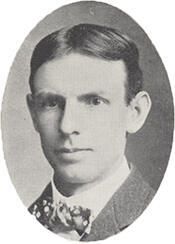
Here you will find contact information for Representative Beman Gates Dawes, including email address, phone number, and mailing address.
| Name | Beman Gates Dawes |
| Position | Representative |
| State | Ohio |
| District | 15 |
| Party | Republican |
| Status | Former Representative |
| Term Start | December 4, 1905 |
| Term End | March 3, 1909 |
| Terms Served | 2 |
| Born | January 14, 1870 |
| Gender | Male |
| Bioguide ID | D000146 |
About Representative Beman Gates Dawes
Beman Gates Dawes (January 14, 1870 – May 15, 1953) was an American politician, businessman, and oil executive who served two terms as a Republican Representative from Ohio in the United States Congress from 1905 to 1909. A member of the Republican Party, he contributed to the legislative process during a significant period in American history, participating in the democratic process and representing the interests of his constituents in Ohio’s 15th Congressional District during the Fifty-ninth and Sixtieth Congresses.
Dawes was born in Marietta, Washington County, Ohio, and was a descendant of American Revolutionary War figure William Dawes. He was the son of Rufus R. Dawes, a Brevet Brigadier General in the Union Army during the American Civil War, and was part of a family that achieved national prominence in public life and business. His brothers Charles G. Dawes, Rufus C. Dawes, and Henry May Dawes each gained international or national distinction, with Charles G. Dawes later serving as Vice President of the United States, among other high offices. Growing up in Marietta, Beman Dawes was educated in the local public schools, an upbringing that grounded him in the civic and commercial life of southeastern Ohio.
After completing his early education, Dawes attended Marietta College in his hometown, graduating with the Class of 1890. His college education prepared him for a career that would blend technical, agricultural, and managerial pursuits. On October 3, 1894, he married Bertie Burr, establishing a family partnership that would later extend into their shared philanthropic endeavors. Following his graduation, Dawes engaged in agriculture and engineering, occupations that reflected both the regional economic base of Ohio and the expanding opportunities of the late nineteenth century. He also developed a strong interest in public utilities, an area that would become central to his early business leadership.
By the early twentieth century, Dawes had assumed a significant role in regional infrastructure development. In 1903 he was president of The Ohio River Bridge & Ferry Company at the time the Williamstown–Marietta Bridge was constructed, an important transportation link between Ohio and West Virginia. This work in transportation and utilities underscored his practical engagement with economic development and public service, and it helped establish his reputation as a capable executive and community leader, paving the way for his entry into elective office.
Dawes was elected as a Republican to the U.S. House of Representatives from Ohio’s 15th District and served from March 4, 1905, to March 3, 1909, encompassing the Fifty-ninth and Sixtieth United States Congresses. During his two terms in Congress, he participated in the legislative process at a time marked by progressive-era reforms and growing federal involvement in economic and regulatory matters. As a member of the House of Representatives, Beman Gates Dawes represented the interests of his Ohio constituents and contributed to national debates characteristic of the early twentieth century, though the specific details of his committee assignments and sponsored legislation are less extensively documented than those of some of his contemporaries. He chose not to continue in Congress after his second term, effectively retiring from elective federal office in 1909.
After his retirement from Congress, Dawes turned his attention more fully to private enterprise and the rapidly evolving energy and transportation sectors. He became actively involved in the production of oil and in the building of electric railways, aligning his business efforts with the technological and industrial transformations of the era. His leadership in the oil industry culminated in his election in 1914 as president and chairman of the board of directors of the Pure Oil Company, a major independent oil firm. In this capacity, he played a significant role in the development and management of petroleum resources and related infrastructure during a formative period for the American oil industry.
In addition to his business career, Dawes, together with his wife Bertie Burr Dawes, devoted substantial effort to philanthropy and education. The couple founded the Dawes Arboretum near Newark, Ohio, establishing it as an endowed institution dedicated to the education of youth and to the study and appreciation of trees, plants, and the natural environment. The Arboretum became a lasting reflection of their interest in conservation, public education, and community improvement, and it remains one of the most enduring legacies of their public-spirited work.
Beman Gates Dawes spent his later years in Ohio, maintaining his ties to the state where he had been born, educated, and elected to public office. He died in Newark, Ohio, on May 15, 1953. His body was entombed in a mausoleum at the Dawes Arboretum, symbolically linking his final resting place to the educational and environmental institution he and his wife had founded.