Representative Benito Legarda Y Tuason
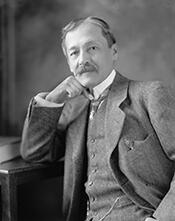
Here you will find contact information for Representative Benito Legarda Y Tuason, including email address, phone number, and mailing address.
| Name | Benito Legarda Y Tuason |
| Position | Representative |
| State | Philippine Islands |
| District | At-Large |
| Party | Unknown |
| Status | Former Representative |
| Term Start | December 2, 1907 |
| Term End | March 3, 1913 |
| Terms Served | 3 |
| Born | September 27, 1853 |
| Gender | Male |
| Bioguide ID | L000218 |
About Representative Benito Legarda Y Tuason
Benito Cosmé Legarda y Tuason (September 27, 1853 – August 27, 1915) was a Filipino legislator and statesman who played a prominent role in the political life of the Philippines during the late Spanish colonial period and the early years of American rule. He later served as a Resident Commissioner from the Philippine Islands to the United States Congress, where he was a Representative from the Philippine Islands from 1907 to 1913. Over the course of three terms in office, he contributed to the legislative process in Washington and participated in the evolving relationship between the United States and its new Pacific possession.
Legarda was born on September 27, 1853, in Manila, in the then Spanish-controlled Philippines, into a prominent and affluent family of mixed Spanish and Filipino ancestry. The Legarda and Tuason families were among the leading mestizo families of Manila, with extensive landholdings and commercial interests. This background afforded him access to education and social networks that would later support his entry into public life. Growing up in a milieu closely tied to both local elites and the colonial administration, he was exposed early to questions of governance, commerce, and the role of Filipinos within the imperial structure.
Educated in institutions that served the colonial elite, Legarda received training appropriate to a career in business and public affairs. His education, which reflected the Spanish colonial emphasis on law, administration, and the humanities, prepared him to navigate both the Spanish and, later, American systems of governance. Through this formation he acquired fluency in multiple languages and familiarity with European and colonial political thought, skills that would prove valuable as the Philippines underwent rapid political transformation at the turn of the twentieth century.
Before the advent of American rule, Legarda was active in civic and economic circles in Manila and became known as a leading figure among the Filipino elite. With the transition from Spanish to American sovereignty following the Spanish–American War and the subsequent Philippine–American War, he emerged as one of the Filipinos willing to work with the new colonial administration. His standing in Manila society and his experience in public affairs led to his appointment to the Philippine Commission, the legislative body of the American colonial Insular Government. As a member of the Philippine Commission, he participated in the early institutional development of the American colonial regime, helping to shape laws and policies affecting administration, infrastructure, and economic development in the archipelago.
Legarda’s service on the Philippine Commission positioned him for a broader role as the United States Congress created mechanisms for limited Filipino representation in Washington. When the office of Resident Commissioner from the Philippine Islands to the United States Congress was established, he was selected as one of the first to hold this post. As a Resident Commissioner, he served as a Representative from the Philippine Islands in the United States Congress from 1907 to 1913. Although Resident Commissioners did not possess full voting rights on the House floor, they could serve on committees, introduce legislation, and speak on matters affecting their constituencies. Over three terms in office, Legarda participated in the democratic process of the U.S. House of Representatives and represented the interests of his Filipino constituents during a significant period in American and Philippine history, as the two countries negotiated the contours of colonial governance, economic policy, and the gradual expansion of Filipino self-government. He was generally associated with the pro-American, conservative Filipino political current of the era, though in the existing record his specific party affiliation is noted as Unknown.
During his tenure in Congress, Legarda worked to secure measures favorable to the Philippines, including attention to trade relations, infrastructure, and administrative reforms under the Insular Government. His presence in Washington symbolized the new, if limited, channel through which Filipinos could present their views to U.S. lawmakers. He contributed to debates and committee work that touched on the status of the Philippine Islands, the responsibilities of the United States as a colonial power, and the evolving policies that would eventually lead toward greater autonomy for the archipelago. His service coincided with broader American discussions about imperialism, territorial governance, and the rights of colonial populations.
After concluding his service as Resident Commissioner in 1913, Legarda returned to the Philippines, where he remained a respected elder statesman of the American colonial period. He continued to be associated with public affairs and with the social and economic life of Manila’s leading families. Benito Cosmé Legarda y Tuason died on August 27, 1915. His career, spanning the late Spanish era, the upheavals of war and regime change, and the formative years of American colonial rule, reflected the complex position of Filipino elites who sought to influence policy both in Manila and in Washington during a transformative period in Philippine and American history.