Representative Benjamin Franklin Butler
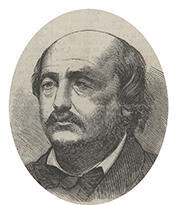
Here you will find contact information for Representative Benjamin Franklin Butler, including email address, phone number, and mailing address.
| Name | Benjamin Franklin Butler |
| Position | Representative |
| State | Massachusetts |
| District | 7 |
| Party | Republican |
| Status | Former Representative |
| Term Start | March 4, 1867 |
| Term End | March 3, 1879 |
| Terms Served | 5 |
| Born | November 5, 1818 |
| Gender | Male |
| Bioguide ID | B001174 |
About Representative Benjamin Franklin Butler
Benjamin Franklin Butler served as a Representative from Massachusetts in the United States Congress from 1867 to 1879. A member of the Republican Party, Benjamin Franklin Butler contributed to the legislative process during 5 terms in office.
Benjamin Franklin Butler’s service in Congress occurred during a significant period in American history. As a member of the House of Representatives, Benjamin Franklin Butler participated in the democratic process and represented the interests of constituents.
Benjamin Franklin Butler (November 5, 1818 – January 11, 1893) was an American major general of the Union Army, politician, lawyer, and businessman from Massachusetts. Born in New Hampshire and raised in Lowell, Massachusetts, Butler was a political major general of the Union Army during the American Civil War and had a leadership role in the impeachment of U.S. president Andrew Johnson. He was a colorful and often controversial figure on the national stage and on the Massachusetts political scene, serving five terms in the U.S. House of Representatives and running several campaigns for governor before his election to that office in 1882. Butler, a successful trial lawyer, served in the Massachusetts legislature as an antiwar Democrat and as an officer in the state militia. Early in the Civil War he joined the Union Army, where he first gained renown when he refused to return escaped slaves, designating them as contraband of war, an idea that the Lincoln administration endorsed and that played a role in making emancipation an official war goal. Later in the war, he was noted for his questionable military skills and his controversial command of New Orleans, which made him widely disliked in the South and earned him the “Beast” epithet. His commands were marred by financial and logistical dealings across enemy lines, some of which may have taken place with his knowledge and to his financial benefit. At the request of General-in-Chief Ulysses S. Grant, President Abraham Lincoln relieved Butler from the posts he held in the Union Army after his failure in the First Battle of Fort Fisher, but he soon won election to the United States House of Representatives from Massachusetts. As a Radical Republican he considered President Johnson’s Reconstruction agenda to be too weak, and he advocated harsher punishments of former Confederate leadership and stronger stances on civil rights reform. He was also an early proponent of impeaching Johnson. After Johnson was impeached in early 1868, Butler served as the lead prosecutor among the House-appointed impeachment managers in the Senate impeachment trial proceedings. Additionally, as Chairman of the House Committee on Reconstruction, Butler authored the Ku Klux Klan Act of 1871 and coauthored the landmark Civil Rights Act of 1875. In Massachusetts, Butler was often at odds with more conservative members of the political establishment over matters of both style and substance. Feuds with Republican politicians led to his being denied several nominations for the governorship between 1858 and 1880. Returning to the Democratic fold, he won the governorship in the 1882 election with Democratic and Greenback Party support. He ran for president on the Greenback Party and the Anti-Monopoly Party tickets in 1884, having unsuccessfully sought the Democratic nomination as well.