Representative Benjamin Butterworth
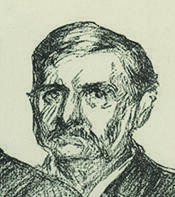
Here you will find contact information for Representative Benjamin Butterworth, including email address, phone number, and mailing address.
| Name | Benjamin Butterworth |
| Position | Representative |
| State | Ohio |
| District | 1 |
| Party | Republican |
| Status | Former Representative |
| Term Start | March 18, 1879 |
| Term End | March 3, 1891 |
| Terms Served | 5 |
| Born | October 22, 1837 |
| Gender | Male |
| Bioguide ID | B001200 |
About Representative Benjamin Butterworth
Benjamin Butterworth (October 22, 1837 – January 16, 1898) was an American lawyer and Republican politician who served as a U.S. Representative from Ohio and later as Commissioner of Patents. Over the course of five terms in the United States House of Representatives between 1879 and 1891, he contributed to the legislative process during a significant period in American history, representing the interests of his Ohio constituents and participating actively in the national political life of the late nineteenth century.
Butterworth was born near Maineville, Warren County, Ohio, on October 22, 1837. His family background was shaped by strong antislavery convictions. His father, a Virginia planter, freed his slaves despite his property interests and moved with his family to Ohio, where he became associated with abolitionist Levi Coffin in the Underground Railroad and assisted fugitive slaves until the close of the Civil War. Benjamin Butterworth attended the common schools of Warren County, continued his studies at the academy in Maineville, and later attended Ohio University in Athens, Ohio, receiving the education that would prepare him for a legal and political career.
After completing his formal education, Butterworth studied law and was admitted to the bar in 1861. He commenced the practice of law in Cincinnati, Ohio, where he established himself professionally during and after the Civil War era. His legal abilities led to his appointment as assistant United States district attorney in 1868, a position in which he gained experience in federal legal matters. He entered elective office as a member of the Ohio Senate, serving in 1874 and 1875, and thereby began to build the political reputation that would carry him to national office.
Butterworth was first elected to the United States House of Representatives as a Republican to the Forty-sixth and Forty-seventh Congresses, serving from March 4, 1879, to March 3, 1883. During these initial terms in Congress, he took part in the legislative deliberations of a nation grappling with the aftermath of Reconstruction and the challenges of industrial expansion. He was an unsuccessful candidate for reelection in 1882 to the Forty-eighth Congress, but remained active in party affairs, serving as a delegate to the Republican National Convention in 1880. In recognition of his standing, he was later appointed a regent of the Smithsonian Institution, contributing to the governance of one of the country’s leading scientific and cultural institutions.
In 1883 President Chester A. Arthur appointed Butterworth a commissioner of the Northern Pacific Railroad, a role that reflected the federal government’s close involvement with major railroad enterprises in the Gilded Age. That same year he served as special government counsel to prosecute the South Carolina election cases, underscoring his continued engagement with federal legal and political issues. Butterworth returned to Congress when he was elected to the Forty-ninth, Fiftieth, and Fifty-first Congresses, serving from March 4, 1885, to March 3, 1891. Over these additional three terms, he completed a total of five terms in the House of Representatives. During the Fifty-first Congress he served as chairman of the Committee on Patents, a position that placed him at the center of legislative questions concerning intellectual property and technological innovation. He was not a candidate for renomination in 1890.
Butterworth’s congressional career also reflected the racial attitudes of his time, including views now recognized as racist. He shared the prejudices held by some, though not all, of his contemporaries in Congress, referring to the Chinese as “a lower race of people” and asserting that allowing them to mix with whites would lead to “degrading amalgamation but no elevating and ennobling assimilation.” Such statements formed part of the broader national debate over immigration and race in the late nineteenth century and are an important aspect of the historical record of his public life.
After leaving Congress, Butterworth continued to hold prominent public positions. In the early 1890s he was appointed secretary of the World’s Columbian Exposition of 1893 in Chicago, a major world’s fair commemorating the 400th anniversary of Christopher Columbus’s voyage. He was widely recognized for his role in the success of that enterprise, which showcased American industrial, cultural, and scientific achievements to an international audience. Following this service, he resumed the practice of law in Washington, D.C., maintaining his involvement in national affairs from the capital.
In 1896 Butterworth was appointed Commissioner of Patents, returning to a field in which he had already acquired substantial legislative experience as chairman of the House Committee on Patents. He served in this capacity until his death, overseeing the administration of the nation’s patent system during a period of rapid technological change. Butterworth was regarded in his day as “one of Ohio’s big four politically,” a group that also included William McKinley, Joseph Benson Foraker, and Charles Foster, reflecting his prominence within Ohio’s Republican leadership. Seeking relief from ill health, he traveled to Thomasville, Georgia, where he died from a severe attack of pneumonia on January 16, 1898. He was interred in Rock Creek Cemetery in Washington, D.C. His family connections extended into American industrial history: his son, William Butterworth, married the granddaughter of inventor John Deere and the niece of architect Merton Yale Cady, linking the Butterworth family to the Deere industrial legacy.